-
E-mail
2802943235@qq.com
-
Phone
18702111683
-
Address
No. 253 Yulu Road, Jiading District, Shanghai
Ankerui Electric Co., Ltd
How can companies optimize their charging and discharging strategies under the new regulations of the National Development and Reform Commission's "Energy Storage Participation in the Electricity Spot Market"?
Date: 2025-03-28Read: 38
How can companies optimize their charging and discharging strategies under the new regulations of the National Development and Reform Commission's "Energy Storage Participation in the Electricity Spot Market"?
Ankrui Li Mingjun
Introduction: Policy+technology dual wheel drive, ushering in a new era of intelligent energy storage operation
withIn the Notice of the National Development and Reform Commission on Further Accelerating the Construction of the Electricity Spot Market,Clear policy guidance has been put forward to encourage new entities such as energy storage to participate in the electricity spot market,thisA loud horn announces that China's energy storage industry has officially entered a new era of market-oriented operation. In this context, the Ankerui EMS3.0 energy management system, with its "cloud edge end" collaborative architecture and advanced AI algorithms, is gradually emerging as an intelligent and capable assistant for enterprises to cope with the complex challenges of the electricity spot market. This article will delve into how to leverage the powerful features of the EMS3.0 system to achieve maximum revenue, controllable risks, and intelligent operation of energy storage power plants, adding a significant touch to the marketization process of the energy storage industry.
Interpretation of Policy Core Points:
①Key content of the new regulations
Admission criteria: The admission threshold for independent energy storage power stations/new energy distribution and storage (such as capacity ≥ 10MW/2h).
Price mechanism: Allow energy storage to participate in the spot market according to "node electricity price" or "zone electricity price", and clarify the rules for separating charging and discharging electricity prices for settlement.
Compensation mechanism: The possibility of overlapping benefits between auxiliary services such as frequency modulation and backup, and the spot market (refer to the pilot projects in Shandong and Shanxi).
②Enterprise Opportunities and Challenges
Opportunity: The widening price difference between peak and valley increases the arbitrage space in regions such as Guangdong and Zhejiang; Multiple revenue channels (electricity+ancillary services).
Challenge: Price fluctuation risk, high prediction accuracy requirements, and complex settlement rules.

1 Optimization of Charge and Discharge Strategy FourA majordirection
Direction 1: Dynamic Electricity Price Response Strategy
Core objective:By capturing electricity price fluctuations in real-time, maximize peak valley price difference returns
Ankerui EMS3.0 microgrid support functions:Built in electricity spot market API interface, real-time access to time of use electricity price data (such as Guangdong's daily/real-time market data). Based on reinforcement learning algorithms, dynamically generate charging and discharging plans (such as charging during peak electricity price periods and discharging during peak or spot price surges).
Case effect:The energy storage project in a certain industrial park has increased arbitrage returns by 28% through dynamic response, and the investment payback period has been shortened to 4.1 years.
Policy adaptation:Adapt to the requirement of "separate settlement of charging and discharging electricity prices" in the new regulations, and automatically distinguish between charging costs and discharging benefits.
Direction 2: Multi market joint optimization strategy
Core objective:Synchronize participation in the electric energy market and auxiliary service market to achieve revenue accumulation
Ankerui EMS3.0 microgrid system supports the following functions:The "three pool linkage" algorithm (energy pool, frequency regulation pool, backup pool) intelligently allocates energy storage capacity, frequency regulation demand forecasting module, and dynamically adjusts strategies in combination with power grid dispatch instructions.
Typical scenario:High frequency participation in FM services during the day, and turning to spot arbitrage at night.
Policy adaptation:Comply with the provisions of the "Management Measures for Electric Power Auxiliary Services" that "energy storage can participate in multiple markets simultaneously", such as allowing revenue accumulation in the Shandong market.
Direction Three: Risk Hedging and Stable Operations
Core objective:Reduce the uncertainty of returns caused by fluctuations in spot prices
Ankerui EMS3.0 microgrid system supports the following functions:Price fluctuation warning system, providing early warning of risks.
Enterprise applications:Sign a long-term peak valley electricity price agreement with the power sales company to lock in low returns (such as a minimum guarantee of 0.6 yuan/kWh).
Policy adaptation:In response to the guidance of the National Development and Reform Commission to encourage energy storage to avoid market risks through financial instruments.
Direction 4: AI driven prediction and decision-making
Core objective:Improve the accuracy of electricity prices and load forecasting, optimize the effectiveness of strategies
Ankerui EMS3.0 microgrid system supports the following functions:Hybrid forecasting model with small electricity price prediction error, digital twin simulation platform to simulate the benefits and battery degradation under different strategies.
actual effectA certain new energy distribution and storage project reduced the penalty cost caused by prediction errors by about 15% through AI prediction.
Policy adaptation:Meet the entry requirements of the new regulations for energy storage that require market forecasting capabilities.

II Ankerui EMS3.0 Microgrid Solution
2.1 Core Value of Solution
Improve energy management efficiency:Comprehensive data collection and real-time monitoring of energy equipment; Deeply analyze data and provide management basis,Intelligent optimization scheduling, dynamic adjustment of strategies, achieving * low energy consumption. 3D visualization management provides decision support and explores energy-saving potential.
Enhance the reliability of the power grid:Anti backflow control to avoid power grid failures; Smooth output power and improve power supply quality. Five remote function monitoring, timely detection of hidden dangers; Multi system monitoring to prevent safety accidents.
Reduce operating costs:Optimize energy structure and reduce energy costs; Intelligent control of lighting and air conditioning for energy conservation and emission reduction. Orderly charging scheduling to reduce distribution pressure; Energy storage peak valley arbitrage reduces electricity costs. Participate in the electricity market and earn additional profits.
Promote green and low-carbon development:Accurately manage carbon emissions and assist in green electricity trading. Integrated light storage and charging to improve the utilization efficiency of new energy. Intelligent prediction optimization ensures the consumption of new energy. The solution covers a wide range and allows for flexible deployment of applications.

2.2 Solution Networking Architecture
The networking architecture of Ankerui EMS3.0 system solution mainly covers various links of "source network load storage charging" in enterprise microgrids,Realized integrated flexible control of source network load storage and charging, as well as interconnection, intercommunication, and interaction. It can monitor, intelligently predict, dynamically allocate, optimize strategies, diagnose and alert the operating status of distributed power sources, municipal power sources, energy storage systems, charging facilities, and various AC/DC loads in enterprise microgrids in real time, achieving orderly interaction between dispatchable sources and loads and comprehensive energy analysis, meeting the needs of digital energy efficiency management, intelligent safety analysis, dynamic adjustment and control, and visualized panoramic analysis of enterprise microgrids.
Equipment layer:Integrate multifunctional instruments, protective devices, energy storage and new energy equipment (such as photovoltaic and wind power generation), charging piles, etc., and achieve real-time collection and transmission of equipment data through diversified communication interfaces and protocols.
Transport layer:Adopting a data fusion terminal that supports multi protocol conversion and data encryption, ensuring stable and secure transmission of data to the cloud platform.
Cloud platform layer:Centralized storage, processing, and display of data, providing functions such as energy monitoring, historical data analysis, and alarm notifications. At the same time, open API interfaces to facilitate third-party system integration.
Application layer:Based on cloud platform data, applications such as energy planning, energy storage optimization, and orderly charging are implemented, supporting users to access and enjoy convenient energy management services through multiple terminals.

III EMS3.0 Intelligent Microgrid System Feature Interface Display
3.1 Real time monitoring
The monitoring system interface of the microgrid energy management system includes the system main interface, which includes the microgrid photovoltaic, wind power, energy storage, charging piles, and overall load composition, including revenue information, weather information, energy conservation and emission reduction information, power information, electricity quantity information, voltage and current situation, etc. According to different needs, charging, energy storage, and photovoltaic system information can also be displayed.

3.2 Photovoltaic Interface
Display information on photovoltaic systems, mainly including monitoring and alarm of the operating status of inverters on the DC and AC sides, statistics and analysis of inverter and power station power generation, monitoring and analysis of grid connected cabinet power generation, statistics of annual effective utilization hours of power station power generation, statistics of power generation revenue, carbon emission reduction statistics, monitoring of irradiance/wind power/environmental temperature and humidity, simulation and efficiency analysis of power generation; Simultaneously display the total power, voltage and current of the system, as well as the operational data of each inverter.

3.3 Energy storage interface
Display the energy storage installed capacity, current charging and discharging capacity, revenue, SOC change curve, and electricity change curve of this system. Data display and control of PCS and BMS.

3.4 Wind Power Interface
Display information on wind power systems, mainly including monitoring and alarm of the operation status of the DC and AC sides of the inverter control integrated machine, statistics and analysis of the power generation of the inverter and the power station, statistics of the annual effective utilization hours of the power station's power generation, statistics of power generation income, carbon reduction statistics, monitoring of wind speed/wind speed/environmental temperature and humidity, simulation of power generation and efficiency analysis; Simultaneously display the total power, voltage and current of the system, as well as the operational data of each inverter.

3.5 Charging Station Interface
Display information about the charging station system, mainly including the total power consumption of charging stations, the power and electricity consumption of AC and DC charging stations, electricity costs, change curves, and operational data of each charging station.

3.6 Power generation forecast
Based on historical power generation data, measured data, and future weather forecast data, predict the short-term and ultra short term power generation of distributed power generation, and display the qualification rate and error analysis. According to power prediction, manual input or automatic generation of power generation plans can be carried out, which facilitates users to centrally control the new energy generation of the system.

3.7 Strategy Configuration
The system should be able to set the system operation mode and configure different control strategies based on power generation data, energy storage system capacity, load demand, and time of use electricity price information. Such as peak shaving and valley filling, cycle planning, demand control, anti backflow, orderly charging, dynamic expansion, etc.

3.8 Real-time alarm
Equipped with real-time alarm function, the system should be able to remotely signal the starting and closing of inverters and bidirectional converters in each subsystem, as well as issue alarms when internal protection actions or accident trips occur. It should be able to display alarm events or trip events in real time, including the name of the protection event and the time of the protection action; And it should be able to notify relevant personnel in the form of pop ups, sounds, text messages, and phone calls.

3.9 Power Quality Monitoring
Continuous monitoring of the power quality of the entire microgrid system, including steady-state and transient states, enables management personnel to grasp the power quality situation of the power supply system in real time, in order to timely detect and eliminate unstable power supply factors.

3.10 Network Topology Diagram
The system supports real-time monitoring of the communication status of various devices connected to the system, and can fully display the entire system network structure; It can diagnose the communication status of equipment online, and automatically display the faulty equipment or component and its faulty location on the interface when network abnormalities occur.

3.11 Fault recording
When the system malfunctions, it automatically and accurately records the changes in various related electrical quantities before and after the fault. By analyzing and comparing these electrical quantities, it plays an important role in analyzing and handling accidents, determining whether the protection is operating correctly, and improving the safe operation level of the power system. Among them, a total of 16 fault waveforms can be recorded, and each waveform can trigger 6 segments of waveform recording. Each waveform recording can record 8 cycles before the fault and 4 cycles after the fault, with a total recording time of 46 seconds. Each sampling point recording should include at least 12 analog waveforms and 10 switch waveforms.

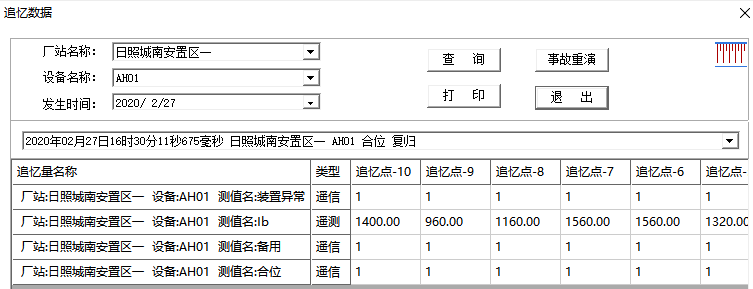
3.12 Accident Remembrance
It can automatically record all real-time scanning data before and after the accident, including switch position, protection action status, remote measurement, etc., forming the data basis for accident analysis;
Users can customize the initiation event for accident recall, and store relevant point data for the 10 scan cycles before and after the accident when each event occurs. The data points for initiating events and monitoring can be determined and modified by users at will.
4 Recommended hardware products
4.1 Monitoring instrument products

4.2 Protection of Measurement and Control Products

4.3 Power Quality Products

5 Conclusion
If the aboveSmart Energy Microgrid SolutionStimulated your curiosity, please feel free to contact me at any time. I will send you detailed product information and a complete solution.
target, aim at, address, focus on, in response toSmart Energy Microgrid SolutionIf you have any questions or need further discussion, please feel free to communicate with me through private message, and I will be happy to answer them for you.
The author will continuously update solutions and electrical product information that may interest you. If you are also interested in other products, feel free to communicate with me at any time to discuss cutting-edge technology.