-
E-mail
2885080326@qq.com
-
Phone
18701998775
-
Address
No. 253 Yulu Road, Jiading District, Shanghai
Ankerui Electric Co., Ltd
A Brief Discussion on the Bottleneck and Improvement Strategies of Charging Stations in Highway Service Areas
Date: 2025-12-29Read: 21
Tang Xueyang
Ankerui Electric Co., Ltd. Shanghai Jiading 201801
Abstract:With the increasing awareness of environmental protection among citizens and the transformation of energy structure, new energy vehicles, as an environmentally friendly and energy-saving means of transportation, have gradually become the development trend of the automotive industry. However, the construction and operation of new energy vehicle charging stations in highway service areas face some problems. Firstly, a general description of the current situation of new energy charging piles in China's highway service areas was provided, and further analysis was conducted on the existing problems of new energy charging piles in highway service areas. On this basis, an improvement plan for the construction of intelligent new energy charging stations is proposed, including improving equipment stability and maintenance efficiency, optimizing the planning and layout of charging piles, establishing a digital charging pile platform, establishing a charging reservation mechanism and intelligent scheduling system, optimizing charging strategies and improving charging efficiency, introducing green energy to assist in the operation of charging piles, and government support policies and cooperation mechanisms. Intended to promote the healthy development of China's new energy vehicle industry, enhance the comprehensive service level of high-speed service areas, and provide reference for the government, enterprises, and research institutions.
Keywords:New energy vehicles; Highway service area; Charging station; Enhancement Plan
0 Introduction
In recent years, with the increasing awareness of environmental protection among citizens and the transformation of energy structure, new energy vehicles, as an environmentally friendly and energy-saving means of transportation, have gradually become the development trend of the automotive industry. In the development process of new energy vehicles, the construction and improvement of charging infrastructure are crucial, and highway service areas, as one of the important charging sites for new energy vehicles, have some problems in the construction and operation of new energy charging piles.
This article aims to systematically analyze and study the bottlenecks of new energy charging piles in China's highway service areas, and propose corresponding improvement strategies to promote the healthy development of China's new energy vehicle industry and enhance the comprehensive service level of service areas. Firstly, this article will provide a brief overview of the current status of new energy charging stations in China's highway service areas; Secondly, sort out and summarize the main problems that exist. Thirdly, based on the actual situation in China, explore the possibility and feasibility of solving these problems and propose a series of improvement measures. Through the analysis of the problem of new energy charging piles in highway service areas and the study of improvement measures, the aim is to provide reference for government departments, corporate institutions, and related researchers, promote the development of the new energy vehicle industry, and advance the green and sustainable development of China's transportation sector.
Development status of new energy vehicle charging piles in high-speed service areas in China
Distribution of charging stations. The coverage rate of new energy vehicle charging stations in China's high-speed service areas has been rapidly increasing year by year, striving to achieve full coverage. However, there is still a problem of relatively uneven distribution of charging infrastructure in highway service areas. Currently, charging piles in service areas are mainly concentrated in some developed regions and high-speed service areas around big cities, such as the Beijing Tianjin, Yangtze River Delta, and Pearl River Delta regions. In contrast, some areas with weak infrastructure, such as the three northeastern provinces, still face a shortage of charging stations, which affects the convenience of charging new energy vehicles.
Type and technical level of charging stations. The types of charging stations in high-speed service areas include alternating current charging stations (AC) and direct current charging stations (DC). DC charging stations usually have faster charging speeds and are more suitable for long-distance travel. Although the level of technology has improved, there may be differences in equipment updates and maintenance levels between different service areas, which affects the stability and efficiency of charging services.
Charging station operators and management models. The operators and management models of charging stations are diverse, including state-owned enterprises, private enterprises, and joint ventures such as TeDian, Xingxing Charging, Xiaoju Charging, etc. Some high-speed service areas adopt autonomous operation mode, while others may be entrusted to professional charging service companies, resulting in diversity in operation and management methods.
Charging service experience. The charging experience of users in high-speed service areas is influenced by the performance of charging station equipment, payment methods, information feedback, and other aspects. Charging difficulties often occur during holiday travel, and phenomena such as "sighing at the charging station", "difficult to find a charging station", and "difficult to pay" are not uncommon. Some service areas may provide more convenient payment methods and user interfaces to improve the user experience, but there is still room for improvement.
Policy support. In recent years, the government has issued a series of policies to support the development of new energy vehicles, including the construction of charging infrastructure and the purchase of new energy vehicles. In October 2015, the "Guiding Opinions on Accelerating the Construction of Electric Vehicle Charging Infrastructure" were issued, which pointed out the need to accelerate the construction of electric vehicle charging infrastructure to alleviate the problem of charging difficulties and promote the promotion and application of new energy vehicles; In December 2020, four ministries jointly issued the "Notice on Further Improving the Financial Subsidy Policy for the Promotion and Application of New Energy Vehicles", which pointed out the need to optimize the financial subsidy policy for the promotion and application of new energy vehicles, improve the accuracy of subsidies, and promote the high-quality development of the new energy vehicle industry; In June 2023, the Guiding Opinions on Further Building a High Quality Charging Infrastructure System were issued, which pointed out the need to accelerate the construction of a high-quality charging infrastructure system, enhance the ability to guarantee charging services, and support the rapid development of the new energy vehicle industry. In February 2024, the "Notice on Accelerating the Construction of Charging Infrastructure in Highway Service Areas in 2024" was issued to deploy and promote the construction of charging infrastructure along highways. These policies have played a positive role in promoting the construction and upgrading of new energy vehicle charging stations in China's high-speed service areas, but further improvement and implementation are still needed in the implementation process.
Analysis of Problems with New Energy Vehicle Charging Stations in High Speed Service Areas
The failure rate of charging stations is high. At present, some charging stations in certain service areas have various problems, including being under repair, waiting for repair, or not receiving timely repair. Indicating that some charging station equipment lacks stability and is prone to malfunctions. The maintenance capability may be insufficient, causing users to encounter charging difficulties during their travels.
The types of charging stations in the service area vary. In the service area, it was found that there are different types of charging stations, including alternating current (AC) and direct current (DC) charging stations. Different types of charging stations may have different impacts on users, and some vehicles may not be compatible with a certain type of charging station. This may result in some users facing restrictions when charging in the service area.
The number of DC charging stations is insufficient. DC charging stations are the main charging method for new energy vehicles during long-distance travel, but the number is still insufficient in many service areas, especially on highways with dense traffic. In the high-speed service areas around big cities, although there are relatively many, the supply of DC charging stations can still barely meet the demand, usually exceeding 20. In other service areas, the number of DC charging stations remains at around 4, which is clearly insufficient to meet the charging needs of high-speed vehicles.
The difference between operators and payment methods. There are significant differences in the operators and payment methods used in different high-speed service areas, including the need to download software, register users, use mini programs, and use the apps provided by the operators. Some operators' applications may have numerous errors, resulting in poor user experience.
The problem of car owners occupying charging stations when parking for charging. In highway service areas, charging car owners often arrange time-consuming activities such as dining and resting based on the expected charging time, which can result in the vehicle being charged but the charging station being occupied. This phenomenon affects the user experience of other car owners, especially during peak hours.
The average charging time per vehicle is too long. During the charging process, when the car is charged to 80% or 90% of its capacity, the charging power will decrease, resulting in a decrease in overall charging efficiency.
The usage status of high-speed charging stations is not updated in a timely manner. When driving on highways, it is difficult to obtain information about the charging stations in the next service area in advance, including the number of available charging stations and whether there are vehicles waiting in line. This may make it difficult for car owners to make informed decisions during the driving process, increasing the uncertainty of finding available charging stations, especially during peak hours.
The problem of crowded charging stations in highway service areas during holidays. During holidays, charging stations in high-speed service areas often face congestion, resulting in many vehicles being unable to charge. Some car owners even run out of battery due to delayed charging or traffic congestion, which brings inconvenience and uncertainty to new energy vehicle users, especially during holidays when they need to drive for a long time.
Regional differences. The number of charging stations varies significantly in different regions, with relatively better conditions around big cities and relatively scarce conditions in other areas. Regional differences may lead to inconvenience in charging for some new energy vehicle users during long-distance travel, which may affect their user experience with new energy vehicles. Some remote high-speed service areas have not yet established charging stations, which may limit the use of new energy vehicles. The lack of charging stations may hinder the popularization and use of new energy vehicles in remote areas, as car owners may
Unable to obtain charging services when needed, which limits their long-distance driving. Lack of user education and guidance. Some service areas lack clear user education and guidance, resulting in some users not knowing how to correctly use charging stations and what measures to take when charging stations malfunction. This will cause some users to be at a loss when encountering problems, increasing the difficulty of repairing charging stations.
3. Plan for Enhancing the Construction of Intelligent New Energy Charging Stations
3.1 Improving equipment stability and maintenance efficiency
Implement regular technical updates and equipment upgrades, adopt technology to improve equipment stability and durability, and establish a strict quality monitoring system to test and inspect charging equipment for quality. At the same time, a regular inspection and maintenance system will be established to regularly inspect and maintain the charging pile equipment. Remote monitoring technology will be introduced to monitor the real-time operation status of the charging pile, and a 24-hour emergency maintenance service mechanism will be established to ensure rapid response, repair, and restoration of normal operation in case of equipment failure.
In addition, data analysis technology is used to continuously monitor and analyze equipment operation data, collect user feedback, and continuously improve equipment design and operation modes to enhance user experience and equipment stability. These comprehensive measures aim to ensure the long-term stable operation of charging stations, improve user satisfaction, and enhance the charging experience of new energy vehicles.
3.2 Optimize the planning and type layout of charging stations
The government and relevant enterprises should increase the deployment of charging stations in a targeted manner based on the number of new energy vehicles and traffic flow in the region, improve the coverage of charging facilities in service areas, and ensure that users can conveniently charge in different areas. Reasonably plan the deployment of AC and DC charging stations to meet the charging needs of various new energy vehicles. The management of high-speed service areas should increase the number of DC charging stations, especially in areas with dense traffic, to meet the fast charging needs of users on highways.
For peak periods, the government and operators can consider planning and installing high-speed service area charging equipment in advance to meet the needs of car owners, especially during holidays when congestion is likely to occur. For example, providing mobile charging equipment or in car charging services can alleviate the pressure of crowded charging stations. Mobile charging stations can be quickly and flexibly deployed in different areas based on the temporary and centralized charging needs during holidays. It can respond to changes in charging demand in a timely manner, quickly adapt to traffic flow and vehicle distribution during special periods, and has an independent power supply system. Mobile charging piles do not rely on external power grids and can provide charging services in areas without fixed power facilities. This mobility enables it to cover a wider area and meet the charging needs of vehicles in different locations during holidays.
3.3 Establishing a digital charging station platform
Integrate multiple data sources from charging station operators, government departments, user feedback, etc. to ensure the accuracy of information. Users only need to register once on this platform to obtain access to all charging stations. Through the platform, users' registration information, charging history, and generated fees can be automatically pushed to the corresponding supplier software. In this way, users can manage all charging related transactions on one platform, reducing confusion and inconvenience caused by different suppliers. This one-stop digital platform can lower the usage threshold for elderly users and make it more convenient for them to use charging services. The government can provide training and support to ensure that elderly users can smoothly adapt to the use of digital platforms.
At the same time, the government can also monitor the current charging status and queuing situation of charging stations in real time through the digital charging station platform, ensuring the real-time information. Transmitting real-time monitoring data to major navigation systems enables car owners to obtain more accurate and real-time charging station information while using the navigation system, including the number of available charging stations and whether there are vehicles waiting in line. Add a route planning function based on charging station conditions to the navigation system, allowing car owners to choose suitable service areas for charging and improve charging efficiency.
3.4 Establish a charging reservation mechanism and intelligent scheduling system
Firstly, establish an intelligent charging scheduling system to predict peak periods through algorithms, achieve intelligent allocation of charging resources, ensure the rational use of charging stations, and reduce congestion. At the same time, an intelligent parking monitoring system is introduced to monitor the charging status and parking time of vehicles, promptly remind car owners to move their vehicles, and ensure the timely vacancy of charging stations.
Secondly, a charging station reservation mechanism will be implemented, allowing car owners to make advance appointments for charging periods, avoiding a large number of vehicles rushing into the charging station at the same time, dispersing charging demand, and improving charging efficiency. Set up information display screens or prompt devices to remind car owners to move their vehicles as soon as possible after charging is completed, ensuring that more car owners can smoothly use charging services. Remind car owners through apps or other means to return to the vehicle and move away in a timely manner when charging is about to be completed, reducing the time spent on charging stations.
3.5 Optimizing Charging Strategies and Improving Charging Efficiency
Implement a tiered charging system, for example, when the charging power drops by 80% or 90%, gradually increase the unit price of charging electricity for each stage of power reduction, in order to motivate car owners to complete the charging process more quickly. During the charging process, notify the car owner in advance through an app or other means that the charging power is about to decrease, and prompt them to pay attention to the gradually increasing charging electricity unit price, in order to enhance the car owner's attention to charging efficiency. Due to the incentive to increase the unit price of electricity, car owners may be more inclined to complete charging more quickly, reducing their expected charging time.
Charging stations can clearly explain the tiered charging mechanism to users through information displays, apps, and other means, increasing users' understanding of this mechanism. Establish a user feedback system to allow users to share their feelings and suggestions about the new charging mechanism, in order to continuously optimize the system. By motivating car owners to complete the charging process faster, reducing the time spent on ineffective charging stations, and improving the utilization rate of charging stations.
3.6 Introducing green energy to assist in the operation of charging stations
The government should promote the application of more intelligent and low-cost charging equipment in remote areas by supporting technological research and innovation, in order to improve the feasibility of charging station construction. For example, green energy sources such as solar or wind power can be used in remote areas to promote sustainable development and improve energy efficiency. This measure will provide reliable and environmentally friendly solutions for charging new energy vehicles in remote areas, while reducing energy costs and making positive contributions to the local economy and environment. Government support policies and cooperative construction mechanisms
3.7 Government support policies and cooperative construction mechanisms
Firstly, the government can formulate incentive policies to encourage the establishment of charging stations in remote high-speed service areas, such as providing tax incentives, funding subsidies, or other incentive plans to promote the rapid deployment of charging stations.
Secondly, the government can collaborate with enterprises to jointly build charging facilities, share construction costs, and promote the construction and popularization of charging stations. By collaborating with local enterprises or service areas, the construction and sharing of charging stations can be achieved, reducing the investment burden on enterprises and accelerating the construction process of charging stations. In regional development planning, the popularization and demand for new energy vehicles should be fully considered, and the construction of charging facilities should be included in the overall plan. The government should ensure coverage of high-speed service areas in remote areas to meet the charging needs of users in different regions and promote full coverage and popularization of charging facilities.
4 Ankerui Charging Station Charging Operation Cloud Platform Helps Carry out Orderly Charging
4.1 Overview
The AcrelCloud-9000 Ankerui Charging Pole Charging Operation Cloud Platform system uses IoT technology to continuously collect and monitor data from electric bicycle charging stations and various charging stations connected to the system. It monitors the operation status of charging stations in real time, provides charging services, payment management, transaction settlement, asset management, energy management, and detailed queries. At the same time, warning for various faults such as over temperature protection, leakage, input/output overvoltage, undervoltage, and low insulation of the charger; The charging pile supports Ethernet, 4G or WIFI access to the Internet, and users can charge through WeChat, Alipay, and cloud flash payment scanning code.
4.2 Application Sites
Suitable for the design of charging infrastructure in charging station modes such as civil buildings, general industrial buildings, residential areas, industrial units, commercial complexes, schools, and parks.
4.3 System Architecture
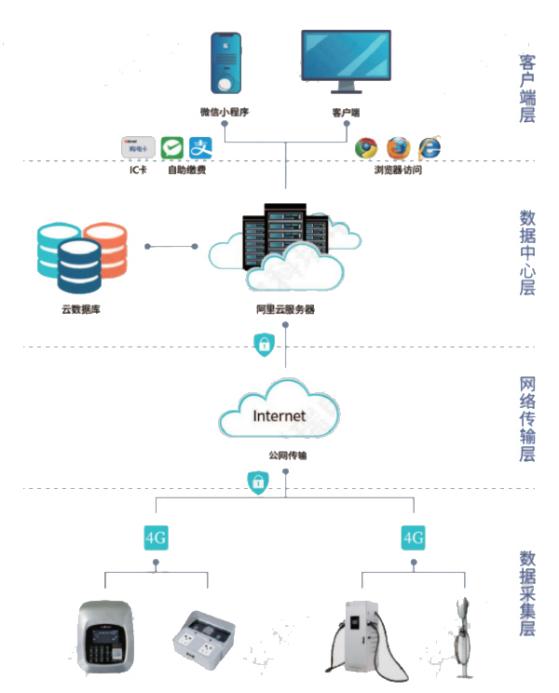
The system is divided into four layers:
1) That is, the data collection layer, network transmission layer, data layer, and client layer.
2) Data collection layer: The communication protocol for the intelligent charging station of the electric scooter is standard Modbus RTU. The intelligent charging station for electric scooters is used to collect power parameters of the charging circuit, and perform energy metering and protection.
3) Network transport layer: Upload data to a pre built database server through 4G network.
4) Data layer: includes application servers and data servers. The application server deploys data collection services and WEB websites, while the data server deploys real-time databases, historical databases, and basic databases.
5) Client layer: System administrators can access the electric scooter charging station charging platform in the browser. Terminal charging users start charging by swiping their card and scanning the code.
The functions of the community charging platform mainly include intelligent large screens for charging facilities, real-time monitoring, transaction management, fault management, statistical analysis, basic data management, etc. At the same time, it provides operation and maintenance personnel with operation and maintenance apps, and charging users with charging mini programs.
4.4 Ankerui Charging Pile Cloud Platform System Functions
4.4.1 Intelligent large screen
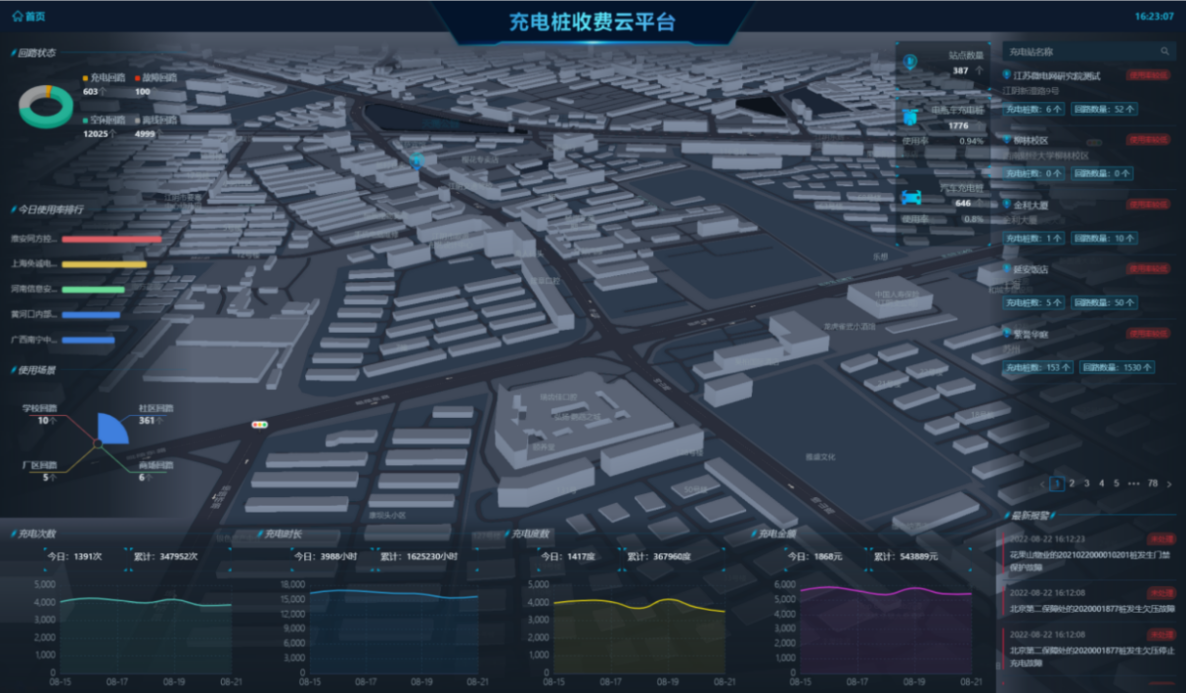
The intelligent large screen displays the distribution of stations, including device status, device usage rate, charging frequency, charging duration, charging amount, charging degree, charging pile faults, etc. It can also view the station information, charging pile list, charging records, revenue, energy consumption, fault records, etc. of each station. Unified management of community charging stations, monitoring equipment utilization rates, and rational allocation of resources.
4.4.2 Real time monitoring
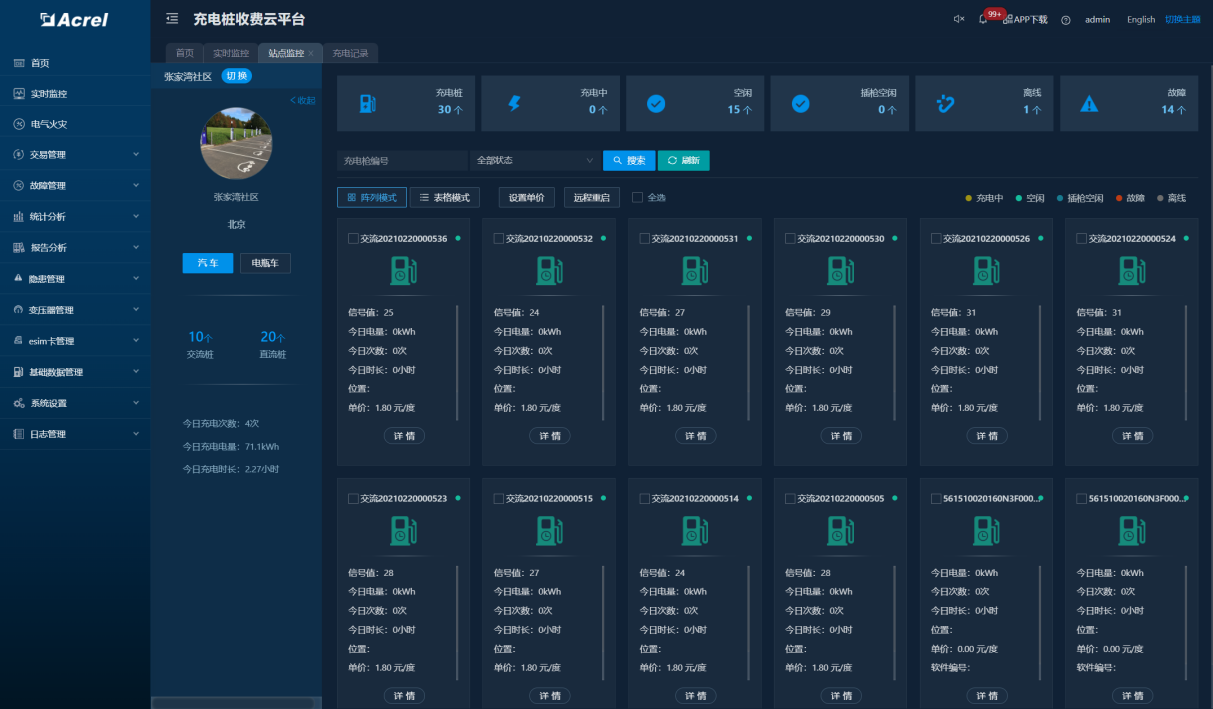
Real time monitoring of the operation status of charging facilities, mainly including the operation status of charging stations, circuit status, charging power during the charging process, charging voltage and current, charging station alarm information, etc.
4.4.3 Transaction Management
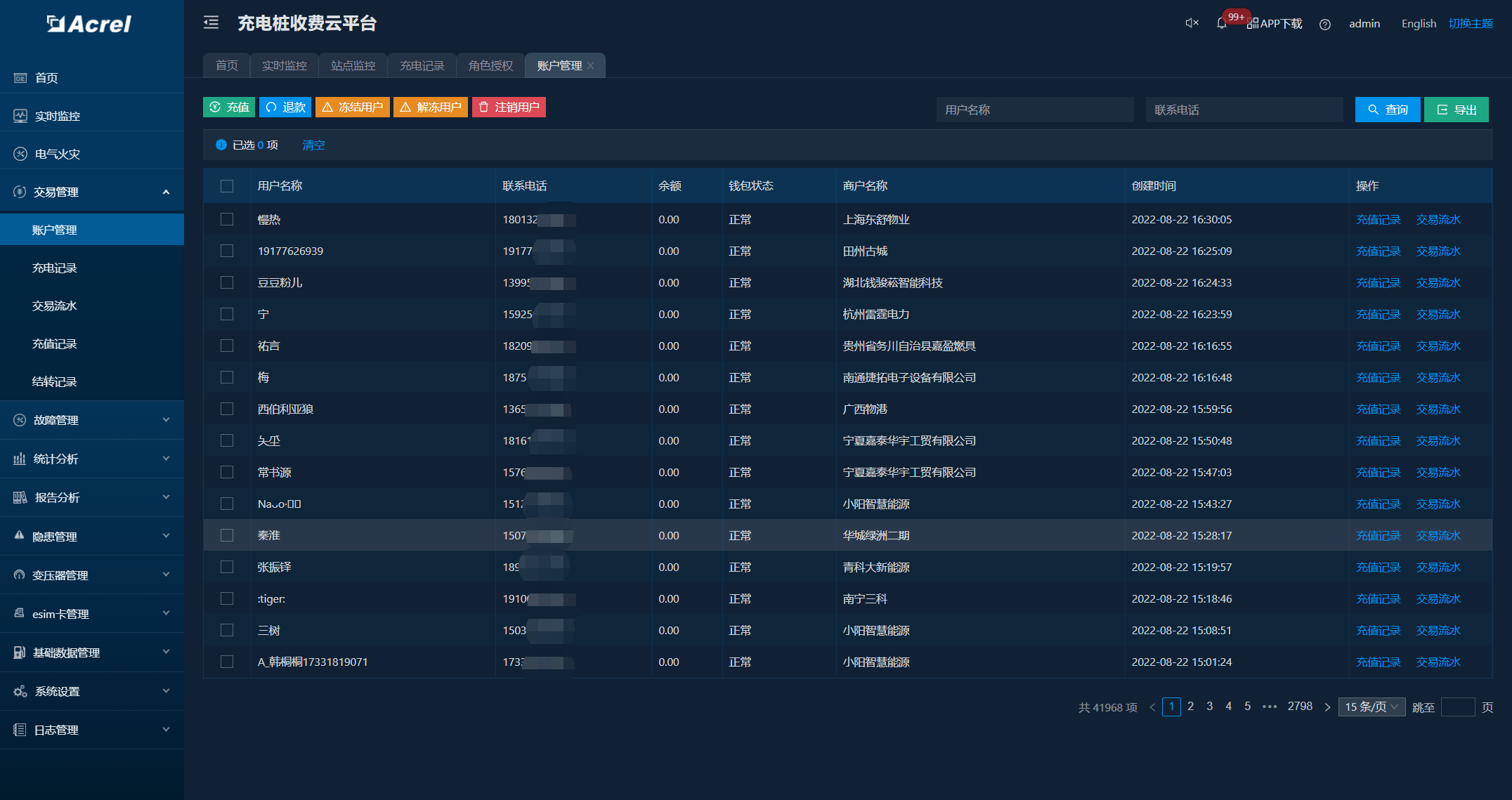
Platform management personnel can manage charging user accounts, perform account recharge, refund, freeze, cancel and other operations, and view detailed daily charging transaction information of community users.
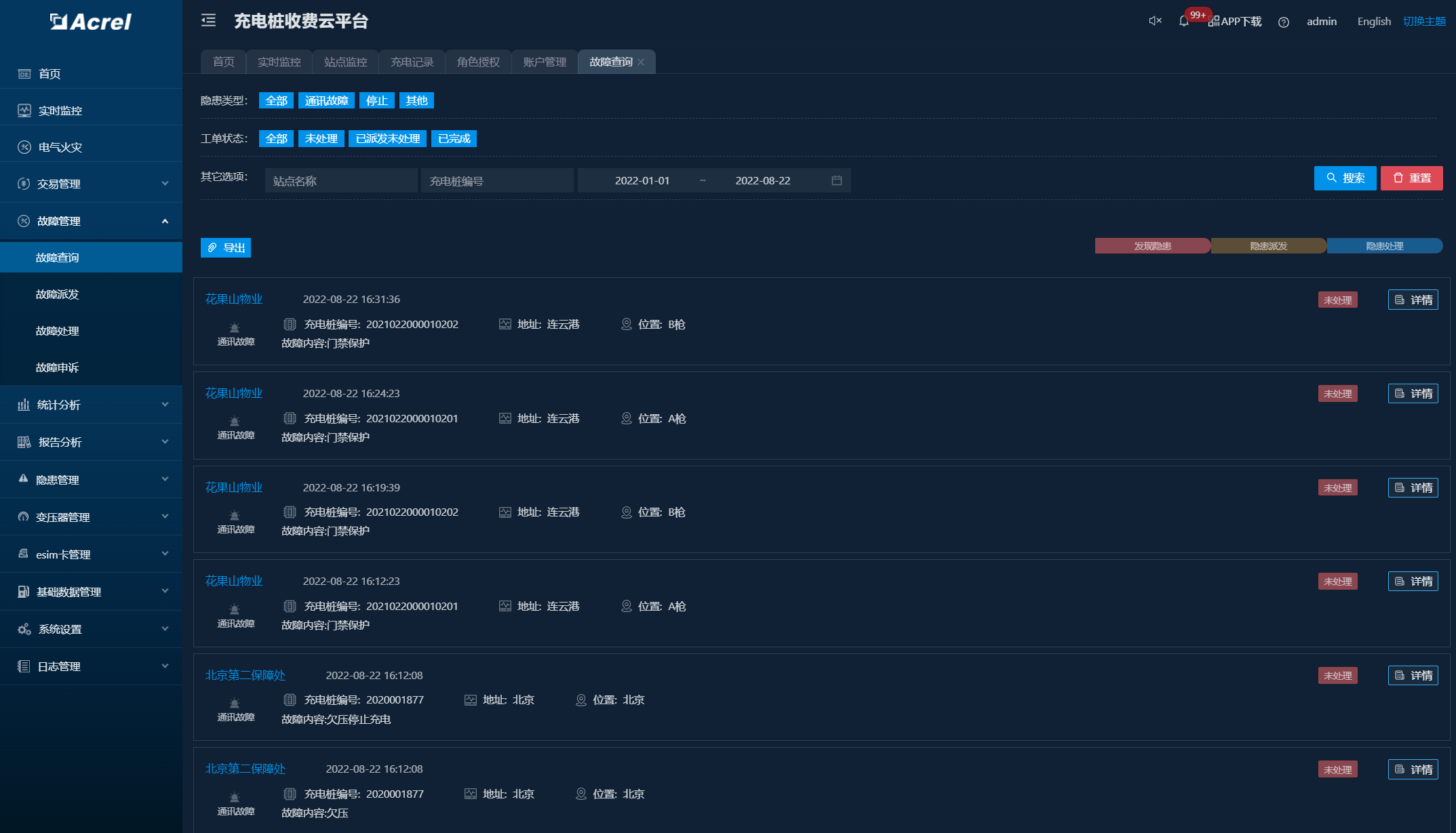
4.4.4 Fault Management
The equipment automatically reports fault information, and platform management personnel can view and distribute fault information through the platform. At the same time, operation and maintenance personnel can receive fault push notifications through the operation and maintenance APP, and report the results after the operation and maintenance work is completed. Charging users can also provide feedback on on-site issues through the charging mini program.
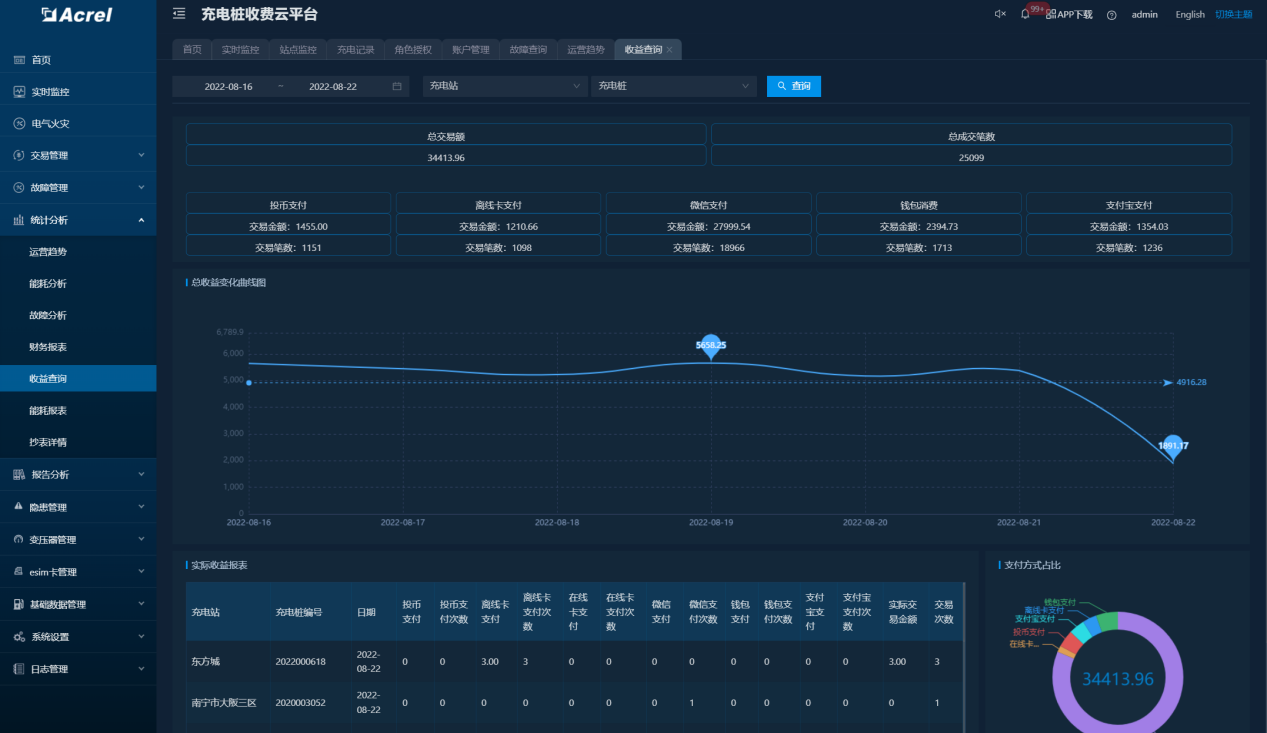
4.4.5 Statistical analysis
Through the system platform, query charging transaction statistics and energy consumption statistics from different perspectives such as charging stations, charging facilities, charging time, and charging methods.
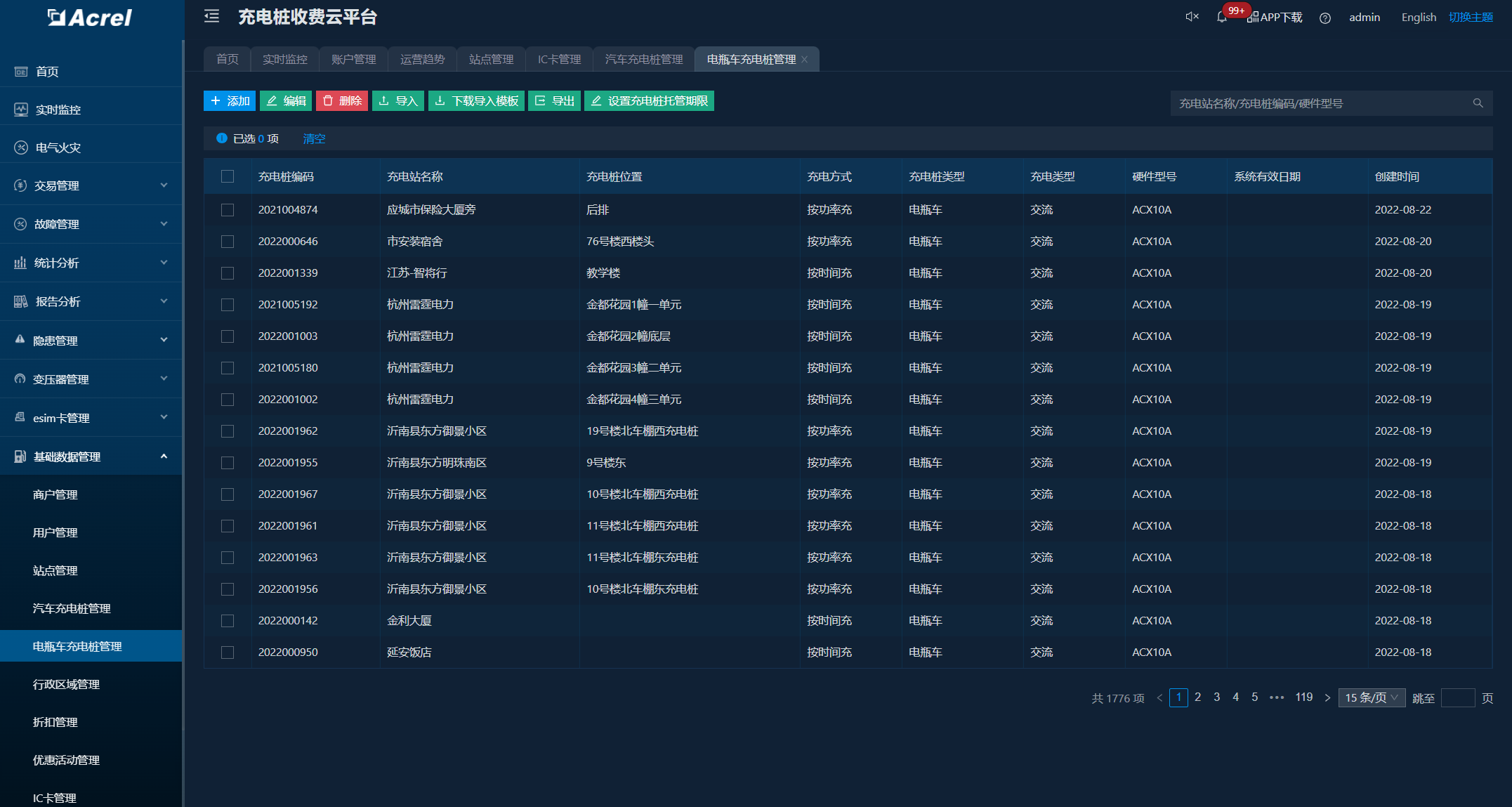
4.4.6 Basic Data Management
On the system platform, operators can establish and manage the required sites and charging facilities for their operations, maintain charging facility information, pricing strategies, discounts, and promotional activities. They can also manage online card user recharge, freezing, and unbinding.
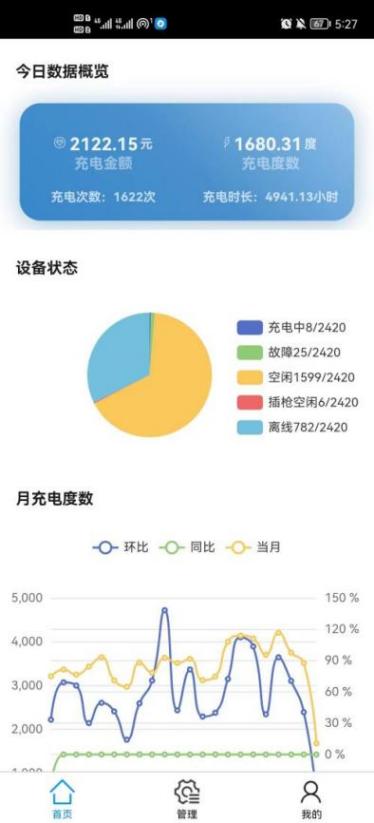
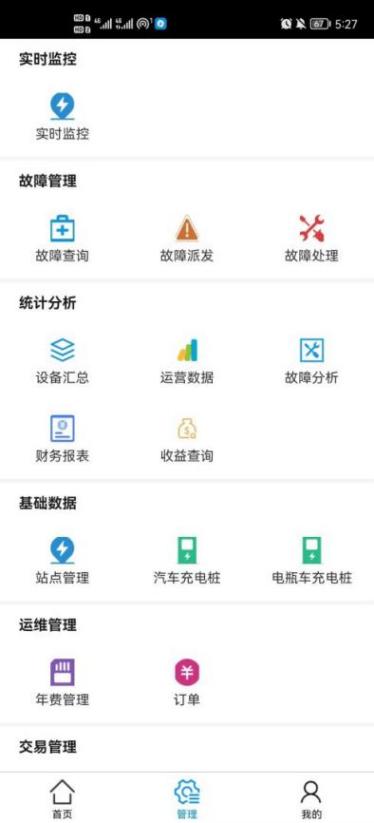
4.4.7 Operation and Maintenance APP
Intended for operation and maintenance personnel, it can manage sites and charging stations, handle fault loops, check the usage of data cards, inquire about charging/recharging status, set remote parameters, and receive fault push notifications
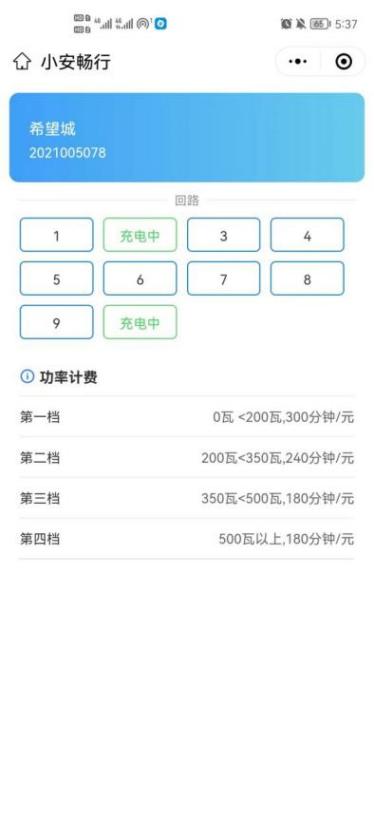
4.4.8 Charging Mini Program
Targeting charging users, it can view nearby idle devices and mainly includes functions such as scanning codes for charging, account recharge, charging card binding, transaction inquiry, and fault appeal.

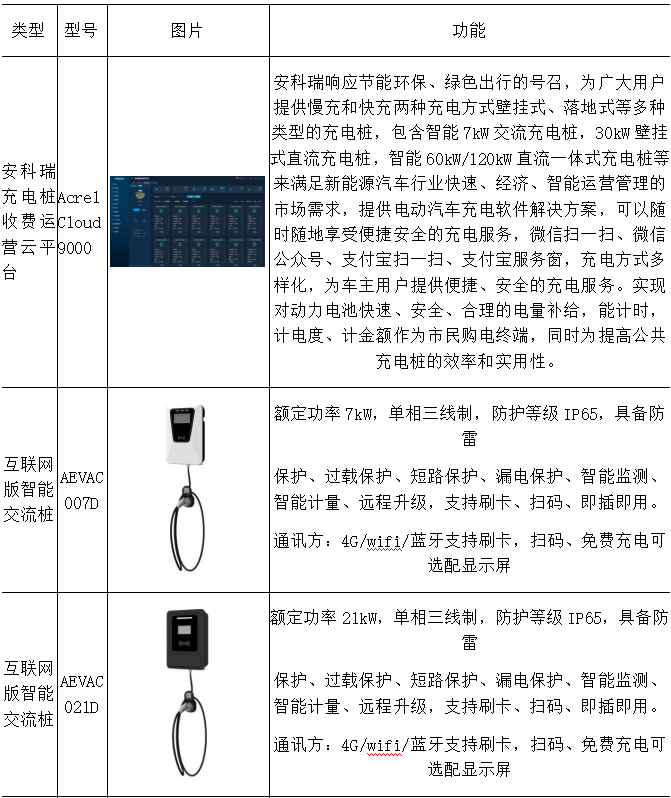
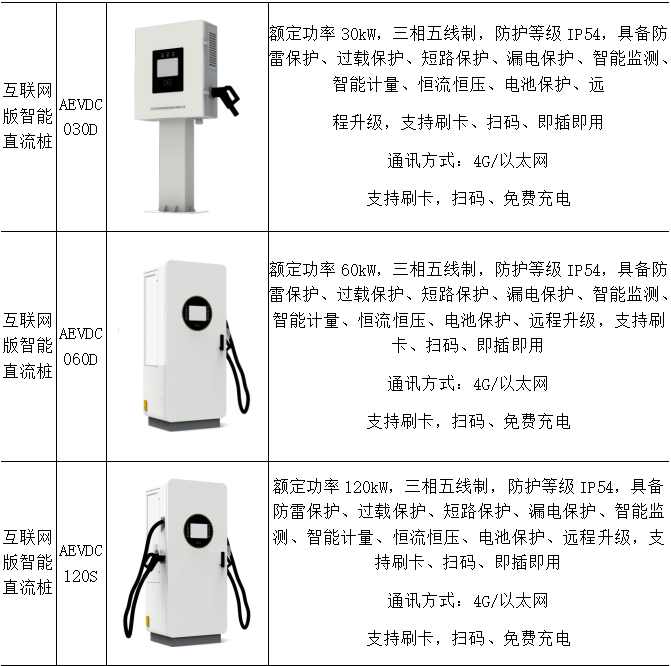
4.5 System Hardware Configuration

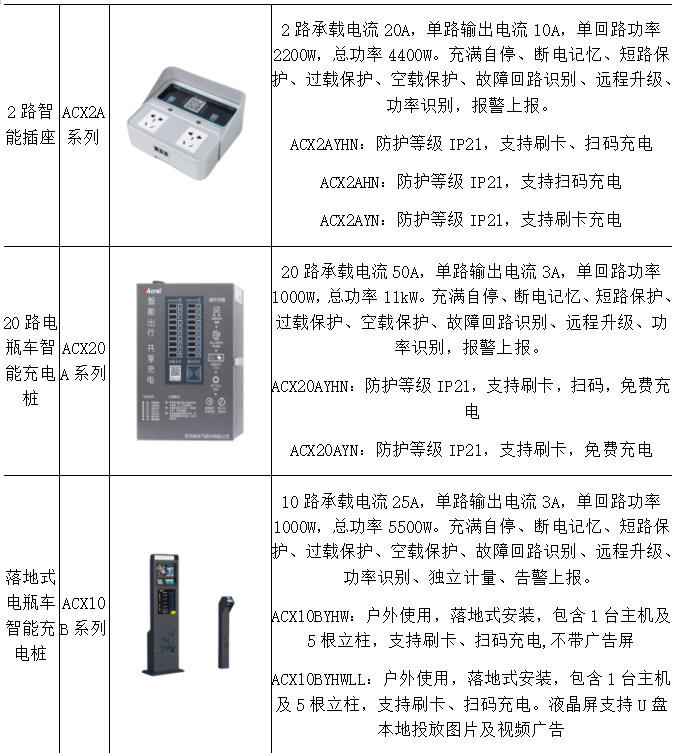
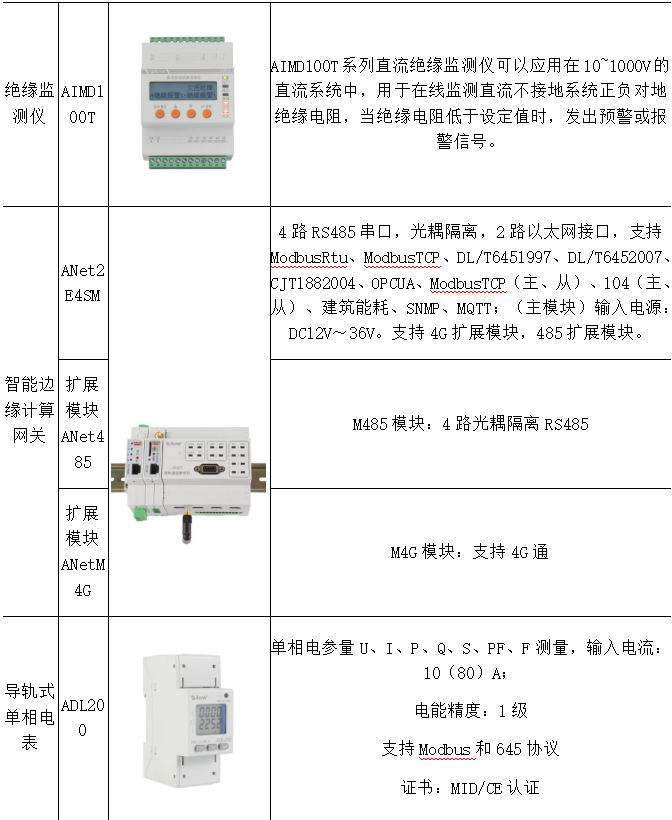
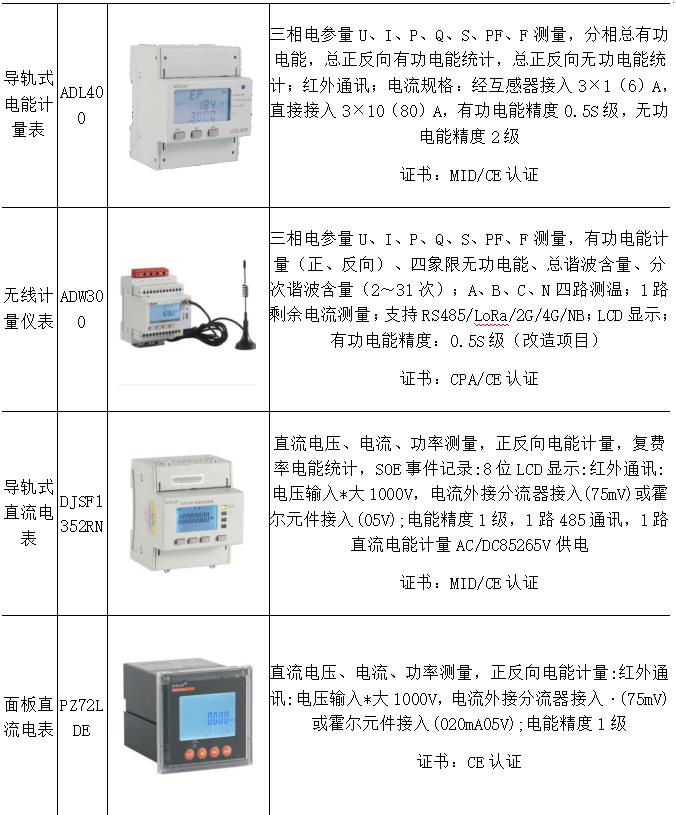
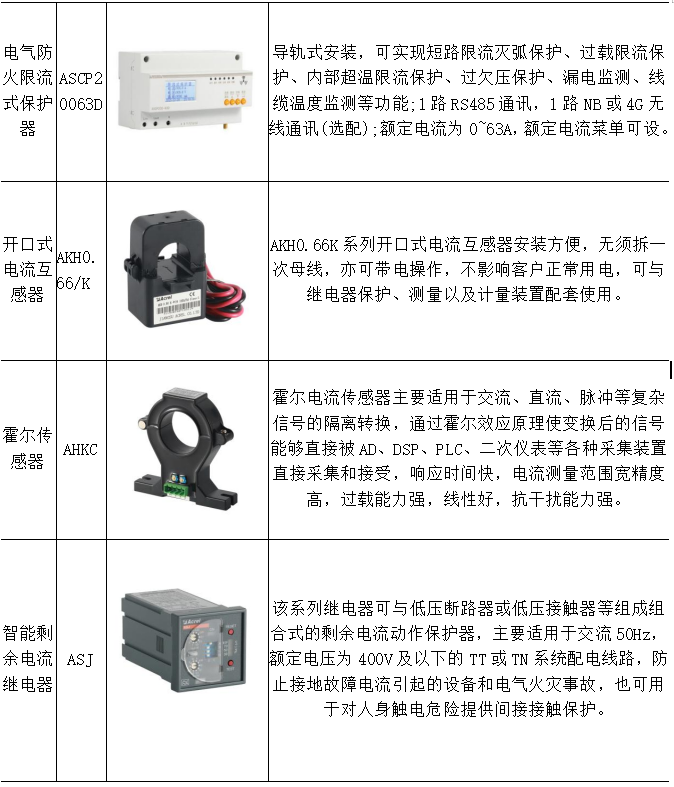
5 Conclusions
The current situation of new energy vehicle charging stations in China's high-speed service areas shows a positive development trend, but there are still some differences and unresolved issues between different regions and service areas. The continuous improvement and innovation in this field will help enhance the charging experience of new energy vehicle users and promote sustainable transportation development.