-
E-mail
1769283299@qq.com
-
Phone
15666889252
-
Address
Room 110, 1st Floor, Workshop 3, Oulong Technology Park, No.1 Jinma Road, Yuqing Community, Xincheng Street, Weifang High tech Zone, Shandong Province
Shandong Boke Instrument Co., Ltd
Ice thickness sensor: ultra fast response, instantly capturing the dynamics of ice thickness
Date: 2025-12-25Read: 59
Ice thickness sensor: ultra fast response, instantly capturing the dynamic ice thickness BK-JB1. Shandong Boko Instrument Manufacturer is continuously updating. In cold environments, ice phenomenon is widely present and has a significant impact. From aircraft wing icing in the aviation industry, to transmission line icing in the power industry, to road icing in the transportation industry, all pose challenges to safety and operational efficiency. The ice thickness sensor, as a key device for addressing ice formation issues, relies on its ultra fast response capability to instantly capture the dynamics of ice thickness, providing reliable support for various industries.
This sensor has ultra fast response characteristics and can react in a very short time when ice is formed. When the ambient temperature drops, water vapor begins to condense into ice, and the sensor immediately starts monitoring, almost synchronously sensing small changes in the thickness of the ice layer. Whether it is slow uniform icing or sudden uneven icing, it can quickly capture and ensure real-time data updates, providing accurate basis for subsequent decision-making.
Its ability to accurately capture the dynamics of ice thickness is astonishing. The combination of high-precision sensing elements and X-ray algorithms can not only measure the thickness of ice layers, but also analyze key information such as ice formation speed and trends. Through continuous monitoring, detailed icing data curves can be generated, presenting a clear overview of the icing process and helping users gain a deeper understanding of icing patterns and develop response strategies in advance.
In practical applications, this sensor has significant advantages. In the aviation field, sensors installed on the wings can provide real-time feedback on icing conditions, allowing pilots to take timely de icing measures to ensure flight safety; In the power industry, sensors installed on transmission lines can provide early warning of icing risks, and operation and maintenance personnel can quickly carry out de icing operations to avoid accidents such as line breakage; In the field of transportation, sensors along the road can timely monitor the condition of road icing, provide decision-making support for traffic management departments, and ensure smooth road traffic.
The ice thickness sensor has become an important tool for ensuring safe and efficient operation in cold environments due to its ultra fast response and precise ability to capture the dynamics of ice thickness.
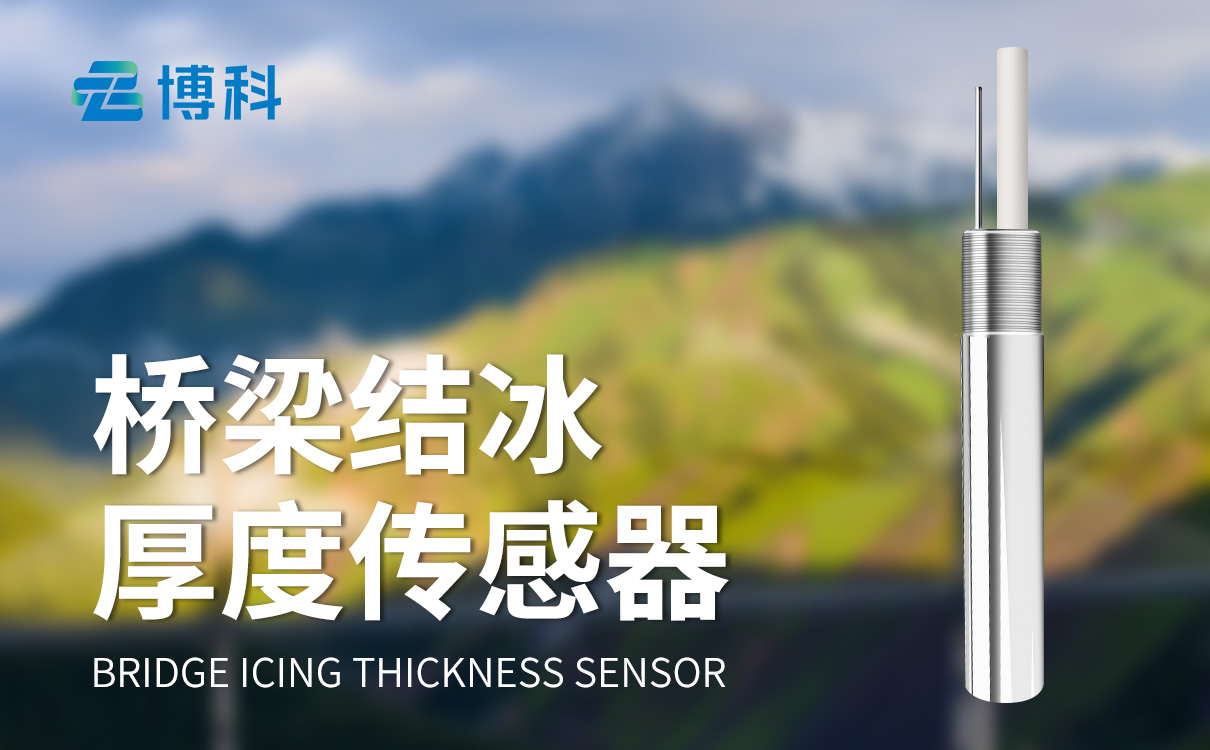
1、 Product Introduction
The sensor adopts microwave disturbance technology to monitor the icing information in the sensitive area of the sensor based on the difference in feedback signals of different substances such as ice, water, and air caused by microwave disturbance signals. The icing thickness is calculated according to the strength of the signal and the distribution information of icing in the sensitive area of the sensor. The icing alarm value can be set according to different icing thickness information to facilitate the start-up of the de icing system.
2、 Product Features
Adopting microwave perturbation technology
Suitable for cables of various specifications
Simulate cable icing monitoring
Small structure, light weight, easy to install
High precision ice detection, analysis and calculation of unit length percentage
Real time monitoring of icing conditions and timely activation of de icing systems
Protecting the safe operation of cables, improving transmission efficiency, and reducing cable freezing accidents