-
E-mail
1968423454@qq.com
-
Phone
15006777917
-
Address
No. 114, Row 10, Sunlou Industrial Park, Jinghe Office, Tengzhou City, Shandong Province
Shandong Feitian Optoelectronics Technology Co., Ltd
Feitian Optoelectronics: Train approach alarm and railway approach large machinery intrusion limit alarm system
Date: 2025-12-15Read: 30
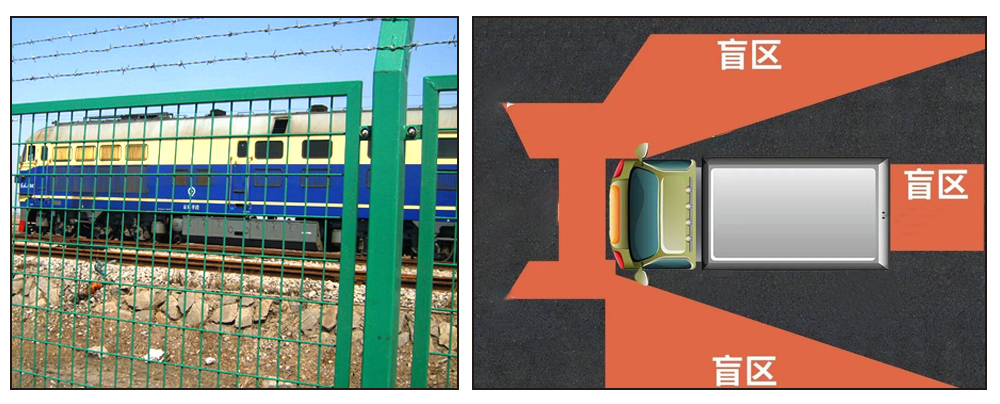
Railway safety has never been a single dimensional challenge. During construction on busy railway lines, railway departments face a dual risk: on the one hand, large machinery may invade the railway near the operating lines. Once the large robotic arm invades the railway boundary during operation, it may even directly touch the overhead contact system, which can easily cause serious safety accidents; On the other hand, trains in motion may suddenly approach, posing a fatal threat to the construction workers on the road or those in the surrounding construction area.

Traditional protective measures such as manual monitoring, physical fences, and warning signs are inadequate in dynamic and complex construction environments. There are blind spots in human monitoring, and the response speed is limited; Physical isolation is difficult to cover all work areas; The effectiveness of warning signs is greatly reduced at night or in adverse weather conditions.
What is even more worrying is that large machinery operators have certain blind spots in their field of vision when focusing on their work, making it difficult to accurately determine the safe distance between mechanical components and railway lines at all times. When the train approaches, the noisy environment at the construction site often conceals the sound of the train whistle. By the time the construction personnel discover the danger, it is often too late to evacuate
The combination of dual risks makes railway construction a high-risk operation. Railway safety protection must shift from "passive response" to "active prevention" and upgrade from "single point protection" to "system protection".
solution
Faced with the dual challenges of railway construction safety, Feitian Optoelectronics provides a new solution. The integration and deployment of the train approach alarm system and the large mechanical intrusion limit alarm system has formed a three-dimensional intelligent safety protection network.
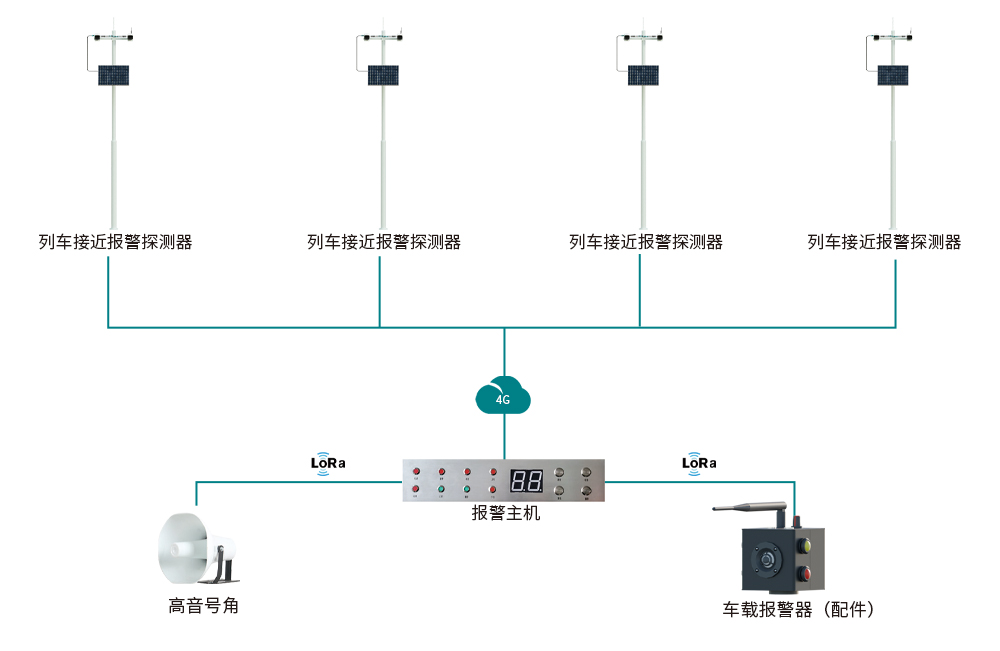
The train approach alarm system is like a "thousand mile eye", sensing incoming trains through up and down directions. Dual radar detectors are deployed 2-8 kilometers in front of the construction area to monitor the movements of up and down trains 24 hours a day. Once the arrival of the train is detected, the system immediately sends a signal to the alarm host at the construction site through the 4G network, triggering a high pitched alarm on site, and warning personnel and large machinery in the construction area that the train is approaching, immediately stopping construction and leaving the train's operating range.
This system has changed the dilemma of traditional alarm devices needing to be installed online. No need to coordinate skylight points, no need to enter the track area, installation can be completed on the roadside, greatly reducing deployment difficulty and safety risks.
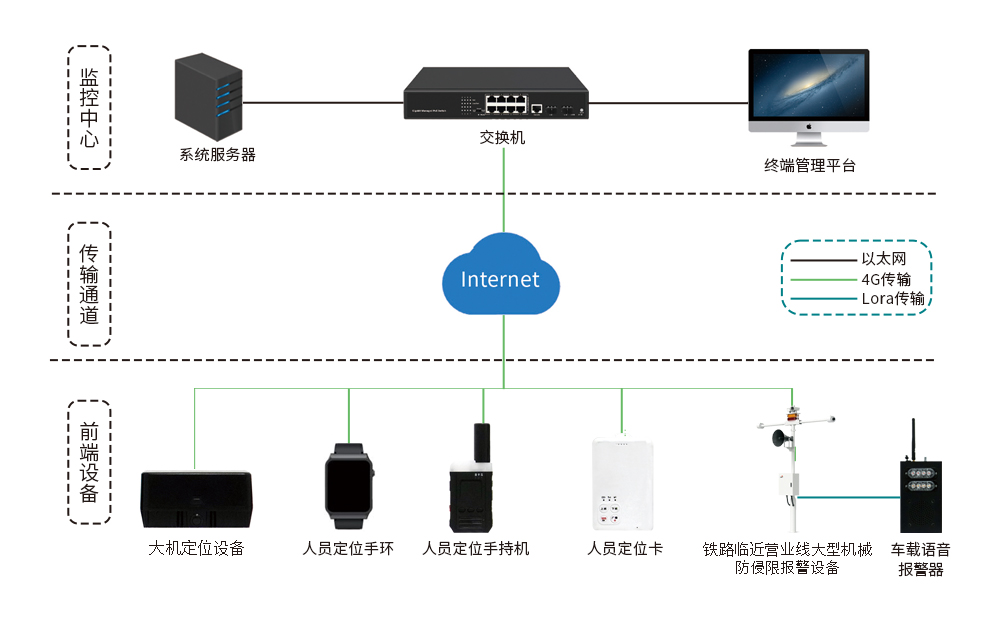
The large-scale mechanical intrusion prevention system plays the role of a "goalkeeper", using laser radar and video monitoring technology to build an invisible safety barrier between construction machinery and railway lines. The equipment is installed at the end of the construction area, which does not affect normal operations and can be effective
core strengths
The second-generation train approach alarm system adopts a solar powered architecture, equipped with high-performance photovoltaic panels and charging controllers, which can maintain stable operation even in continuous rainy weather. The front-end and back-end devices are transmitted through 4G network, supporting anti-interference algorithms to ensure zero false alarms (achieved through dual composite technology and algorithms for precise detection), and the installation location is not limited by geographical environment.
And the system adopts industrial grade protection design, which can operate stably for 7 × 24 hours in an environment of -20 ℃ to 70 ℃. The key components meet the level protection standards, truly realizing the operation and maintenance concept of "no wiring, high reliability".

The large-scale machinery intrusion prevention alarm system adopts an integrated design, which highly integrates modules such as laser radar, wireless control sound and light alarm, video monitoring, etc., and achieves unified management through the built-in intelligent data processing terminal. Two dimensional scanning detection can be performed within a 180 ° or 360 ° area environment, and the defense zone within the scanning area can be drawn arbitrarily, supporting analysis of multiple intrusion targets. The system is equipped with a dual layer protection mechanism of "warning zone+alarm zone". When the machinery enters the warning zone, a prompt is issued, and entering the alarm zone immediately triggers a strong alarm.
Based on the characteristics of large-scale mechanical operations, the alarm voice prompt content can be independently changed. When the equipment touches the safety line, the onboard voice and warning lights will synchronously sound an alarm to ensure that the operator obtains warning information. And send the status of the defense zone to the backend software, in conjunction with high-definition camera video evidence, to achieve anti intrusion activities for construction operations along the railway line, and to monitor the intrusion of large machinery near the railway line.

The collaborative application of the two systems has created a new mode of full chain protection of 'detection warning avoidance'. The synergistic effect of '1+1>2' is precisely the most urgent pain point for customers, which is the utilization efficiency during the construction window period while ensuring safety.
The dual system fusion scheme has been validated through multiple practical tests. When technology meets safety, we not only see a significant decrease in accident rates, but also witness a qualitative leap in railway construction from 'passive defense' to 'active prediction'. This is the answer to railway safety protection in the new era.