-
E-mail
2442648961@qq.com
-
Phone
13023169219
-
Address
No. 3666 Changcheng Road, Mudan District, Heze City, Shandong Province
Shandong Sairuite Testing Instrument Co., Ltd
Introduction to SRT-NM1117 sliding friction coefficient tester for artificial boards, providing testing solutions
Date: 2025-12-30Read: 13
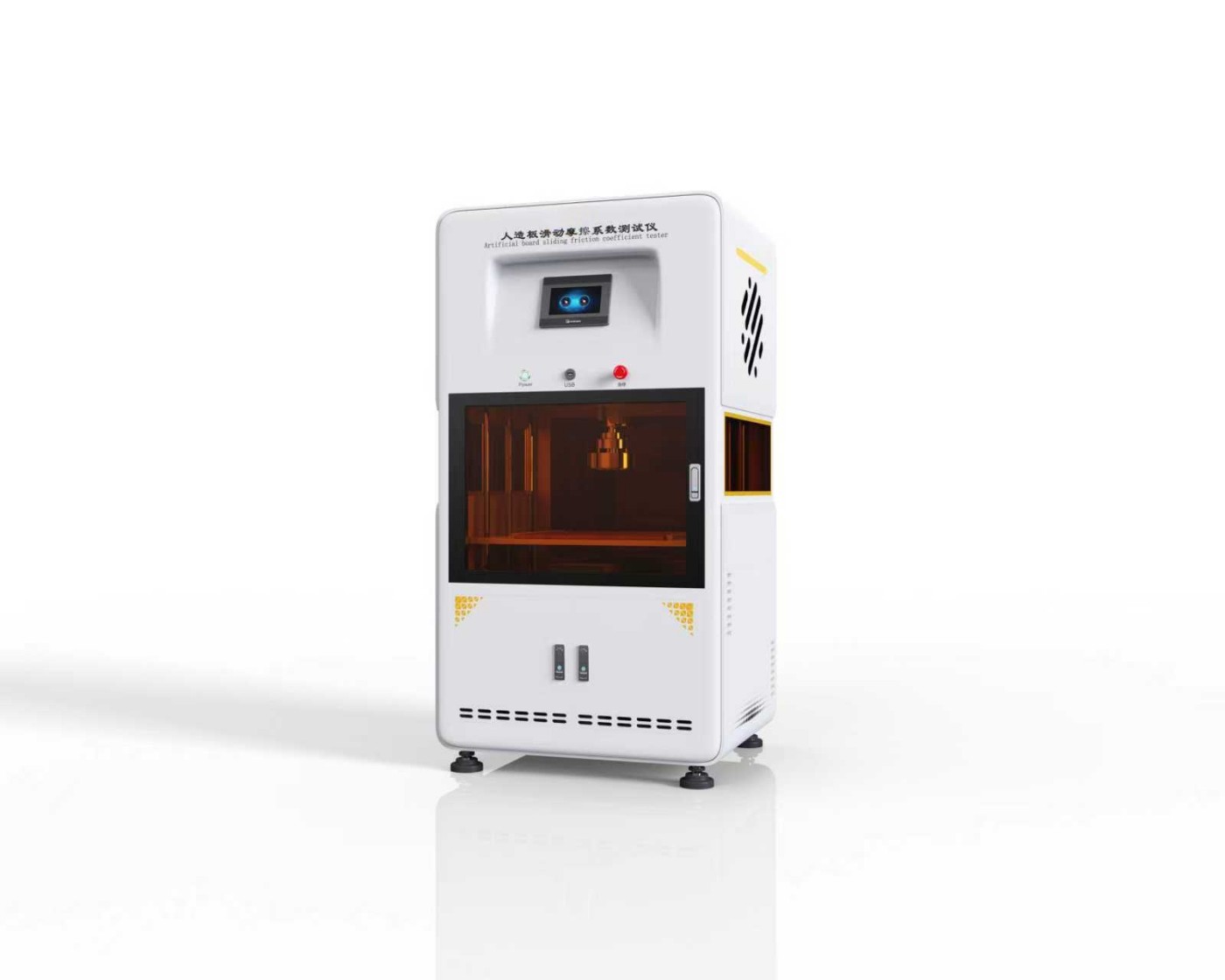
The sliding friction coefficient tester for artificial boards is a precision equipment designed to measure the surface sliding friction coefficient of artificial boards (such as particleboard, fiberboard, plywood, etc.) and their decorative materials. Its core function is to quantify the smoothness performance of material surfaces by simulating friction conditions in actual usage scenarios, providing scientific basis for product quality control, process optimization, and safety assessment. This equipment strictly follows the testing requirements of national standards and is a key testing tool for the artificial board industry, scientific research institutions, and quality inspection departments.
1、 Working principle
The tester is based on the principle of torque drive and data acquisition, and the specific process is as follows:
Torque application: A constant torque is applied to the rotating shaft through a force transmission device to drive the base of the test bench to rotate.
Friction measurement: The rotating disc comes into contact with the surface of the tested artificial board, generating frictional resistance. The torque sensor collects real-time torque data during the rotation process, reflecting the magnitude of frictional force.
Data calculation: The software system automatically calculates the sliding friction coefficient based on the torque value and loading positive pressure.
Result output: During the experiment, the torque and time curves are synchronously displayed, and a standardized report containing data tables and curves is generated, which supports printing or exporting.
2、 Characteristics
High precision and reliability
Configure imported high-precision servo motors to ensure the stability of torque application.
The torque sensor has high resolution and can capture small friction changes, with data repeatability better than 1%.
intelligent operation
Adopting PLC touch screen, supporting one click testing process, reducing human error.
The software can preset parameters such as test times, holding time, and rotation speed to meet diverse testing needs.
Multifunctionality and adaptability
Support dry friction and wet friction testing to simulate friction performance under different environmental conditions.
The height of the rotating disk can be adjusted to accommodate samples of different thicknesses; The friction foot material can be replaced, simulating actual contact objects such as shoe soles and furniture legs.

3、 Application Fields
Quality control of artificial board production
Detect the effect of surface treatment process on the friction coefficient of the board and optimize its anti slip or easy to clean performance.
Evaluate the contribution of different raw materials to friction characteristics and guide formula adjustments.
Safety assessment of furniture and flooring industry
Test the friction coefficient between flooring materials and furniture casters to prevent sliding risks and meet safety standards.
Verify the anti slip design of stair treads, children's furniture, etc. to reduce the probability of accidental injury.
Research and standard setting
Provide friction performance data support for new material research and development.
Participate in the revision of national standards and promote the standardized development of industry technology.
Quality inspection agencies and third-party testing
Conduct market inspections to ensure that products comply with environmental and safety regulations.
Provide arbitration testing services to resolve friction performance disputes in trade disputes.