-
E-mail
yinyangyang@yunjingtianhe.com
-
Phone
13276363313
-
Address
Weifang Optoelectronic Industry Accelerator, Shandong Province
Shandong Tianhe Environmental Technology Co., Ltd
The technical exchange meeting on water quality monitoring system for standing pole rivers was held in Weifang
Date: 2025-11-17Read: 51
Recently, a technical exchange meeting for the vertical river water quality monitoring system developed by Shandong Tianhe Environmental Technology Co., Ltd. was held in Weifang. Many industry professionals and customer friends arrived at the scene. After understanding, everyone highly affirmed and fully recognized the product. The river water quality monitoring system is a comprehensive system that utilizes advanced sensor technology, the Internet of Things, and intelligent algorithms to monitor, analyze, and warn of river water quality in real time. The multi parameter real-time monitoring system can monitor various key parameters in river water in real time, including but not limited to water temperature, conductivity, pH value, dissolved oxygen, ammonia nitrogen, total phosphorus, COD (chemical oxygen demand), BOD (biochemical oxygen demand), turbidity, heavy metal content, etc. It is an important indicator for evaluating water quality, which can comprehensively reflect the physical, chemical, and biological characteristics of water bodies. The system provides real-time alerts for exceeding data based on preset thresholds or dynamic baselines. There are various alarm methods, including SMS, APP push notifications, platform pop ups, sound and light alarms, etc., to ensure that management personnel can receive notifications in a timely manner and take measures. By combining the topology structure of the pipeline network with the direction of water flow, the system can reverse calculate the source of pollution and assist management personnel in quickly locating the source of pollution. Through machine learning algorithms, the system can also predict water quality trends, such as the risk of blue-green algae outbreaks, providing data support for algal bloom control. The system has a large capacity data storage function and can store historical monitoring data for a long time. Provide data query, export download, and analysis comparison functions, supporting management personnel to conduct long-term trend analysis, pollution problem localization, etc.
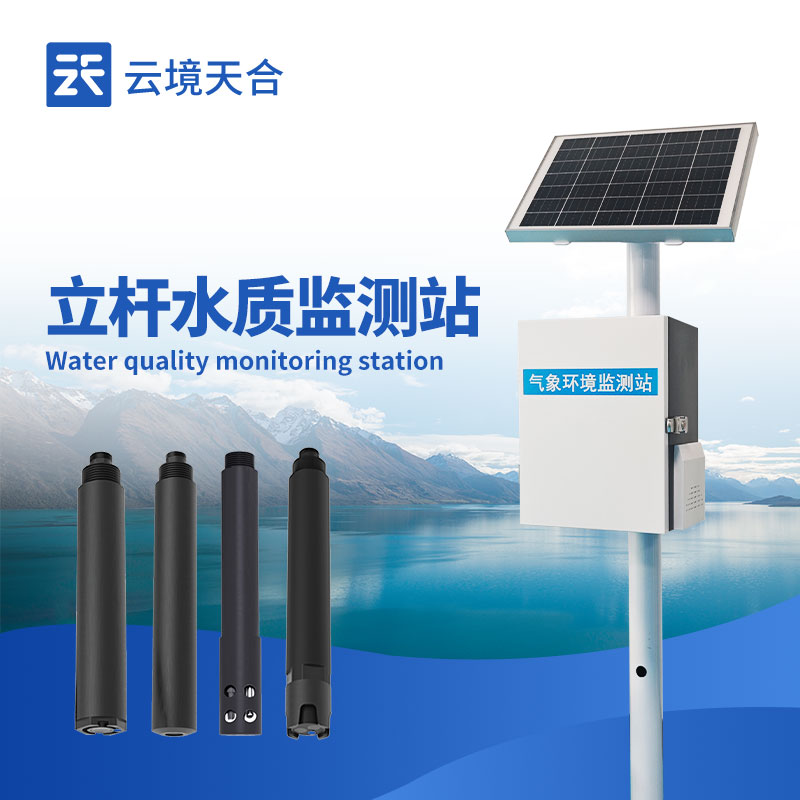
At the meeting, Manager Yu from Tianhe Environmental Technology Co., Ltd. introduced that the high-precision and anti-interference design sensor adopts Micro Electro Mechanical Systems (MEMS) technology, which is small in size, low in power consumption, and can work stably for a long time in harsh environments. The system is equipped with intelligent filtering technology to reduce the impact of interference factors such as water flow fluctuations on monitoring results. Flexible deployment and low maintenance cost. The system equipment has a compact structure, adapts to installation in small spaces, and supports multiple power supply methods (such as solar assisted power supply), reducing operation and maintenance costs. The sensor probe can be freely combined and replaced independently, supporting plug and play for easy maintenance and upgrading. The stable communication and long-term operation system supports wired/wireless communication methods such as 4G, LoRa, RS485, etc., ensuring stable data transmission. Low power design enables the system to achieve long-term operation even with battery power (such as lithium battery life ≥ 12 months).
Application scenarios
For long-term water quality monitoring, monitoring points are set up in important basins such as the Yangtze River and the Yellow River, as well as in urban lakes (such as West Lake and the Taihu Lake Lake), to monitor water quality changes and assess water eutrophication and organic pollution. Monitoring points are set up in areas such as the water intake of urban waterworks (such as Miyun Reservoir in Beijing and Qiandao Lake in Hangzhou) and groundwater sources for real-time monitoring of heavy metals, microbial indicators, etc., to ensure the safety of drinking water. Industrial wastewater regulation sets up monitoring points at the wastewater discharge outlets of chemical, metallurgical, pharmaceutical, food processing and other enterprises to monitor specific pollutants (such as heavy metals, oils, COD) and parameters such as flow rate and pH, ensuring that enterprise wastewater is discharged in compliance with standards. Monitoring points are set up at the site of ecological restoration projects such as river dredging and ecological slope protection to evaluate the effectiveness of the project and provide a basis for subsequent governance. In emergency situations such as chemical plant explosions, oil tanker leaks, and pesticide spills into rivers, portable water quality detectors are quickly deployed for on-site testing, emergency response plans are formulated, and pollution diffusion trends are dynamically tracked.
Summary of Advantages
Real time and precision systems can monitor water quality changes in real-time and provide high-precision data, providing reliable basis for decision-making. Intelligent and automated systems have functions such as intelligent warning, pollution tracing, and trend prediction, achieving a transition from "passive monitoring" to "active governance". The economic and adaptive system equipment has a compact structure, flexible deployment, and low maintenance costs; Strong anti-interference ability and adaptability to complex environments. The system linkage and collaborative governance system can be linked with drainage pump stations, gates, emergency management systems, etc., to enhance the efficiency and capability of addressing water quality issues. '
The exchange meeting was a complete success. We also welcome customers with such needs to come.