-
E-mail
fqr@gato.com.cn
-
Phone
13701710834
-
Address
11th Floor, Hengtong Building, Metro, No. 222 Hengtong Road, Shanghai
Shanghai Guangtuo Information Technology Co., Ltd
Guangtuo's new generation L7 super array electromagnetic sensing: Overcoming the perimeter security problem of false positives and false negatives in all scenarios
Date: 2025-07-15Read: 23
In the construction of security prevention system, perimeter alarm serves as the first line of defense, and its performance directly affects regional security. The national standard GB 55029-2022 "General Specification for Security and Prevention Engineering" requires the scientific configuration of physical protection, intrusion detection, video surveillance and other facilities to ensure that there are no blind spots in perimeter protection and reduce the possibility of false alarms and omissions from the source.
Guangtuo's new generation L7 super array electromagnetic perception system deeply integrates electromagnetic perception and dynamic AI algorithms. Through environmental learning, it establishes a background signal model, extracts real intrusion signal features, uses array style signals, and adjustable frequency to achieve a closed-loop system of "interference automatic filtering+intrusion accurate positioning". Can accurately detect intrusion behavior and block interference. This' thinking perimeter 'completely breaks the dead cycle of traditional technology's' manual parameter tuning repeated false alarms'.
Traditional intrusion detection devices are unable to fully recognize intrusion methods such as climbing, climbing, digging holes, and chiseling walls, resulting in missed reports. Guangtuo L7 innovatively adopts a three-dimensional electromagnetic field protection architecture, breaking through the limitations of traditional protection and accurately detecting the above behaviors, leaving intruders nowhere to enter and no opportunity to take advantage of, avoiding missed reports from the source, and achieving seamless three-dimensional protection.
L7 Super Array Electromagnetic Perception System 3D Stereoscopic Protection

L7 is not afraid of heavy interference in multiple scenarios, achieving extremely low leakage and false alarms
1. Adverse weather disturbances
Wind, rain, and sunlight interfere with the signal transmission of equipment (such as infrared and laser being blocked/scattered), change the working environment of equipment, and create clutter interference, which affects the monitoring accuracy of various perimeter prevention devices and becomes an important cause of false alarms.
Traditional intrusion detection devices are prone to false alarms due to environmental interference in harsh weather conditions such as wind and rain. L7 innovatively adopts intelligent environment adaptive technology to achieve precise detection and suppress false alarms:
-The dynamic threshold intelligent adjustment system analyzes environmental parameters (wind, rain, snow, hail, etc.) in real time and automatically optimizes alarm thresholds;
-Continuous self-learning algorithms continuously optimize detection parameters to ensure that the system adjusts autonomously with changes in the environment.

Case proof (rainstorm): In the field application of a regulatory site for half a year, L7 only had one false alarm, and the false alarm rate was as low as 0.4%. During this period, it experienced a summer heavy rainstorm, which fully proved the long-term operation reliability of the system.

Case study (snow and low temperature): In an extremely cold environment of -30 ℃ for 6 consecutive days, under snow conditions of 5cm to 70cm, all personnel intrusion tests triggered alarms, with a 0% missed rate; 34 alarms with zero false positives, verified system reliability through video recording.
2. Animal intrusion and interference
Small animals (such as birds, rodents, cats, dogs, etc.) change their perimeter defense status through physical obstruction (infrared, laser irradiation) and external impact. The core is to interfere with signal transmission, causing equipment misjudgment and frequent false alarms in the system.
Guangtuo's new generation L7 adopts multi feature detection technology to intelligently identify target features by analyzing near-field electromagnetic scattering characteristics. Establish a feature map of the human body and animals, intelligently distinguish between human and small animal activities, effectively avoid false alarms, and improve alarm accuracy.
Test results show that when humans and animals pass by, animals entering without reporting to the police, and people walking, jumping, and running are all recognized.


3. Vehicle vibration interference
The passage of large vehicles can cause signal interference, which may lead to false alarms of vibration fibers. L7 integrates electromagnetic perception and dynamic AI algorithms, and during deployment, collects low-frequency vibration waves of vehicles through environmental learning to construct a high-precision electromagnetic environment model. The dynamic AI algorithm continuously learns, analyzes signal differences in real time, and quickly filters vehicle vibration interference signals based on preset rules and historical data, effectively avoiding false alarms caused by large vehicles passing by.
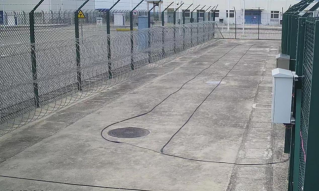
4. Complex terrain interference
The height difference and obstruction of mountainous terrain can hinder signal propagation (such as radar wave reflection), while dust in sandy environments can interfere with optical/electromagnetic monitoring, both of which can reduce accuracy and increase the risk of false positives and false negatives.
L7 adopts an all terrain adaptive design, supporting burial in various media such as soil, asphalt, and bricks, and is not affected by extreme temperatures (-30 ℃~70 ℃) and complex terrain.

The case proves that (many regions in China): L7 is tested in many typical geographical regions in China. The climate is different, the terrain is different, and the weather is changeable, including South China (Fujian), North China Plain (Shandong), Northwest China (Inner Mongolia), Northwest Arid Region (Xinjiang), and Eastern Monsoon Region (Anhui). The overall miss reporting rate is 0%, and the average system false reporting rate is 0.85%;

5. Vegetation cover interference
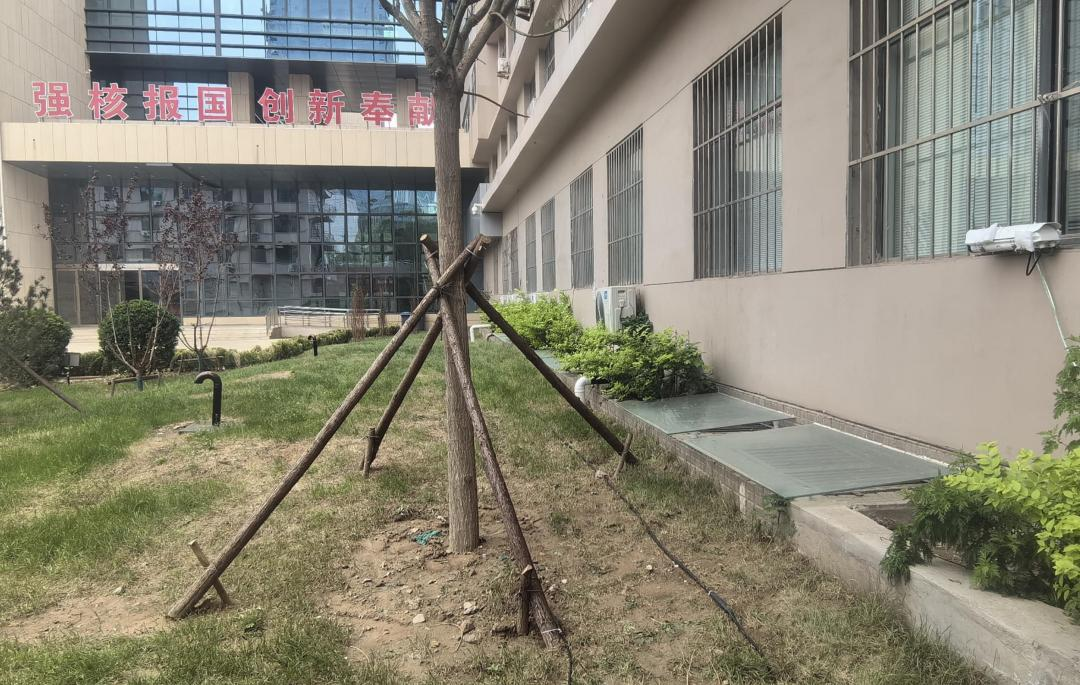
When dense grass, shrubs, or vines come into contact with the detector, it will be misjudged as invasive behavior. At the same time, vegetation growth will block the detection signal path (infrared radiation, laser radiation), resulting in false alarms or missed alarms by the system.
L7 has intelligent environmental learning capability, which can automatically collect background signals and dynamically generate alarm thresholds, adapting to environmental changes such as vegetation growth and soil moisture in real time.
Case Study (Grass Growth): In a certain unit, when the equipment was just installed and debugged, the green plants were flattened, and the test was completed and an alarm threshold was automatically generated. One year later, the green plants had grown nearly 1 meter high, and with the help of automatic alarm threshold updates, accurate alarms could still be generated during testing without false alarms or omissions.
Hardcore technology truly safeguards
0 false positives below 1%, suitable for various geological and environmental conditions
From typhoon rainstorm to extreme cold environment in snow area, Guangtuo L7 electromagnetic sensing cable practices the value of technological innovation, and solves the real pain point of missing and false alarm in the actual scene.
Guangtuo has adopted a large number of tests to verify the application effect of the technology. The testing environment includes common factors such as manhole covers, fire water tanks, trees, rivers, etc. The comprehensive statistical omission rate is 0, the false alarm rate is as low as less than 1%, and the alarm accuracy rate is over 99%.
The all-new L7 electromagnetic sensing cable from Guangtuo once again embodies true hard technology, maintaining stability in the harshest environments and never losing its voice in the most critical moments. This is not a simple product iteration, but a user demand-oriented security revolution that returns technological innovation to its essence, speaking with reliable performance.
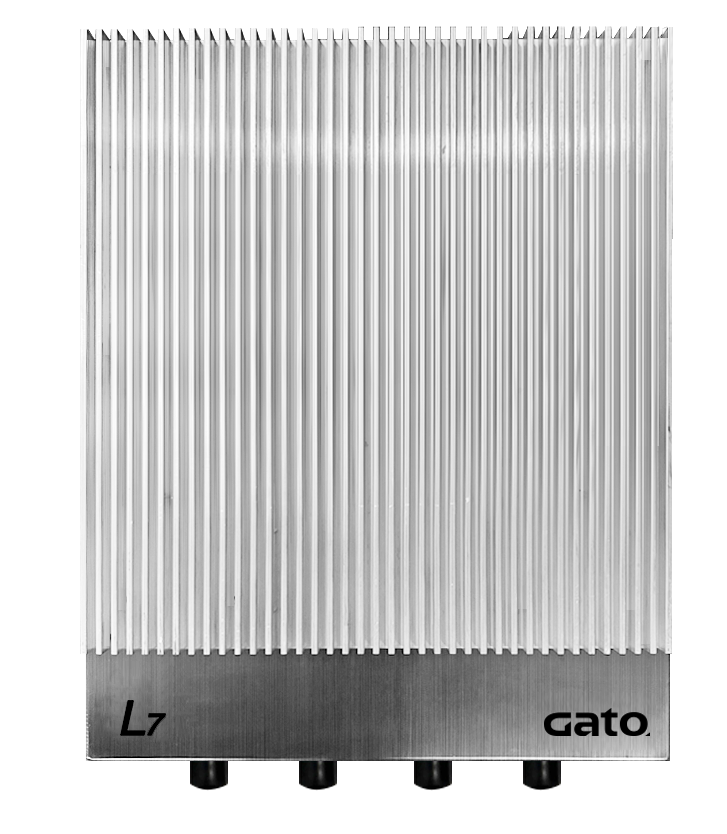
L7 Super Array Electromagnetic Sensing