【
Smart CityOnline Exhibition Report】The 2026 World Digital Education Conference, hosted by the Ministry of Education of the People's Republic of China and the People's Government of Zhejiang Province, was held in Hangzhou from May 11th to 13th. The theme of this conference is "Artificial Intelligence+Education: Transforming Development Governance", discussing how artificial intelligence can promote systematic changes in education, promote high-quality development of education, and build a new global education governance pattern that is inclusive, safe, and sustainable.
Parallel Meeting Four: Preparing Teachers for Future Schools "was held on the morning of the 12th. Wang Guangyan, Vice Minister of Education of China, Wu Jing, Deputy Director of the Standing Committee of the Zhejiang Provincial People's Congress, and Ismail Shafiu, Minister of Education of Maldives, attended the meeting and delivered speeches. The conference is based on the trend of future school form transformation. Through theoretical discussions and experience sharing, it deeply explores the requirements for teacher literacy in the intelligent era, gathers typical practices in digital empowerment of teacher team construction, jointly builds a path for future teacher training and international cooperation in teacher education, actively promotes global improvement of teacher policies, optimizes teacher training models, promotes teacher role transformation, and systematically enhances the effectiveness of talent training.
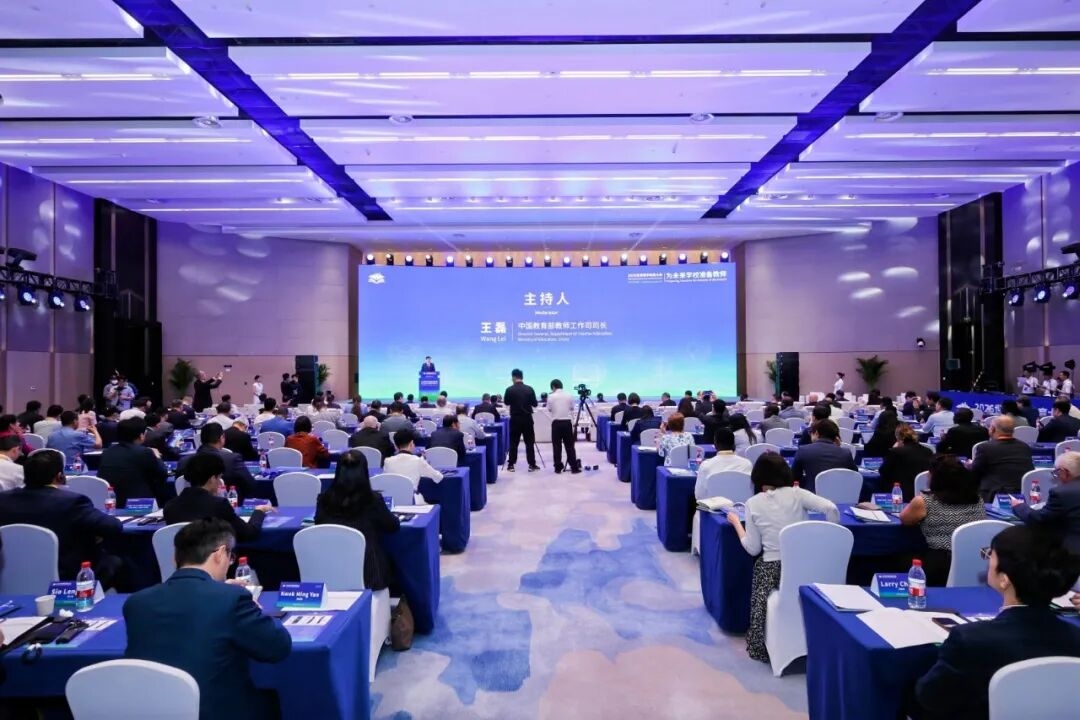
At the meeting, nine experts including Yu Jihong, President of Beijing Normal University, Anne Rooney, President of the Irish Education Conference, and Xie Weiwei, Senior Professor of Humanities at Tsinghua University, delivered keynote speeches successively.
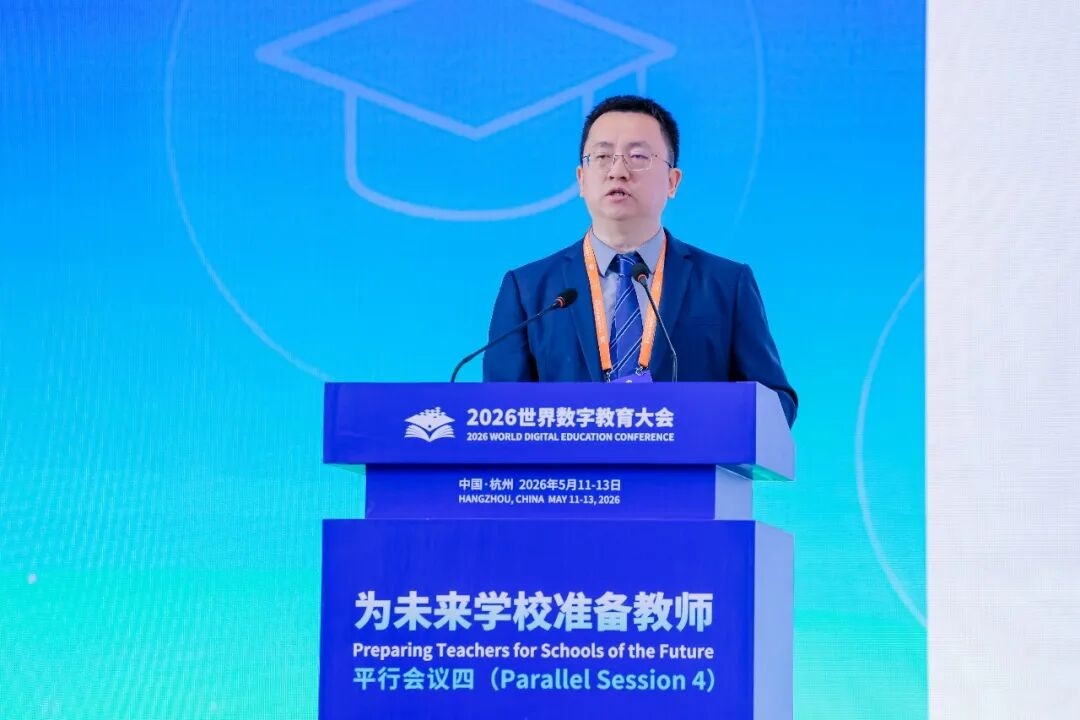
Wang Shijin, Vice President of iFlytek and Executive Director of the AI Research Institute, mentioned in the keynote speech that the singularity of AI driven education transformation has arrived, and the combination of education big models and super intelligent agents will continue to empower teaching innovation and teacher growth.
The following are the main contents of the report.
Large-Scale Artificial Intelligence ModelEmpowering teachers to integrate innovation and professional growth
Respected leaders and experts,
It is a great honor to attend today's parallel meeting and share with you our latest technological advancements in artificial intelligence and big models, as well as our practices and reflections on empowering teachers' innovation and professional growth.
Just now, all the experts mentioned that artificial intelligence technology has developed rapidly in recent years. For example, at last year's World Expo, we saw the "AI Sun Wukong" that supports Chinese Japanese English trilingual interaction, which can help visitors and students better answer and communicate science popularization questions.
At this year's World Digital Education Conference, we also presented numerous cases to introduce innovative applications of new big model technologies in empowering teaching and student self-directed learning. At present, artificial intelligence technology has restructured educational scenarios such as teaching, learning, management, and governance, triggering changes.
IFlytek's smart education products are widely used in 33 provincial-level administrative regions across the country, deeply applied in more than 60000 schools, serving over 160 million teachers and students, and generating many application cases. Taking Hangzhou Xiaoshan Middle School as an example, the school innovates its teaching mode with smart classrooms as the core. This diversified classroom interaction mode greatly improves the efficiency of students' language interaction in the classroom. In terms of regional practice, taking Hefei City in Anhui Province as an example, Hefei promotes the coverage of intelligent terminal applications in the city, innovates teaching modes based on terminals, and significantly improves the effectiveness of teaching and learning through exploratory courses.
In the past six months, technological developments represented by large models and super intelligent systems have brought about significant changes in various industries, especially in the field of education. I would like to introduce them using two keywords.
The first one is "new intelligence". New technologies have transformed what was originally just a tool for serving education and teaching into a partner for human-machine collaboration. As many leaders mentioned earlier, the "teacher-student machine triad" can now better support this tripartite integration in the classroom.
The second one is "new connectivity", where the further understanding of teaching and learning process data through new technologies will enable the technology to study more scenarios and demonstrate more AI capabilities in these scenarios.
Taking teaching scenarios as an example, the original one-way teaching between teachers and students has evolved from one-way teaching to three-way interaction with the rapid development of technologies such as artificial intelligence, big models, and digital humans. AI has become a super teaching assistant for teachers.
Taking Dongcheng District Academy of Educational Sciences in Beijing as an example, the application of technology not only improves the efficiency of lesson preparation and teaching, but also strongly supports evidence-based teaching and research after class. Based on such a multimodal large model, classroom analysis and evaluation have entered a new dimension, including interactive dialogue and advanced thinking.
In homework and exam scenarios, the industry's first three-level error factor system enables big models to understand the answering process, accurately locate error factors, help understand children's thinking processes, and provide data and ability support for teaching innovation. In Binjiang District, Hangzhou, a new model of regional "human-machine symbiosis" is created through intelligent homework grading, and a closed-loop application of "grading analysis teaching" is constructed, which has achieved significant results in reducing workload and improving quality.
In the field of science education, previous experts have also mentioned that knowledge updates very quickly, testing teachers' learning efficiency. We enable AI to learn a vast amount of excellent knowledge, while also learning the teaching design logic and teaching experience of excellent science teachers, extracting the teaching thinking chain. In addition, complex teaching activities and learning processes are presented through task decomposition, planning, and execution by multiple intelligent agents. Through further analysis of the model, experimental and exploratory activities are better supported by their abilities.
The "Science Leading Hangzhou" project jointly established by us and the Hangzhou Education Bureau also provides strong support for teaching and learning in scientific teaching scenarios through the "dual intelligence linkage" of intelligent mentors and intelligent learning partners through such a set of technologies and tools.
In this process, the professional construction and cultivation of the AI teacher team is also very important, so we suggest that through further integration of this knowledge system, evaluation system, and content system, teachers can obtain more growth support.
In terms of physical education, the dynamic big model can capture various states of sports, provide diagnostic suggestions, and even provide personalized health guidance plans, focusing on the five aspects of education. Currently, many schools across the country are using such a system. In the field of mental health education, it used to be measured through scales. With the further development of multimodal models, AI interaction and language analysis can accurately analyze psychological states, making campus psychological services from "limited supply" to "accessible to all".
Frontline teachers actually face a lot of task challenges in their work and life, so we are wondering if there can be an application that can help teachers solve a large amount of work besides teaching. The development of intelligent agent technology has made this possible.
The two typical characteristics of intelligent agents are personal space and long-term memory, which can remember various information of school students and teachers together, no longer just a simple question and answer. The second is that it can achieve cross ecological connectivity, connecting communication information on WeChat, DingTalk, and other platforms with daily teaching data.
Through the knowledge system, tasks, and planning mentioned earlier, it is possible to better promote the analysis of data throughout the entire process, thus enabling teachers to have better AI capability support in lesson preparation, teaching, homework grading, home school co education, and other aspects.
Dear leaders and experts, we believe that artificial intelligence and big model driven education have reached a singularity of change in terms of technology itself and educational needs. The combination of educational big models and super intelligent agents will continue to empower teaching innovation and teacher growth. AI will possess knowledge from all over the world. But it will never replace the teacher. We believe that human-machine integration can promote further development of education.
The above is my report, thank you everyone!