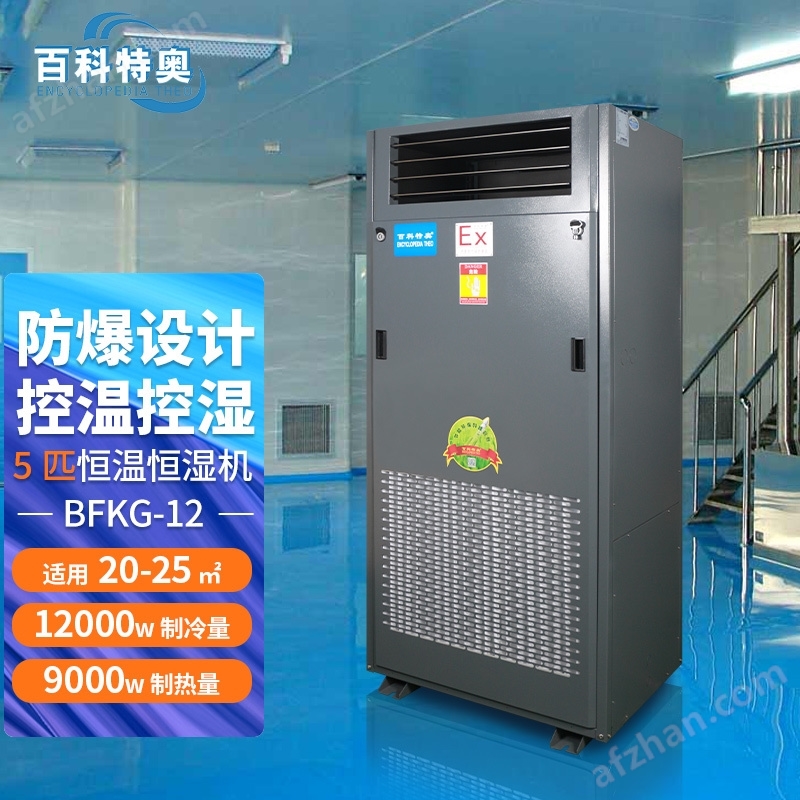
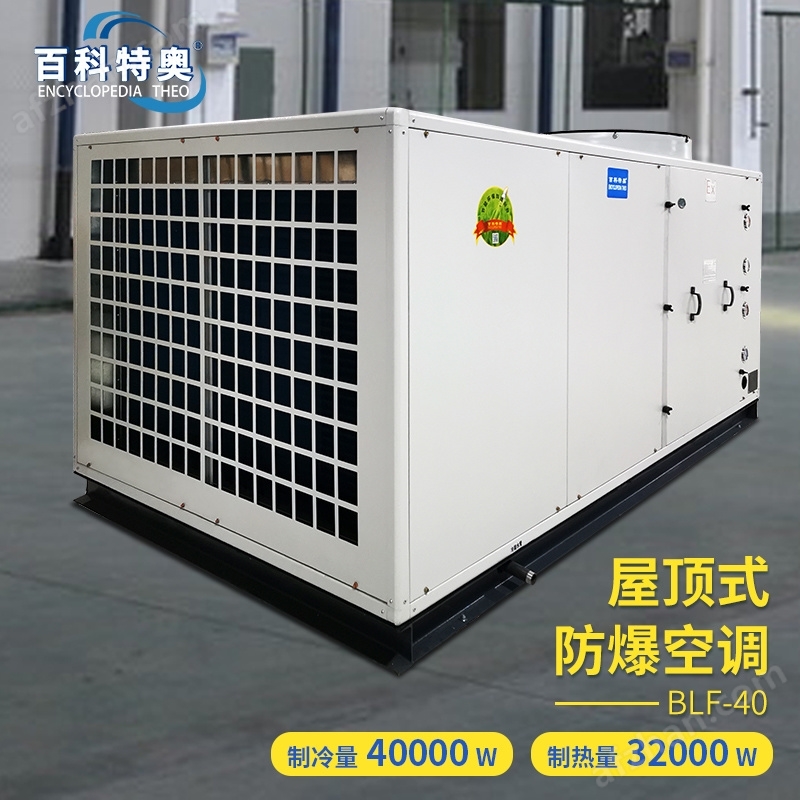
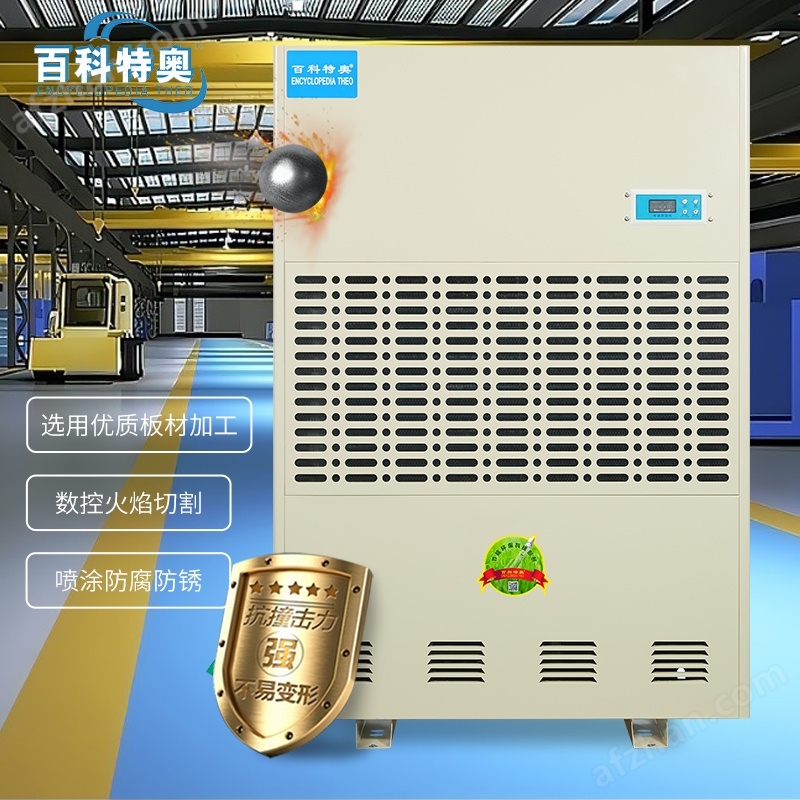
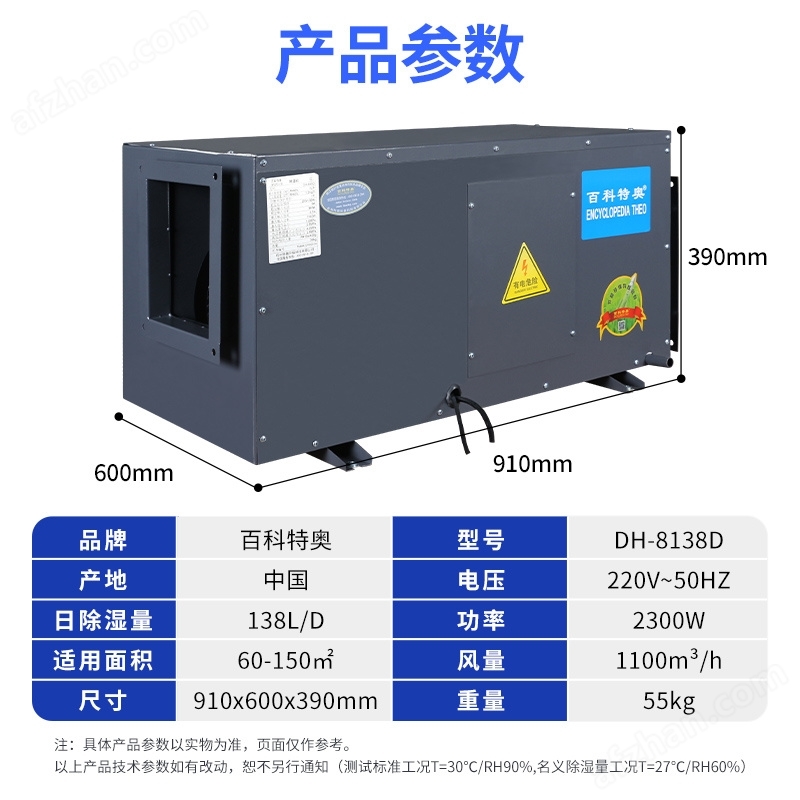
The explosion-proof constant temperature and humidity machine in the tobacco essence and spice storage warehouse is beautiful in appearance, novel in design and easy to install and maintain. The constant temperature and humidity machine adopts brand compressor, microcomputer control, low noise, humidity display, intuitive, simple to operate and many other advantages. Our company can also design and produce according to different customer requirements.
In the scenario of cigarette essence and flavor storage, the explosion-proof constant temperature and humidity machine is the key equipment to ensure the safety of the storage environment and the stability of the quality. It needs to adapt the scenario requirements from multiple dimensions, and the following in-depth analysis is carried out:
Due to the presence of flammable solvents such as ethanol and propylene glycol, there are two major risks in the storage environment of tobacco essence: one is the explosive mixture of volatile matter and air, and the other is the stratification, discoloration and deterioration of essence caused by temperature and humidity fluctuations. Explosion proof constant temperature and humidity machine needs to simultaneously solve "safety explosion-proof" and "precise temperature and humidity control", and build a stable storage environment.
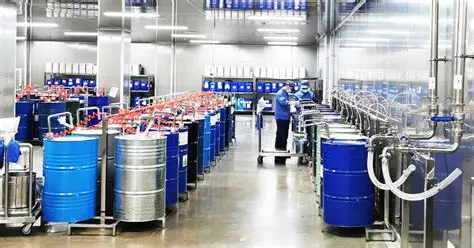
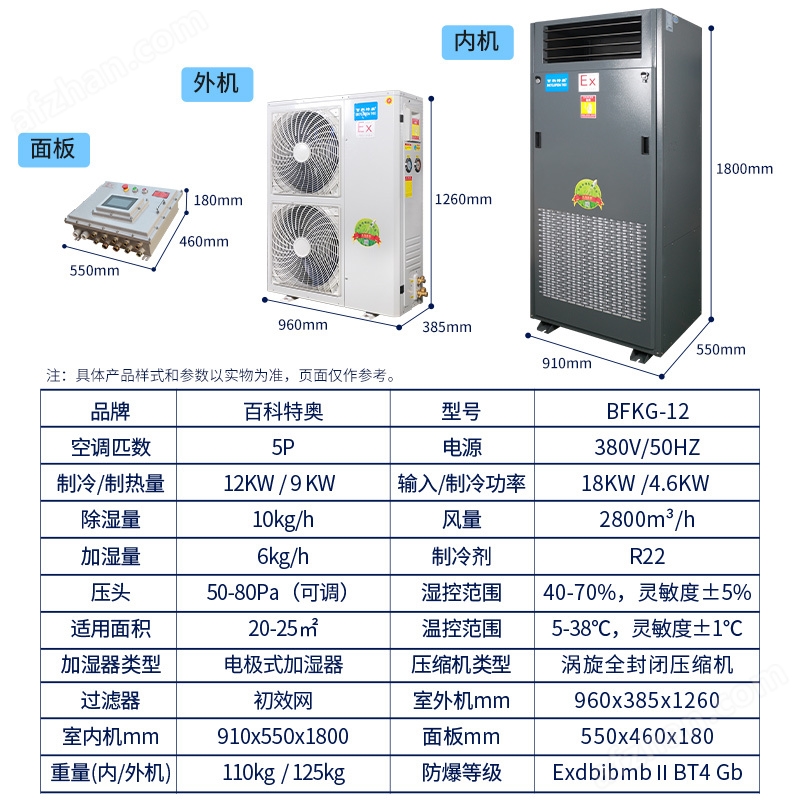
Explosion proof constant temperature and humidity machine for tobacco essence and spice storageadoptExplosion proof+intrinsic safety composite explosion-proof designThe key power components such as compressors and fans are explosion-proof, with thickened outer shells and special sealing treatment. The internal electric sparks and high temperatures are confined within the explosion-proof chamber; The electronic control system, sensors, etc. are inherently safe, and the circuit energy is strictly limited, making it impossible to ignite flammable gases. Need to go throughEx ibmb IIB T3 GbExplosion proof certification (suitable for the explosion hazard level and temperature group of essence volatiles) to ensure safe operation in Class IIB combustible gas environment (common essence volatiles belong to this category), T3 temperature group (equipment surface temperature is not more than 200 ℃).
The classification of explosion-proof levels is a comprehensive considerationExplosive environment category, explosive gas or dust classification, temperature groupA complex system with multiple factors:
Explosive environment category:
Class I: For explosive environments underground in coal mines, equipment needs to adapt to explosive gases such as coal mine gas. BCF-7480C is mainly used in Class II environments other than coal mines, such as petrochemical sites, so it corresponds to Class II.
Class II: Suitable for explosive gas environments other than underground coal mines, further divided into IIA, IIB, and IIC levels. The higher the level, the lower the difficulty and higher the danger of igniting explosive gases. IIA is commonly found in environments such as propane, IIB corresponds to ethylene, and IIC corresponds to hydrogen and acetylene. BCF-7480C can cover Class IIA and Class IIB, and some can be customized to Class II CT4 (as mentioned in the data, it can also be used for Class II CT4 explosion-proof level), which means it can be used in Class II C hazardous environments (if customized) and below, with strong compatibility.
Class III: For explosive dust environments, it is subdivided into Class IIIA (combustible fly ash), Class IIIB (non-conductive dust), and Class IIIC (conductive dust). BCF-7480C is mainly used for gas explosion prevention, and the dust environment depends on whether the specific equipment is suitable for modification.
Temperature group (T)According to the surface temperature during equipment operation, it is divided into T1 (≤ 450 ℃), T2 (≤ 300 ℃), T3 (≤ 200 ℃), T4 (≤ 135 ℃), T5 (≤ 100 ℃), T6 (≤ 85 ℃). The higher the temperature group (the larger the number), the lower the allowable surface temperature. In scenarios where equipment is prone to explosions at high temperatures (such as workshops near high-temperature equipment), choosing a high temperature group (such as T4, T6) is safer. BFKG-12 involves groups T1-T4, indicating that its surface temperature is controlled within the requirements of the corresponding group and can be used in explosive environments corresponding to these temperature groups.
compressorChoose a vortex type explosion-proof compressor, optimize the internal oil circuit and heat dissipation, isolate the compression chamber temperature and electric spark during operation, and avoid igniting external combustible gases.
electrical componentsContactors, relays, etc. are of intrinsic safety type, with explosion-proof sealing of wiring terminals and use of temperature resistant and explosion-proof cables for wires to prevent electrical spark leakage.
Air duct and shell: The shell is galvanized steel plate+anti-corrosion coating (or stainless steel material), resistant to essence volatile corrosion; The air duct design is smooth and free of dust accumulation dead corners, preventing potential hazards caused by dust accumulation.
carry, mount, equip, deployHigh precision temperature and humidity sensor (accuracy up to ± 1 ℃/± 5% RH)Real time collection of environmental data; passPID intelligent algorithmDynamic regulation, linkage of refrigeration, heating, dehumidification and humidification modules, realize the accurate control of temperature 20 ± 2 ℃ and humidity 55 ± 5% RH, and inhibit the physical and chemical changes of essence due to temperature and humidity fluctuations (such as changes in ethanol volatilization rate and solubility of essence ingredients).
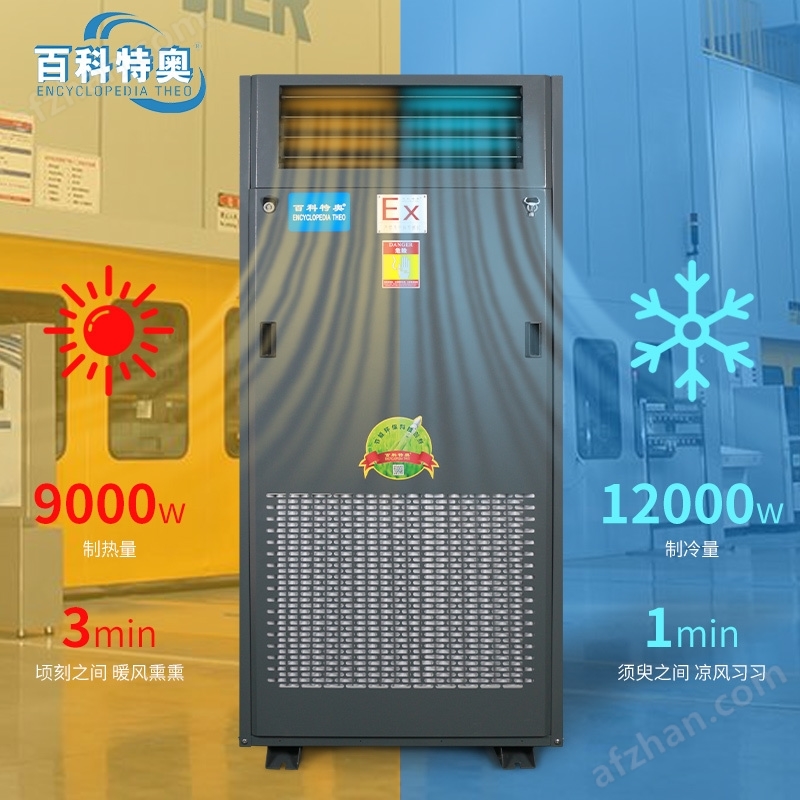
Refrigeration and HeatingUsing a vortex compressor and a hydrophilic aluminum foil heat exchanger, heat is quickly removed during cooling, while heating is supplemented by auxiliary electric heating (or heat pump cycle) to cope with seasonal temperature differences and maintain temperature stability.
Dehumidification and humidificationDehumidification relies on condensation dehumidification (using a refrigeration system to condense water vapor in the air), which rapidly reduces humidity during high humidity seasons; Humidification can be done using electrode type (heating water with current to generate steam) or ultrasonic type (high-frequency oscillation to atomize water), with precise humidification during the dry season and bi-directional adjustment of humidity balance.

Anti corrosion protection: Considering the corrosiveness of essence volatiles, the equipment shell is made of galvanized coating of more than 7 μ m+epoxy anti-corrosion coating, or 304 stainless steel material to extend the service life of the equipment; The protection level reaches IP54, dustproof and waterproof, suitable for storage environments with high dust and occasional splashing.
designThe fan is selected as a low-noise centrifugal fan, combined with shock-absorbing foot pads and sound-absorbing cotton. The operating noise is ≤ 65dB (A) to avoid noise interference with the storage environment and personnel operations.
Taking the common storage warehouse scale as an example, a 50 ㎡ storage warehouse (with a floor height of 3m) with good insulation (polyurethane insulation), recommended equipment parameters:
refrigeration capacity8-10 kW (to cope with high temperatures in summer and rapid cooling)
heating capacity6-8 kW (winter auxiliary heating, maintaining a benchmark of 20 ℃)
dehumidification capacity: 10-15 L/h (during humid periods such as rainy season, quickly reduce humidity)
-
Humidification capacity: 3-5 kg/h (during the dry season in the north, supplement environmental humidity)
If the storage area is larger (such as 200 square meters) or the insulation is poor, the cooling and heating demand needs to be recalculated according to the "volume x heat load coefficient (150-200W/m ³ according to the local climate)", and the dehumidification and humidification capacity should be simultaneously improved.
Environmental measurementMeasure the length, width, and height of the storage facility, and calculate the volume; Evaluate the thermal conductivity and local temperature and humidity of insulation materials (such as polyurethane and rock wool) to determine the heat and humidity loads.
function matching: Priority selection withremote monitoringFunctional models allow real-time monitoring of temperature, humidity, and device operation status through mobile phones/computers, setting alarms for over temperature (e.g.>25 ℃) and over humidity (e.g.>65% RH), and intervening in abnormalities in a timely manner; If the storage facility requires a clean environment, choose models with easy to clean air ducts and built-in air filtration modules.
Certificate verification: Before purchasing, check the explosion-proof certificate, and confirm that the "applicable medium", "explosion-proof grade" and "temperature group" match with the cigarette essence warehouse to avoid potential safety hazards.
install: The equipment shall be far away from the ventilation dead corner in the essence storage area, the air inlet shall be at least 30cm away from the obstacles, and the air outlet shall be at least 50cm away from the wall to ensure smooth air circulation; The installation location should be flat on the ground, with fixed shock-absorbing foot pads to reduce operational vibration.
maintenanceClean the heat exchanger quarterly (by blowing with compressed air and using specialized cleaning agents), replace/clean the air filter to prevent dust accumulation from affecting heat transfer and air quality; Every year, commission an explosion-proof testing agency to inspect the sealing of explosion-proof chambers and the explosion-proof performance of electrical wiring, ensuring the continuous and compliant operation of equipment.