-
E-mail
1034733815@qq.com
-
Phone
18101450258
-
Address
Liubao Town Industrial Park, Baoying County, Yangzhou City, Jiangsu Province
Product Categories
- Transformer no-load loss tester
- Variable frequency series resonance test device
- High voltage switch/circuit resistance tester
- Transformer tester
- Transformer ratio tester
- Transformer comprehensive testing equipment
- Electric harmonic tester
- Online monitoring instrument for power quality
- High voltage switch characteristic tester
- AC/DC voltage withstand tester
Yangzhou Haiwo Electric Technology Development Co., Ltd

Price of 600A/1000V Transformer Comprehensive Tester
NegotiableUpdate on 01/08
- Model
- Nature of the Manufacturer
- Producers
- Product Category
- Place of Origin
Overview
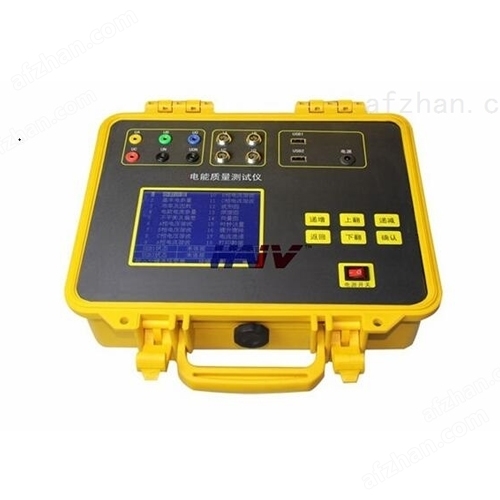
The price of the 600A/1000V transformer comprehensive tester comes with a large LCD screen and a fully Chinese graphical interface. Simply perform a digital setting test to test the high output voltage, large output current, and step size of Z, and the device will automatically step up from zero. Directly display the volt ampere curve during testing, and the instrument will automatically provide data.
Product Details
Price of 600A/1000V Transformer Comprehensive Tester-Error Curve Explanation
The data of the 5% and 10% error curves between the current multiple (M) calculated based on the excitation current and voltage on the secondary side of the transformer and the allowable secondary load (ZII) can also be used to determine whether the transformer protection winding is qualified:
1) If the actual load measured near the theoretical current multiple is greater than the theoretical load value on the transformer nameplate, it indicates that the transformer is qualified
2) The actual current multiple measured near the theoretical load is greater than the theoretical current multiple on the transformer nameplate, which also indicates that the transformer is qualified
The secondary load of the protective current transformer should meet the requirement of a 5% error curve. As long as the actual secondary load of the current transformer is less than the load allowed by the 5% error curve, the measurement error of a qualified current transformer is within 5% at the rated current multiple. The larger the secondary load, the easier it is for the iron core of the current transformer to saturate, and the smaller the allowed current multiple. Therefore, the 5% error curve, also known as the n/ZL curve, is shown in Figure 9 (please consult customer service for instructions). In the example shown in Figure 38 (please consult customer service for instructions), the measured protective CT is 5P10 20VA: where 5 is the accuracy level (error limit of 5%), P is the transformer form (protection level), 10 is the accuracy limit coefficient (10 times the rated current), and 20VA represents the rated secondary load (capacity). When the current multiple is 10.27 times (close to 10 times), the allowable secondary load is 27.19 Ω, which is greater than the rated load of the CT by 20VA (20VA/1=20 Ω). This data can be used to determine that the transformer is qualified. In addition, when the secondary load is 19.58 Ω (close to 20 Ω), the allowable secondary load is 27.19 Ω, which is greater than the rated load of the CT by 20VA (20VA/1=20 Ω). This data can be used to determine that the transformer is qualified. In addition, when the secondary load is 19.58 Ω (close to 20 Ω), the allowed current multiple is 12.85 times, which is greater than the rated current multiple of the CT (10 times). This data can also be used to determine that the transformer is qualified. In fact, as long as either of these two key points is identified, it is possible to determine whether the measured transformer is qualified.
If the 10% error does not meet the requirements, the general approach is:
Increase the interface area of the secondary cable (reduce the secondary impedance)
Series connection of current transformers of the same type and ratio (reducing the excitation current of the transformer)
Switch to windings with higher volt ampere characteristics (increased excitation impedance)
Increase the current transformer ratio (increase excitation impedance)
Price of 600A/1000V Transformer Comprehensive Tester