-
E-mail
2802943235@qq.com
-
Phone
18702111683
-
Address
No. 253 Yulu Road, Jiading District, Shanghai
Ankerui Electric Co., Ltd
Solution for Intelligent Microgrid System in Zero Carbon Park
Date: 2025-12-23Read: 22
Solution for Intelligent Microgrid System in Zero Carbon Park
Introduction: The Wave of Zero Carbon Park Construction under Policies
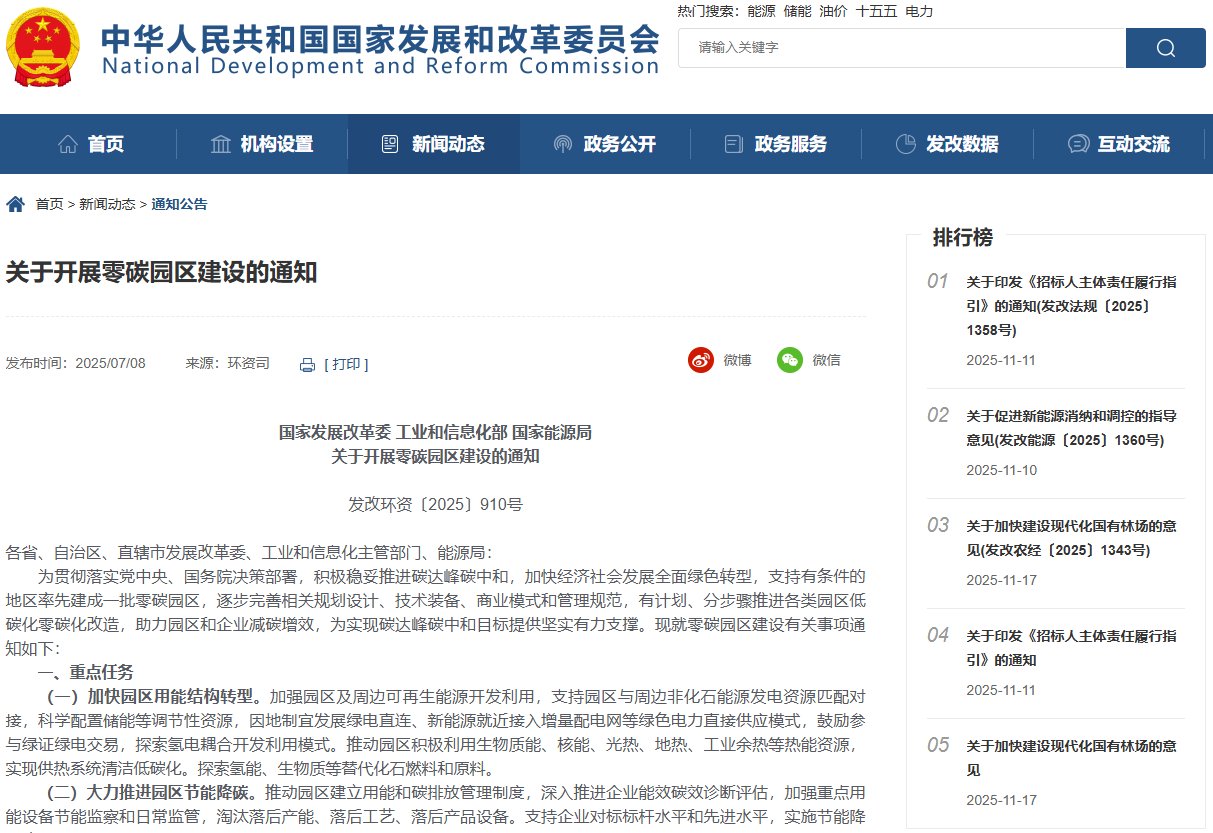
The National Development and Reform Commission, the Ministry of Industry and Information Technology, and the National Energy Administration jointly issued the "Notice on Carrying out the Construction of Zero Carbon Parks" (NDRC Huanzi [2025] No. 910), which clearly proposes to strive to build about 100 * * level zero carbon parks during the "15th Five Year Plan" period, marking that China's low-carbon transformation of parks has entered a substantive stage of promotion. This notice provides systematic guidance for the construction of zero carbon parks from eight dimensions: energy structure transformation, energy conservation and carbon reduction, industrial structure optimization, resource intensive utilization, infrastructure upgrading, technological equipment innovation, and management mechanism reform. It aims to explore replicable green development paths through typical demonstrations and provide experience for the low-carbon transformation of industrial parks nationwide.
1 Zero carbon park intelligent microgridTechnical architecture of the solution
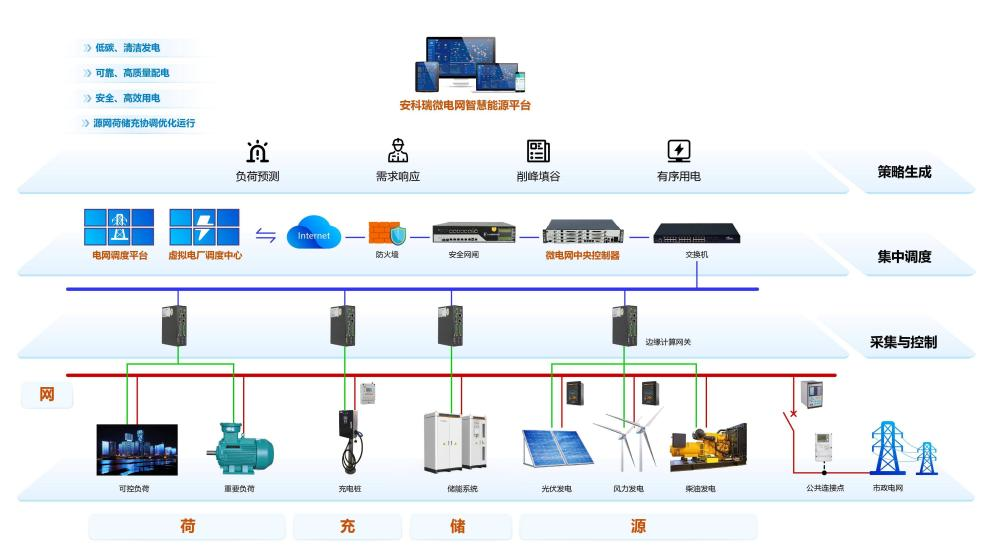
The smart micro network system of Zero Carbon Park adopts a three-tier architecture of "cloud edge end" to achieve closed-loop management of data collection, edge computing and platform decision-making:
End layer (data collection):Deploy smart meters, sensors, circuit breaker monitoring devices, etc. to collect real-time data on photovoltaic power generation, energy storage charging and discharging status, load electricity consumption, grid status, etccanBy coordinating the controller to integrate data from photovoltaic, energy storage, charging stations and other equipment, ensure full data coverage.
Edge layer (edge computing):Configure a microgrid coordination controller as a local "smart brain" that supports multi protocol communication (such as Modbus, 104/101) to achieve real-time collaborative optimization of distributed power sources, energy storage, and loads. The functions include island operation mode switching, dynamic adjustment of energy storage charging and discharging strategies, load forecasting and demand management, etc.
Cloud layer (platform decision):Build a smart energy management platform that integrates panoramic monitoring, power prediction, optimized scheduling, carbon asset management, and other functions. Through big data analysis and AI algorithms, generate monthly/annual carbon emission reports and carbon inventory reports, supporting multi-dimensional (enterprise, department, region) carbon emission monitoring and year-on-year/month on month analysis.
II Core function: Multi energy complementarity and intelligent regulation
Localization of energy supply:Integrating distributed energy sources such as photovoltaics, wind power, and energy storage to achieve on-site production and consumption of electricity, reducing transmission losses (traditional long-distance transmission loss rates reach 6% -8%). For example, in a smart park in Beijing, wind, solar and energy storage are jointly operated, with an on-site consumption of 7.25 million kWh of electricity and a renewable energy consumption rate of 93%.
Dynamic balance of energy storage system:Configure electrochemical or physical energy storage devices to construct a dynamic balance system of "power generation energy storage electricity consumption":
Peak valley regulation:Charging during low electricity prices and discharging during peak hours to reduce electricity costs (such as reducing the impact of grid regulation on production at a certain energy storage power station).
Smooth output:Buffer fluctuations in wind and photovoltaic power, reducing the curtailment rate of new energy from 15% to below 5%.
Load Management and Demand Response:Optimize load distribution through intelligent regulation strategies:
Peak shaving and valley filling:Energy storage devices discharge during peak electricity consumption to avoid transformer overload (such as a 30% reduction in peak load for a high-speed project).
Flexible expansion:When overloaded with electricity, the energy storage system responds to discharge in seconds to ensure power supply for critical loads.
Digitalization of Carbon Asset Management:Built in carbon emission accounting model, automatically connects with government regulatory platforms, generates standardized carbon emission reports, and meets the needs of carbon verification and carbon trading. For example, a semiconductor factory has increased its photovoltaic absorption rate to 85%, benchmarking its carbon emission intensity against industry standards.
III Core Advantage Analysis: Collaborative Breakthrough of Technology, Economy, and Ecology
Technical advantages: precise and reliable, compatible and efficient
High precision and high reliability:The edge computing layer uses the micro grid coordination controller to complete the island mode switching within 0.2 seconds to ensure the power supply of key loads, and the response speed is more than 10 times higher than that of traditional diesel generators.
Multi protocol compatibility:Supports mainstream industrial protocols such as Modbus and 104/101, compatible with devices from multiple vendors, and reduces integration costs.
AI prediction accuracy:The accuracy of the load forecasting model based on machine learning exceeds 85%, which can predict electricity demand in advance, dynamically adjust energy storage strategies, and reduce wind and solar power curtailment.
Economic advantages: cost reduction and diversification, considerable returns
Direct reduction in electricity costs:Through peak valley arbitrage and demand management, the comprehensive electricity cost has been reduced by 15% -30%. For example, in a certain automobile park in Suzhou, the annual electricity cost has exceeded 2 million yuan, and the investment payback period is 3-5 years.
Carbon trading revenue increase:Digital carbon asset management supports green certificate application and carbon trading, allowing enterprises to earn additional income, such as an annual carbon trading revenue of over 500000 yuan for a semiconductor factory.
Policy subsidy assistance:Those who meet the standards of zero carbon parks can apply for policies such as green loans and tax reductions to reduce initial investment pressure.
Ecological Advantage: Green Transformation, Collaborative Win Win
Zero carbon certification empowers:Generate carbon emission reports that meet international standards, assist the park in obtaining certification, and enhance brand value, such as Shanghai Fu Lei Library obtaining LEED net zero carbon certification.
Industrial ecological aggregation:By using VPP technology to aggregate adjustable loads and participate in electricity market transactions, a "source grid load storage" ecosystem is formed, such as a chemical industrial park with quarterly revenue exceeding 3.8 million yuan.
Circular Economy Transformation:Support waste heat recovery and wastewater recycling, promote the transformation of the park towards energy resource dual circulation, such as achieving 80% energy self-sufficiency in the Ordos Zero Carbon Industrial Park.
4 Microgrid system interface display
4.1 Real time monitoring
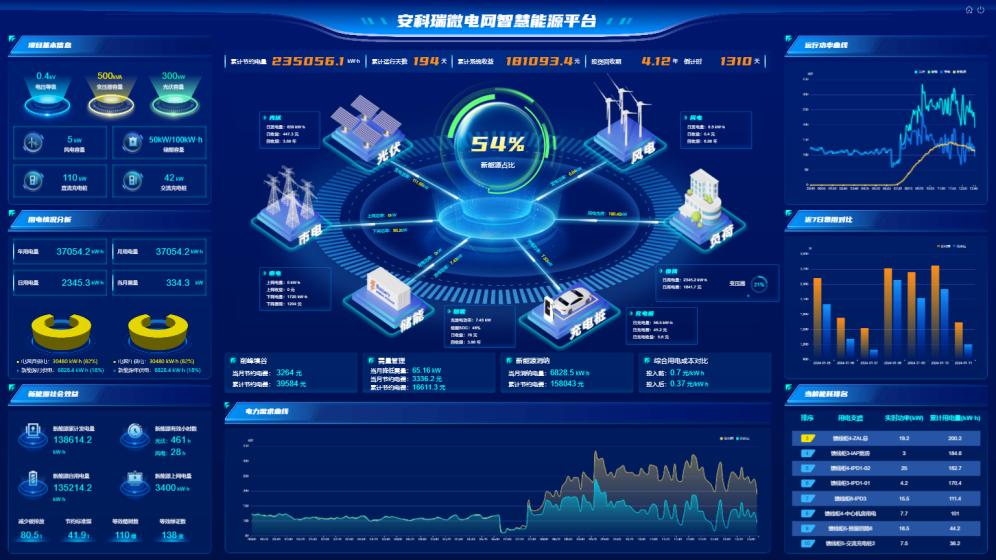
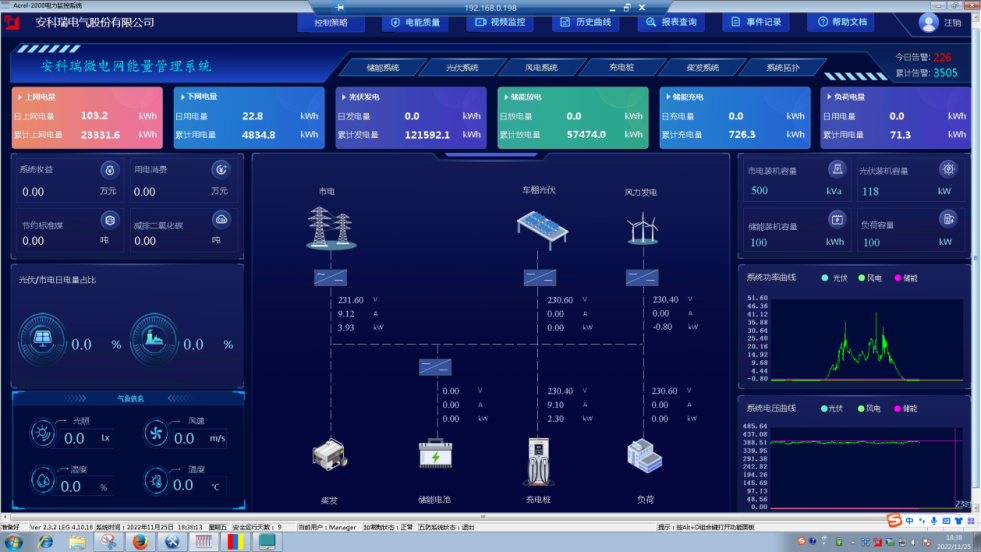
The monitoring system interface of the microgrid energy management system includes the system main interface, which includes the microgrid photovoltaic, wind power, energy storage, charging piles, and overall load composition, including revenue information, weather information, energy conservation and emission reduction information, power information, electricity quantity information, voltage and current situation, etc. According to different needs, charging, energy storage, and photovoltaic system information can also be displayed.
4.2 Photovoltaic Interface
Display information on photovoltaic systems, mainly including monitoring and alarm of the operating status of inverters on the DC and AC sides, statistics and analysis of inverter and power station power generation, monitoring and analysis of grid connected cabinet power generation, statistics of annual effective utilization hours of power station power generation, statistics of power generation revenue, carbon emission reduction statistics, monitoring of irradiance/wind power/environmental temperature and humidity, simulation and efficiency analysis of power generation; Simultaneously display the total power, voltage and current of the system, as well as the operational data of each inverter.
4.3 Energy storage interface
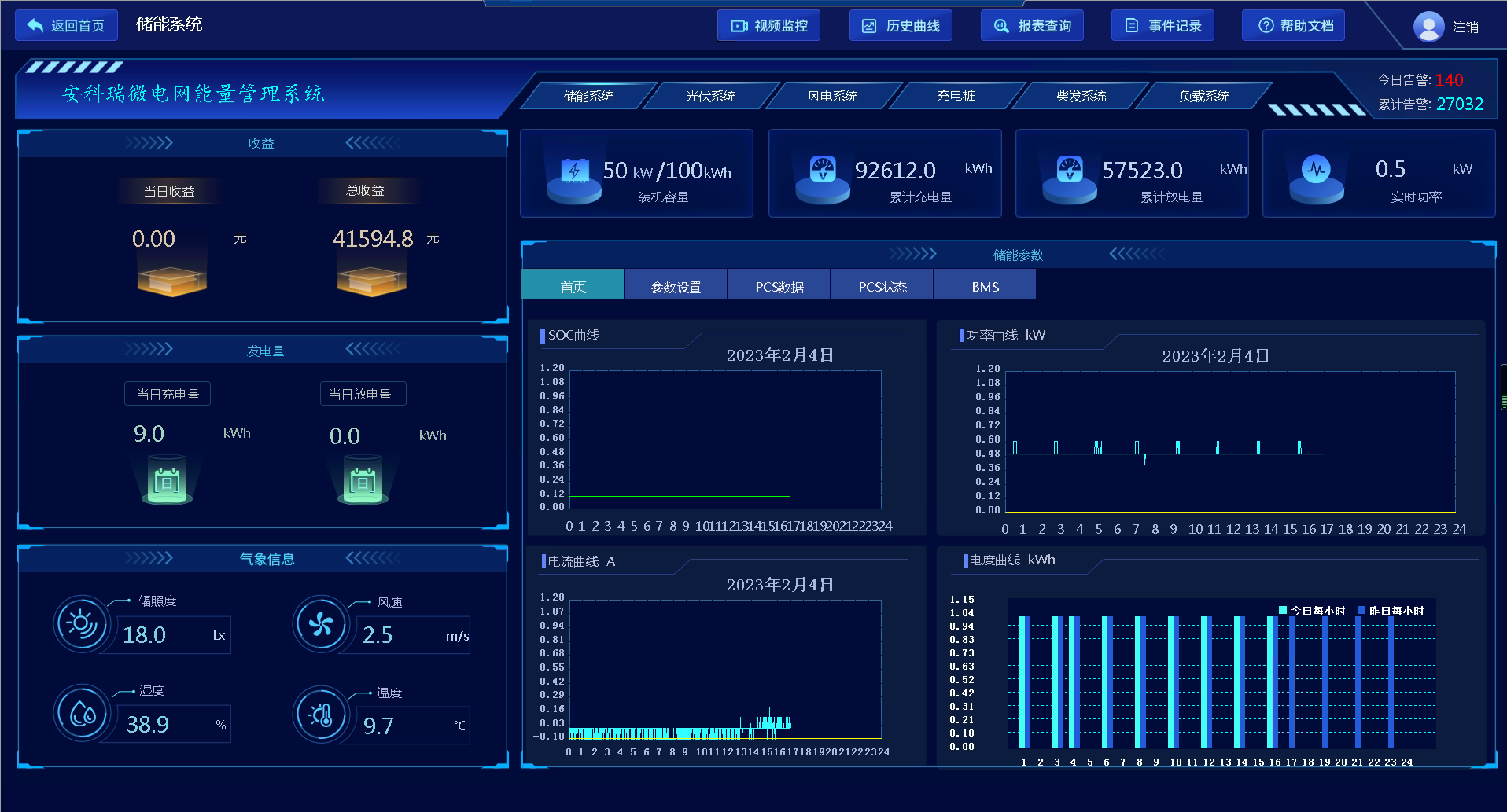
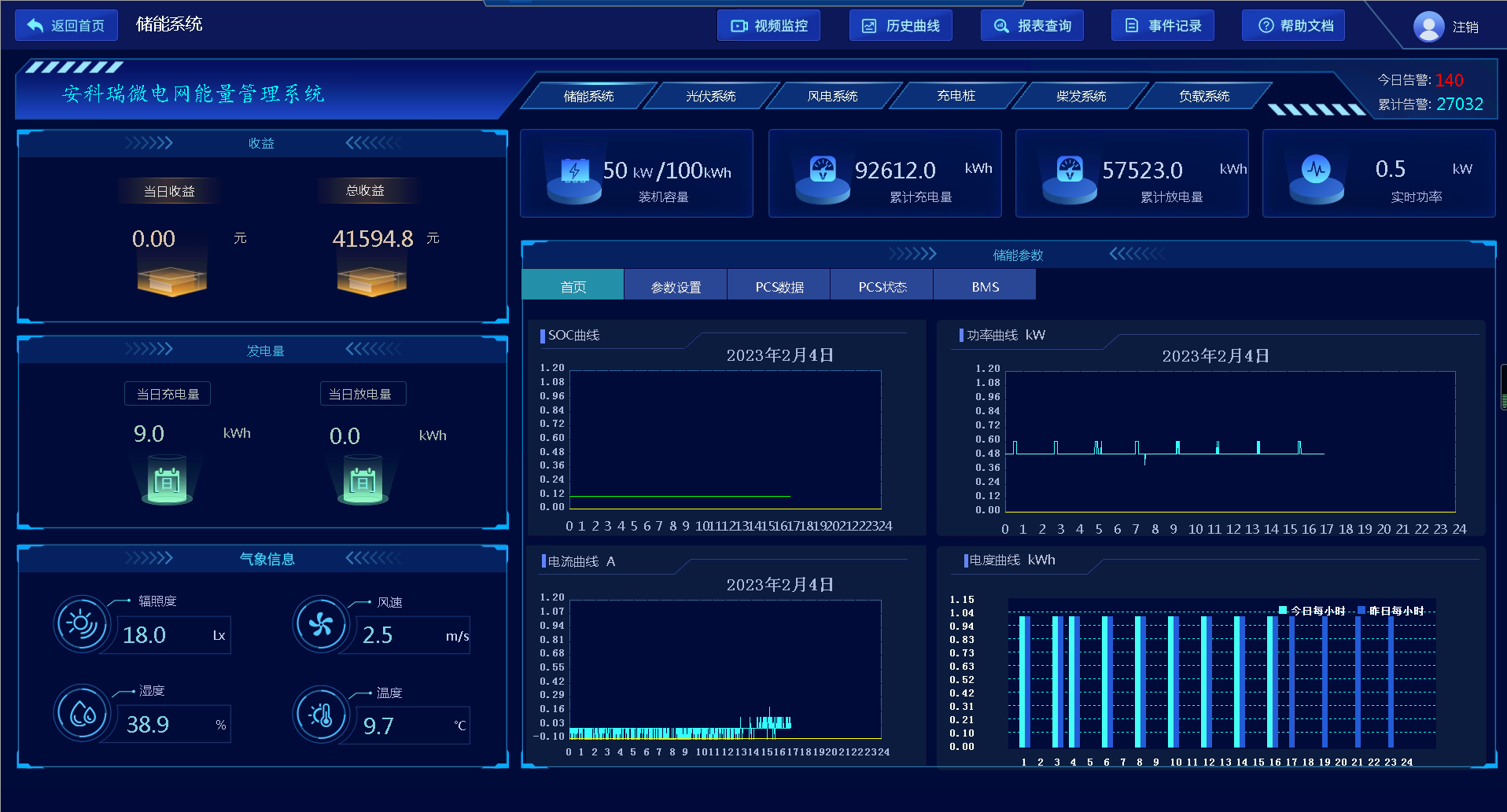
Display the energy storage installed capacity, current charging and discharging capacity, revenue, SOC change curve, and electricity change curve of this system. Data display and control of PCS and BMS.
4.4 Wind Power Interface
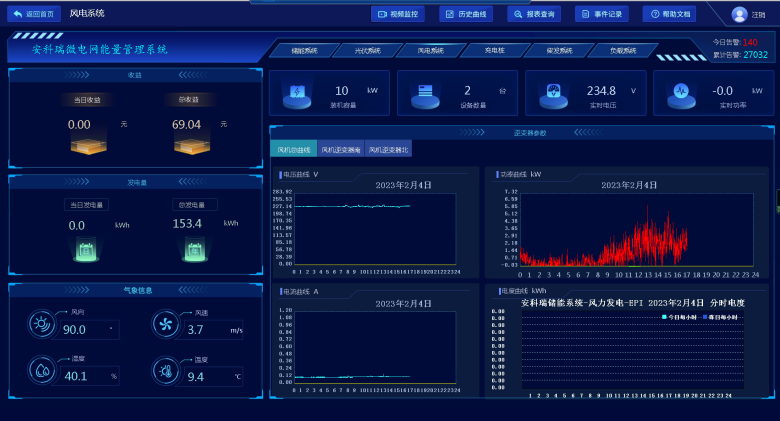
Display information on wind power systems, mainly including monitoring and alarm of the operation status of the DC and AC sides of the inverter control integrated machine, statistics and analysis of the power generation of the inverter and the power station, statistics of the annual effective utilization hours of the power station's power generation, statistics of power generation income, carbon reduction statistics, monitoring of wind speed/wind speed/environmental temperature and humidity, simulation of power generation and efficiency analysis; Simultaneously display the total power, voltage and current of the system, as well as the operational data of each inverter.
4.5 Charging Station Interface
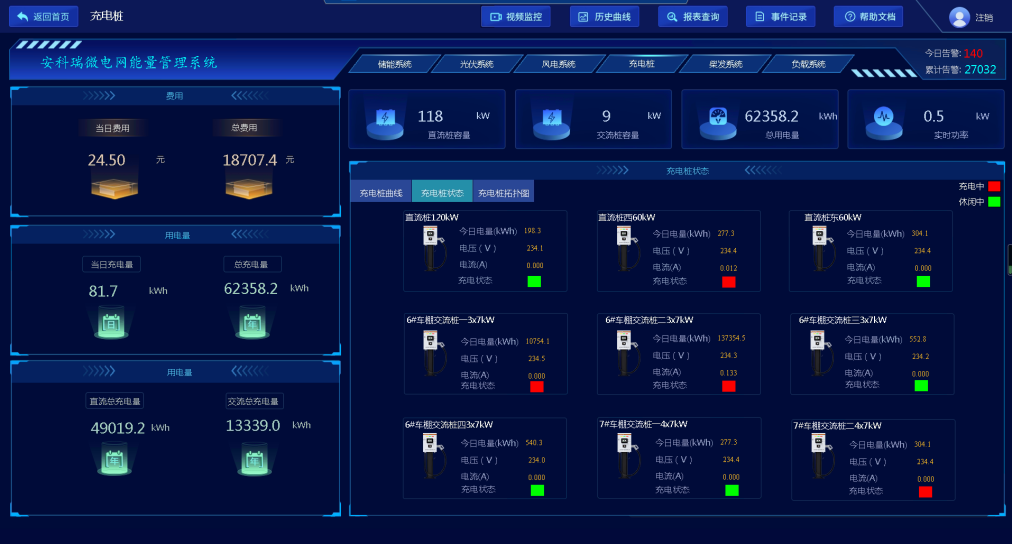
Display information about the charging station system, mainly including the total power consumption of charging stations, the power and electricity consumption of AC and DC charging stations, electricity costs, change curves, and operational data of each charging station.
4.6 Power generation forecast
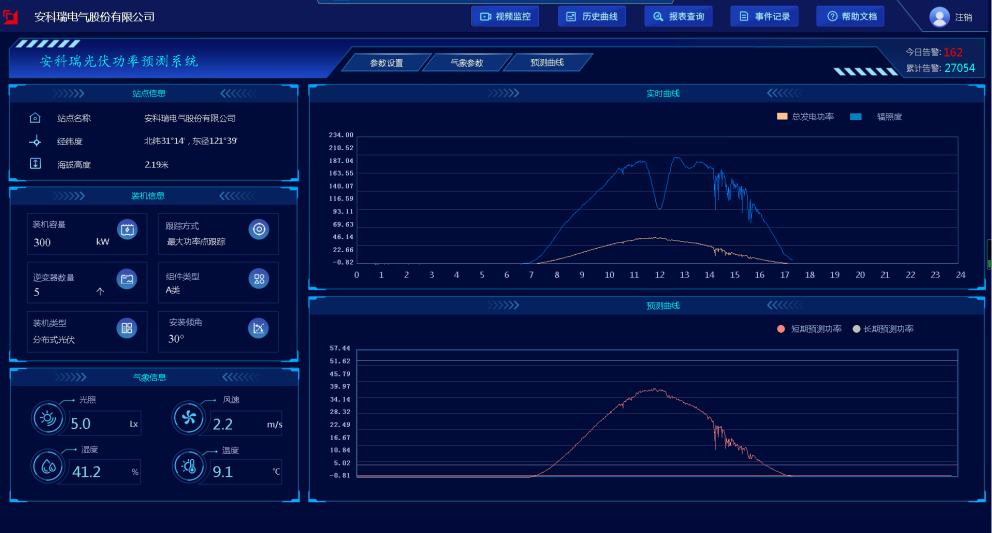
Based on historical power generation data, measured data, and future weather forecast data, predict the short-term and ultra short term power generation of distributed power generation, and display the qualification rate and error analysis. According to power prediction, manual input or automatic generation of power generation plans can be carried out, which facilitates users to centrally control the new energy generation of the system.
4.7 Strategy Configuration
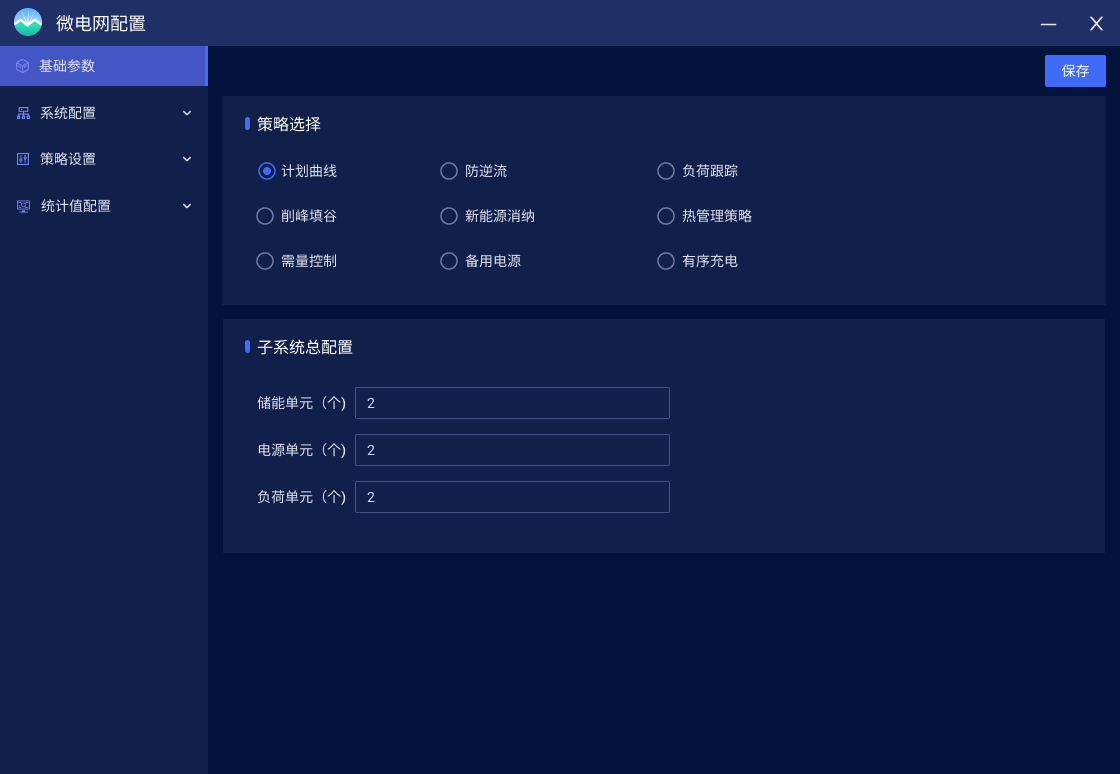
The system should be able to set the system operation mode and configure different control strategies based on power generation data, energy storage system capacity, load demand, and time of use electricity price information. Such as peak shaving and valley filling, cycle planning, demand control, anti backflow, orderly charging, dynamic expansion, etc.
4.8 Real-time alarm
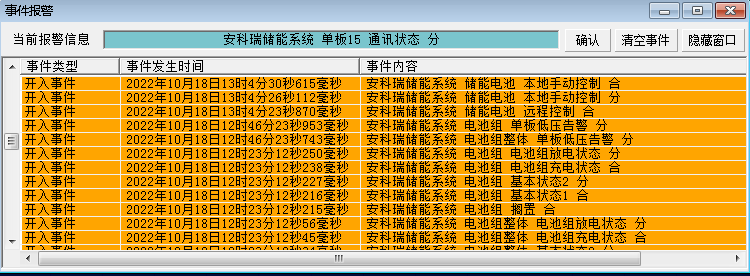
Equipped with real-time alarm function, the system should be able to remotely signal the starting and closing of inverters and bidirectional converters in each subsystem, as well as issue alarms when internal protection actions or accident trips occur. It should be able to display alarm events or trip events in real time, including the name of the protection event and the time of the protection action; And it should be able to notify relevant personnel in the form of pop ups, sounds, text messages, and phone calls.
4.9 Power Quality Monitoring
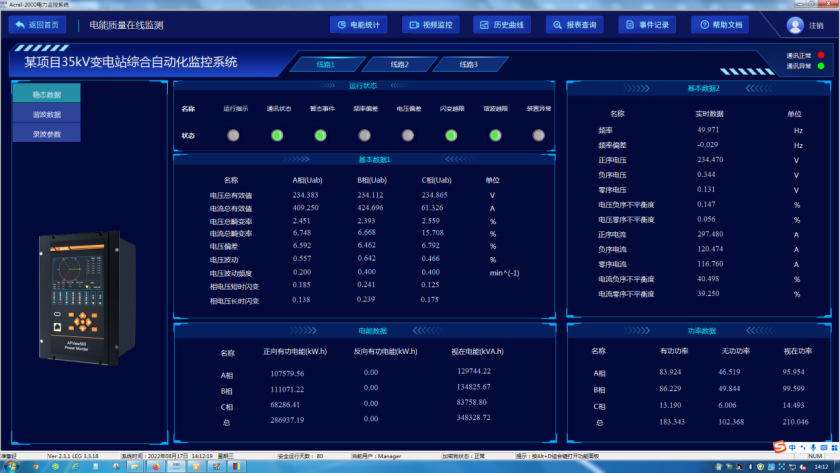
Continuous monitoring of the power quality of the entire microgrid system, including steady-state and transient states, enables management personnel to grasp the power quality situation of the power supply system in real time, in order to timely detect and eliminate unstable power supply factors.
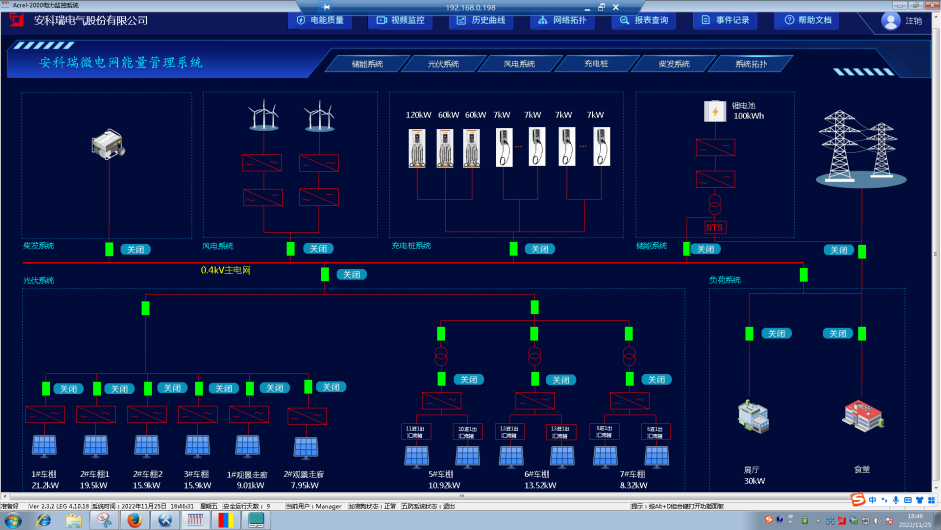
4.10 Network Topology Diagram
The system supports real-time monitoring of the communication status of various devices connected to the system, and can fully display the entire system network structure; It can diagnose the communication status of equipment online, and automatically display the faulty equipment or component and its faulty location on the interface when network abnormalities occur.
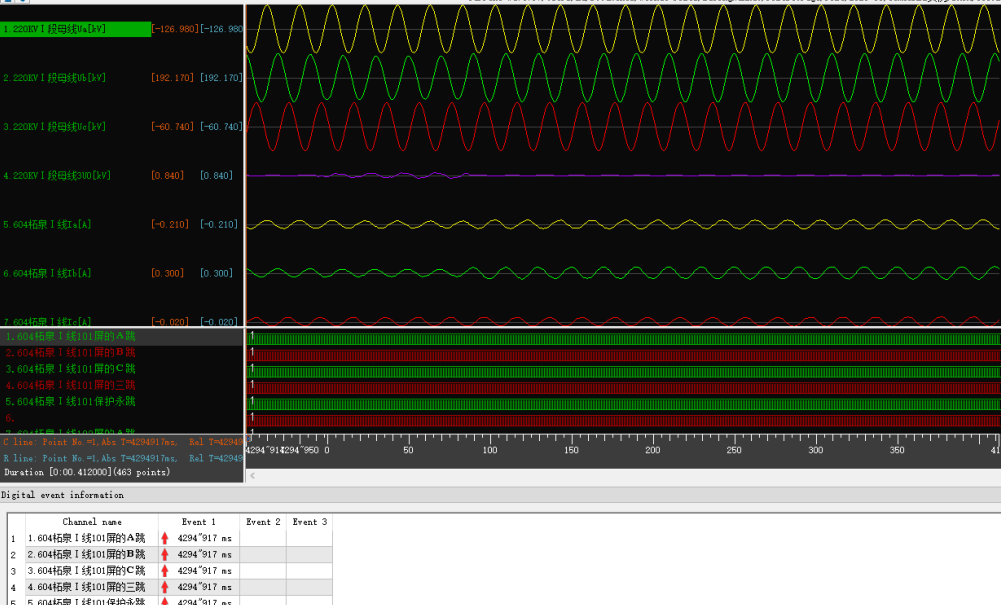
4.11 Fault recording
When the system malfunctions, it automatically and accurately records the changes in various related electrical quantities before and after the fault. By analyzing and comparing these electrical quantities, it plays an important role in analyzing and handling accidents, determining whether the protection is operating correctly, and improving the safe operation level of the power system. Among them, a total of 16 fault waveforms can be recorded, and each waveform can trigger 6 segments of waveform recording. Each waveform recording can record 8 cycles before the fault and 4 cycles after the fault, with a total recording time of 46 seconds. Each sampling point recording should include at least 12 analog waveforms and 10 switch waveforms.
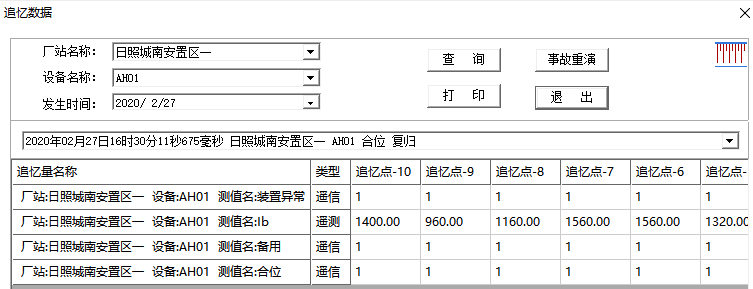
4.12 Accident Remembrance
It can automatically record all real-time scanning data before and after the accident, including switch position, protection action status, remote measurement, etc., forming the data basis for accident analysis;
Users can customize the start event for accident recall, and when each event occurs, store relevant point data for 10 scan cycles of the accident and 10 scan cycles after the accident. The data points for initiating events and monitoring can be specified and modified by users at will.
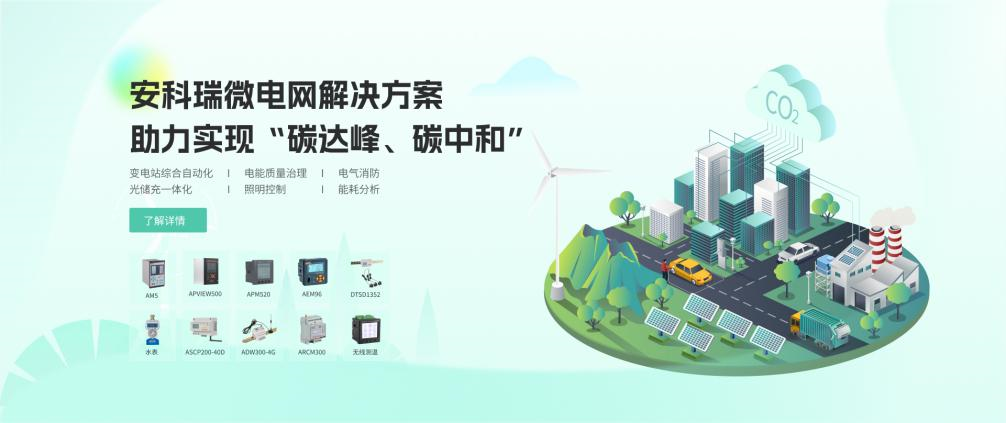
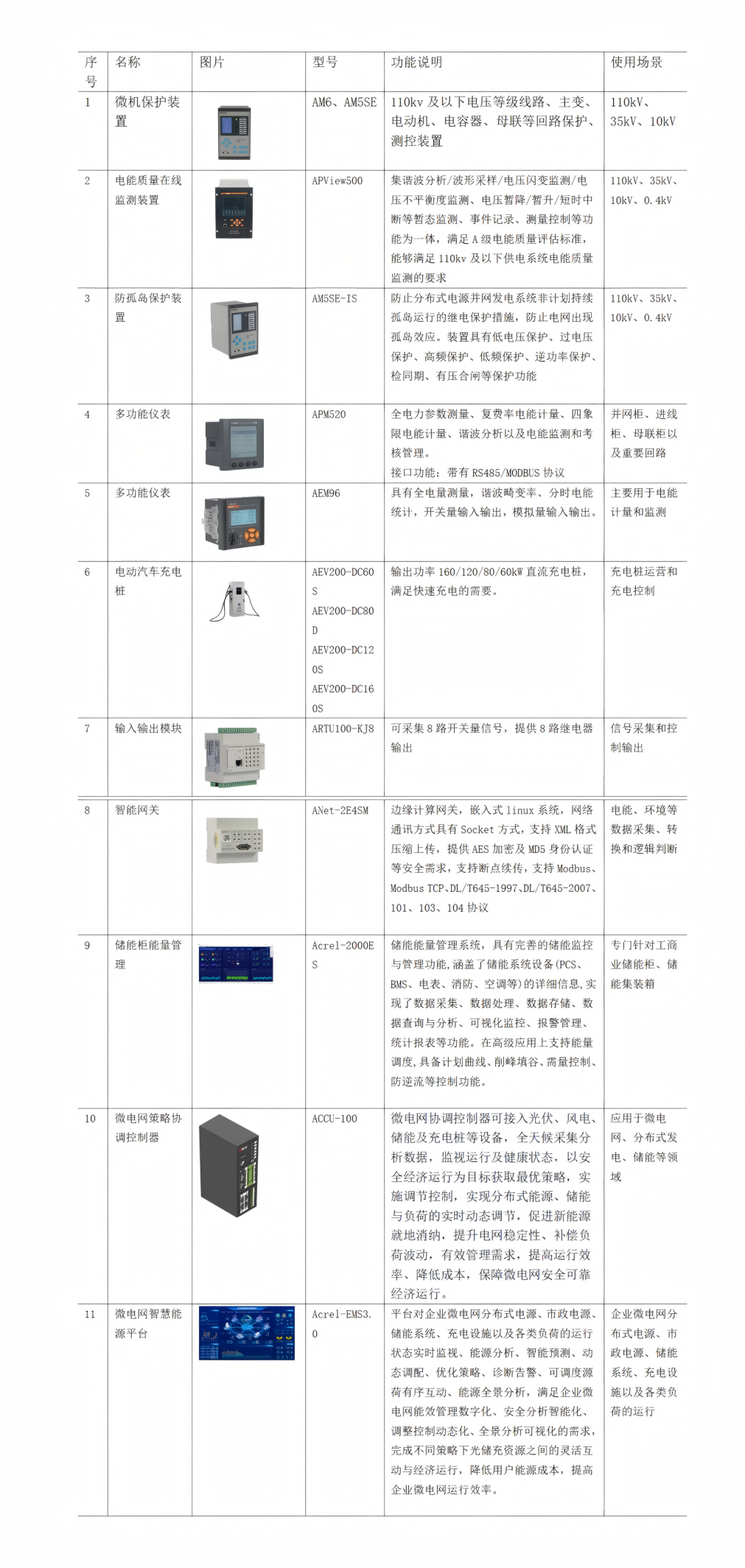
5 solutionRecommended products related to the case
Conclusion: The * * and Engine of Green Transformation in Zero Carbon Parks
The zero carbon park is not only a testing ground for technology integration, but also a new engine for green development. Through the deep application of intelligent microgrid systems, the park can achieve clean energy supply, efficient energy utilization, and visualized carbon emissions. Its core advantages lie in the high precision and reliability of technology, economic cost reduction and efficiency improvement, diversified benefits, ecological green transformation, and industrial synergy. In the future, with the integration of technologies such as virtual power plants, digital twins, and AI algorithms, zero carbon parks will further break through the bottleneck of energy supply and demand balance, promote deep collaboration between industries and energy, and help China achieve its "dual carbon" goals as scheduled.