-
E-mail
2885080326@qq.com
-
Phone
18701998775
-
Address
No. 253 Yulu Road, Jiading District, Shanghai
Ankerui Electric Co., Ltd
Ankerui Microgrid Smart Energy Solution: Empowering Efficient Implementation and Green Transformation of "Source Grid Load Storage"
Date: 2025-12-30Read: 21
Tang Xueyang
Ankerui Electric Co., Ltd. Shanghai Jiading 201801
1、 The diverse demand background in the new power scenario
The current energy and power sector is forming new demands around four major directions:
1. Driven by the "dual carbon" goal: it not only requires energy conservation and carbon reduction on the consumer side, but also gives rise to new fields such as carbon emission rights and carbon asset trading. At the same time, rules such as carbon tariffs are also affecting market layout.
2. Deepening the reform of the electricity market: the rise of power sales companies, the expansion of peak valley differences in electricity prices, the adjustment of the "two-part system" electricity price application, and the gradual implementation of new models such as virtual power plants.
3. Industry and market development: The cost of photovoltaic and energy storage equipment has decreased, coupled with the rapid popularization of new energy vehicles and the large-scale construction of charging piles, promoting the upgrading of energy infrastructure.
4. User core demand: Enterprises are more concerned with reducing energy costs and increasing revenue, while also hoping to avoid the impact of "dual control of energy consumption" and improve electricity reliability. They also need to optimize the flexible expansion of transformers and energy management efficiency.
2、 From demand to scenario: three types of landing directions for "source network load storage"
Undertaking the diverse demand background mentioned above, the "Source Network Load Storage" project has formed three typical application scenarios:
Distributed light storage charging scenario:Matching users' needs for cost reduction and efficiency improvement, by constructing distributed photovoltaic, energy storage, and photovoltaic charging stations, combined with peak and valley electricity prices, policy subsidies, and other dividends, not only can energy utilization efficiency be improved, but also electricity costs can be directly reduced.
Scenario of coordinating multiple new energy sites:In response to the reform of the electricity market and the development trend of the industry, value-added services such as operation, maintenance, and energy-saving management will be carried out around multiple new energy sites, relying on the multi energy complementary model to explore new mechanisms for coordinated scheduling of source grid load storage.
Industrial parks and zero carbon factory scenarios:Adhering to the "dual carbon" goal and the requirements for park transformation, utilizing the spatial advantages of industrial parks, taking safety as the core premise, and combining with the construction standards of zero carbon parks, we will promote the park to achieve green and low-carbon upgrading.
3、 Six core pain points in the implementation of "source network load storage"
1. Pain points in power balance: The intermittency and randomness of new energy generation can easily lead to short-term power imbalances, and the seasonal mismatch between power generation and consumption exacerbates long-term power balance problems.
2. Pain points for system security and stability: The new power system has weak inertia and voltage support capabilities, complex dynamic characteristics, and faults that can easily cause safety accidents such as broadband oscillation and chain disconnection.
3. Pain points in electricity costs: To ensure system balance, the construction of auxiliary services and supporting facilities, resource regulation, and channel investment will all drive up energy usage costs.
4. Pain points of low-carbon energy consumption: Users need to simultaneously cope with multiple low-carbon constraints such as dual control of energy consumption, green electricity quotas, and carbon markets, and adjust their energy consumption methods to meet policy requirements.
5. Pain points in scheduling and control: With the integration of various links of source grid load storage and massive new energy and new loads, the observable, measurable, and controllable scheduling of the power system is facing severe challenges.
6. Pain points of intelligent operation and maintenance: The popularization of multi site and cross regional energy facilities places high demands on intelligent operation and maintenance of sites (such as heterogeneous data access, equipment diagnosis, etc.) to reduce costs and avoid hidden dangers.
4、 Solution for Six Pain Points: Microgrid Smart Energy Platform
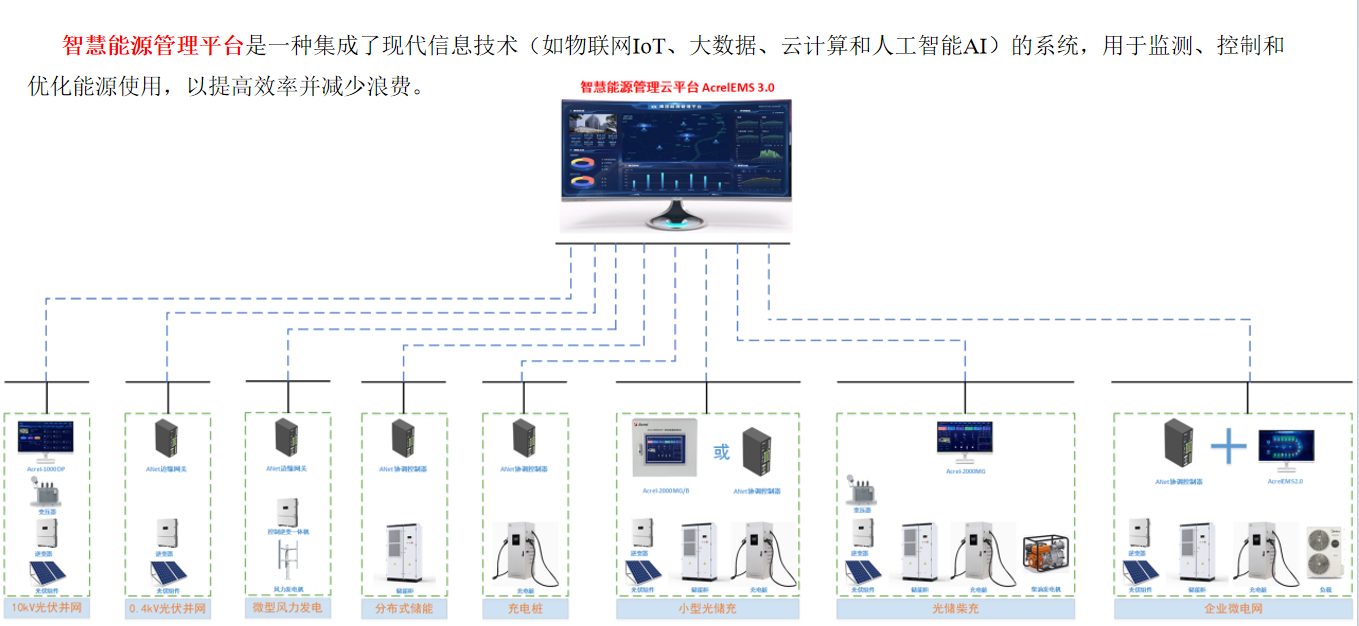
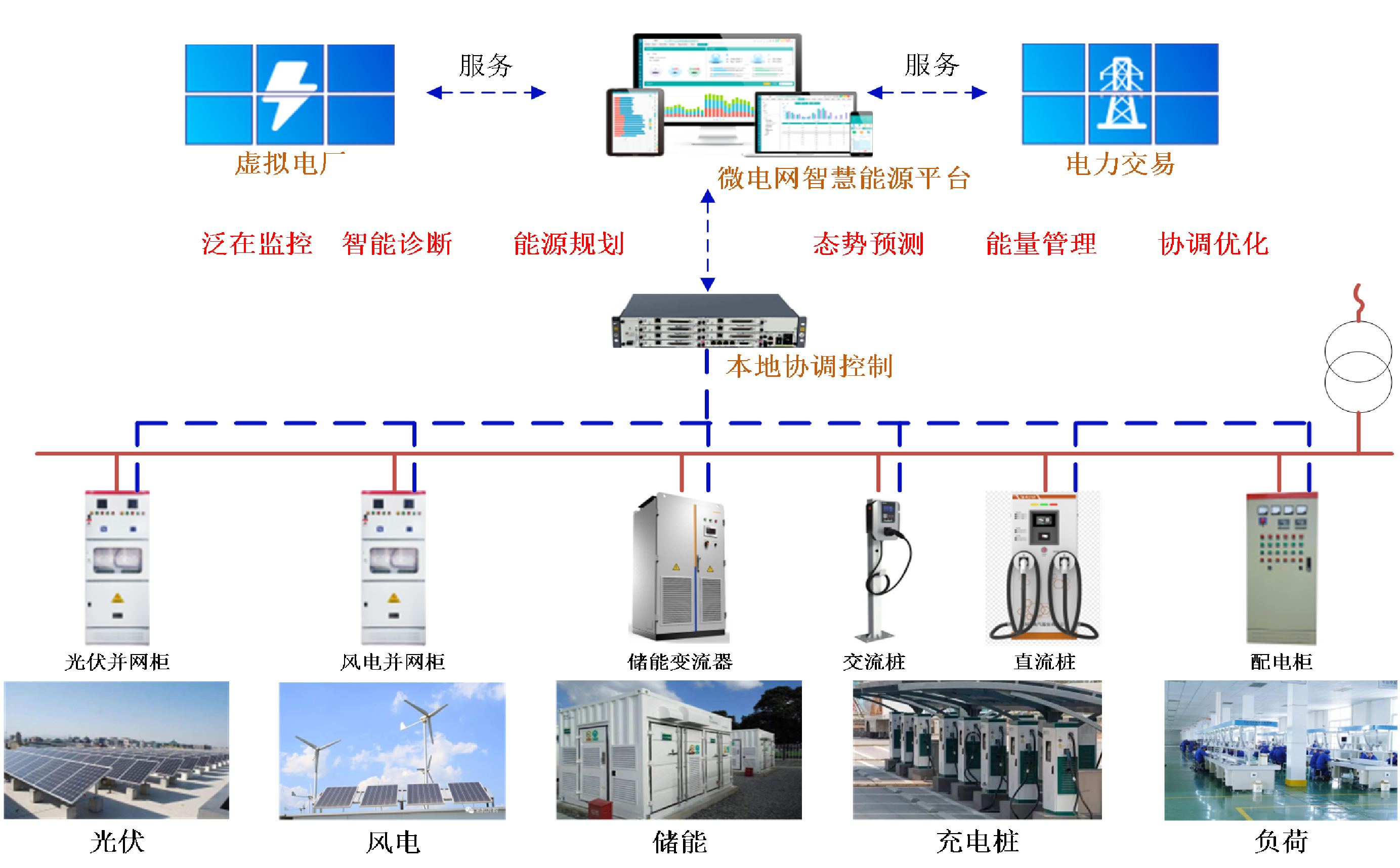
Under the six major pain points of the implementation of "source grid load storage", the microgrid smart energy platform has become the core solution. It is a system that integrates IoT, big data, AI and other technologies (represented by AcrelEMS3.0), which connects various energy facilities to achieve monitoring, control and optimization of energy:
From an architectural perspective, the platform relies on the smart energy management cloud platform to achieve data integration, and connects with terminal devices in various scenarios, including 10kV/0.4kV photovoltaic grid connection, micro wind power, distributed energy storage, charging piles and other basic energy facilities. It also covers combination scenarios such as small-scale photovoltaic storage and charging, photovoltaic storage and diesel charging, and enterprise microgrids.
Its core value lies in solving pain points such as power balance, cost control, scheduling and operation through technological means, such as real-time matching of new energy output and load demand, optimizing scheduling strategies, achieving intelligent operation and maintenance of stations, ultimately improving energy efficiency, reducing waste, and adapting to the needs of "dual carbon" and power market reform.
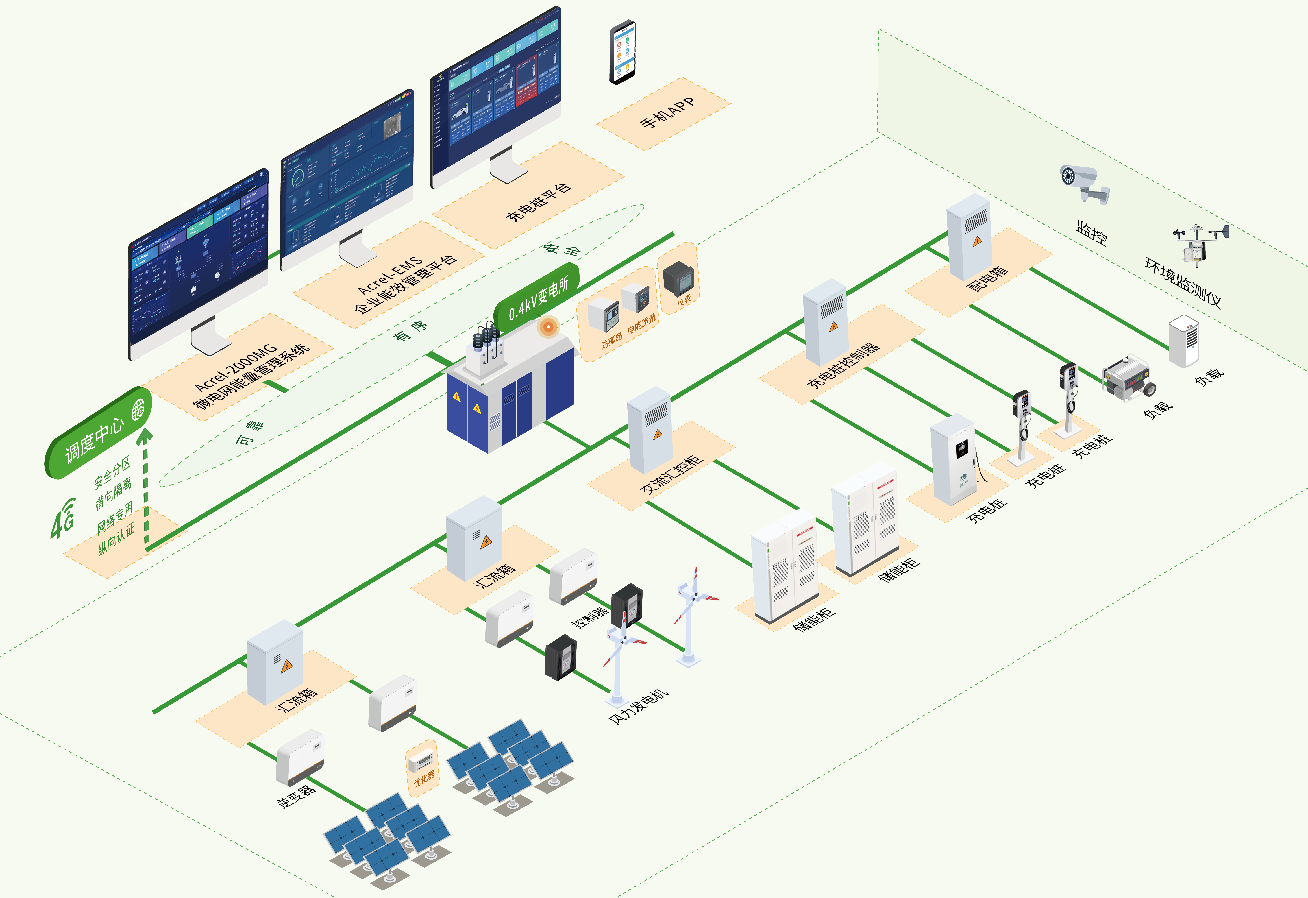
Ankerui's microgrid system solution involves installing various monitoring, analysis, protection, and governance devices independently developed by Ankerui at key nodes within the enterprise, including source, grid, load, storage, and charging; By utilizing control, metering, communication, and other technologies, distributed power sources, energy storage systems, controllable loads, electric vehicles, and energy routers are aggregated together; The platform flexibly adjusts the microgrid control strategy based on grid prices, electricity loads, and grid dispatch instructions, and distributes it to energy storage, charging piles, inverters, and other systems and equipment to ensure the safe, reliable, economical, efficient, and low-carbon operation of the enterprise microgrid at all times.
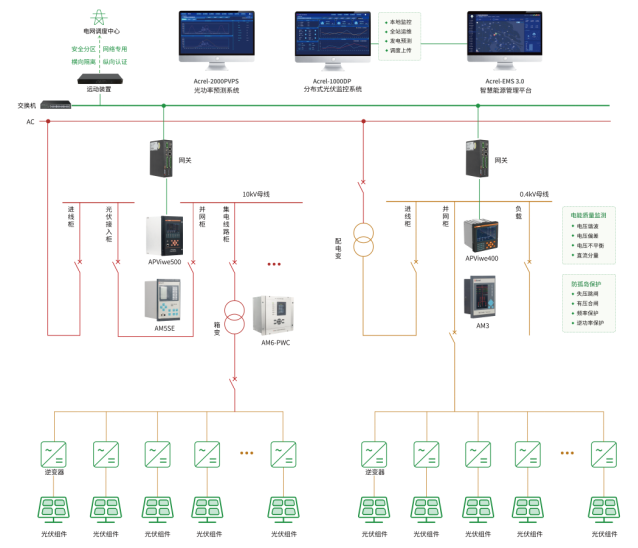
Solution - Distributed Photovoltaic Monitoring System
User requirements:There are safety hazards present; Lack of effective monitoring, power generation efficiency cannot be guaranteed; Difficulty in calculating profits; The efficiency of operation and maintenance is low.
User benefits:Reduce energy usage costs; Reduce transformer load; Connect surplus electricity to the internet to increase revenue; Energy conservation and carbon reduction are in line with national policies.
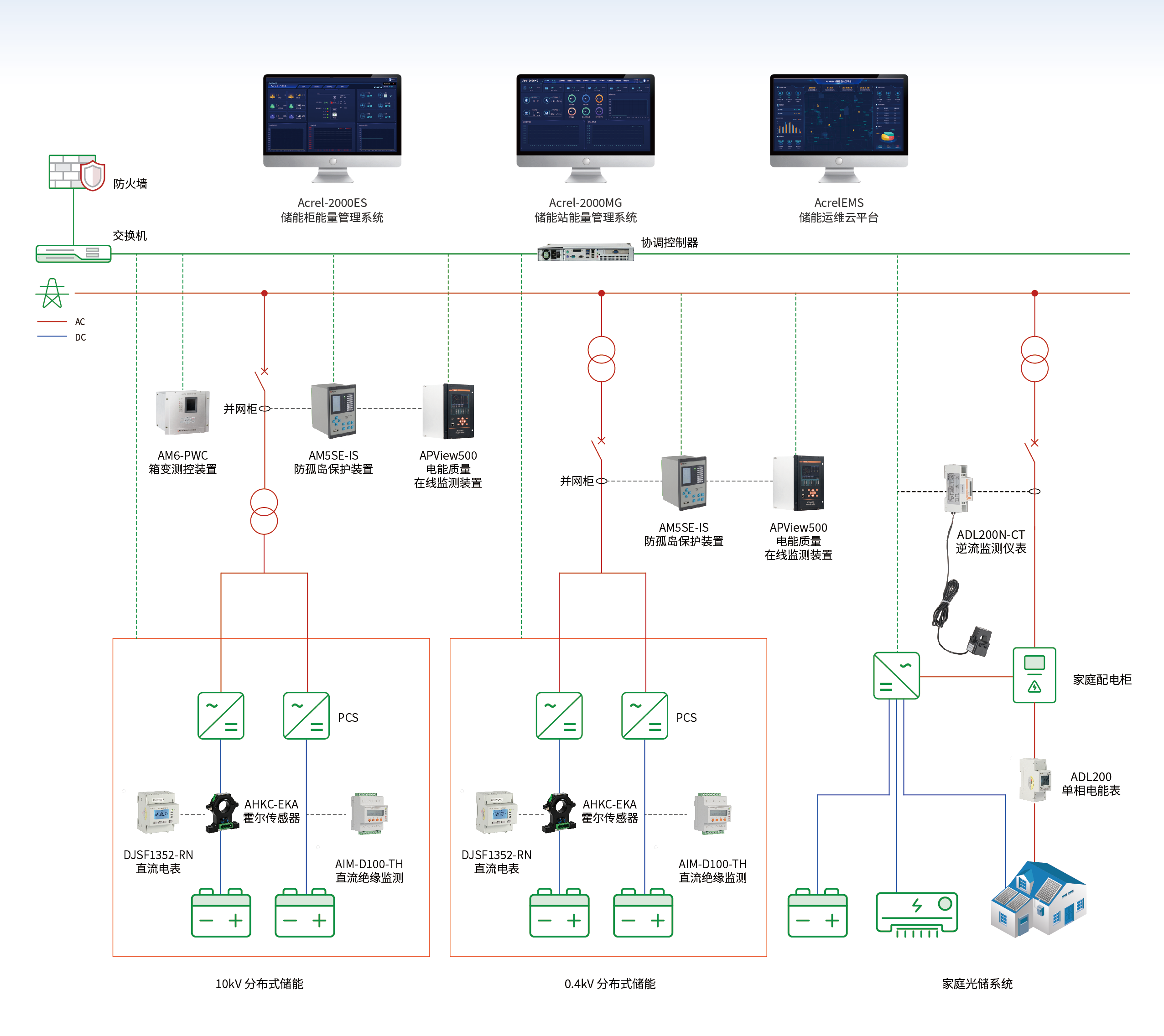
Solution - Industrial and Commercial Energy Storage System
User requirements:Resolve issues such as high electricity prices, insufficient short-term capacity, power restrictions/outages affecting normal operations, and unstable power quality causing damage to equipment.
User benefits:Improve energy utilization efficiency through strategies such as peak valley arbitrage, dynamic capacity expansion, demand management, and demand side response; Auxiliary power supply during unstable power grid to improve power quality; Seamless off grid switching to ensure power supply for critical loads; Comprehensive monitoring and rapid fault alarms ensure the safety and stability of the power supply system.
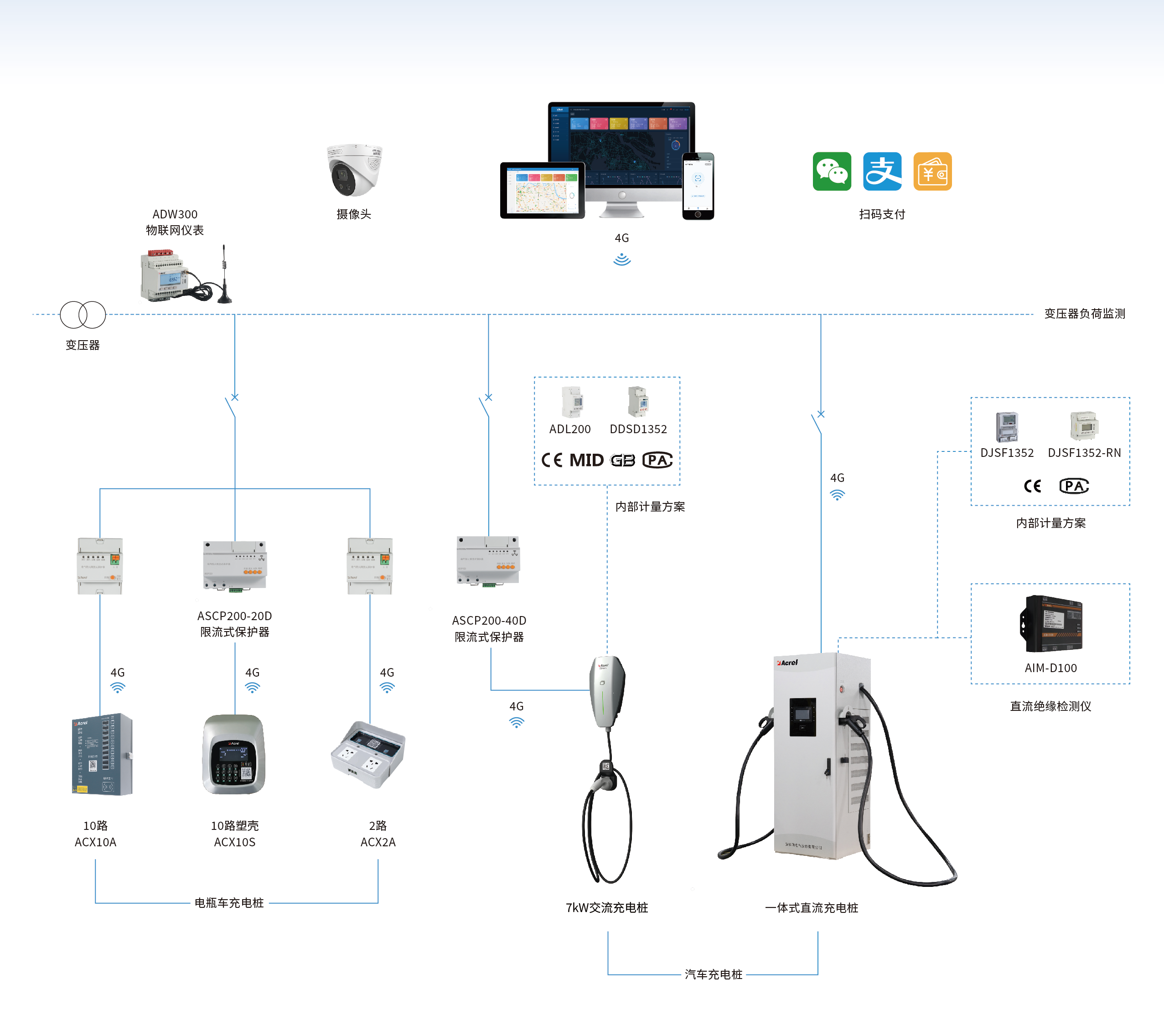
Solution - Ordered Charging System
Enterprise demand:Reliable and clean energy usage; Reduce energy costs; Efficient operation and maintenance; Professional and comprehensive energy management; Off peak electricity consumption, peak shaving and valley filling.
Operational requirements:The equipment is stable and reliable; Investment attraction and drainage; Efficient operation and maintenance; Low operating costs; Orderly charging.
User benefits:Charging and monitoring management; Shorten the payback period; Safe and reliable operation; Efficient operation and maintenance; Low operating costs.
Solution - Optical Storage Charging System
User requirements:Real time monitoring, diagnosis and alarm, panoramic analysis, orderly management, and advanced control of the source, network, load, energy storage system, and charging load of microgrids are carried out to meet the needs of comprehensive monitoring, intelligent safety analysis, forward-looking adjustment and control, and dynamic panoramic analysis of microgrid operation. Flexible interaction and economic optimization of photovoltaic energy storage and charging resources under different goals are achieved to achieve energy, economic, and environmental benefits.
User benefits:Smooth power output to improve the utilization rate of green electricity; Peak shaving and valley filling, valley electricity utilization, and improving economic efficiency; Reduce the impact of charging equipment on local power grids; Reduce the capacity of distribution transformers within the station.
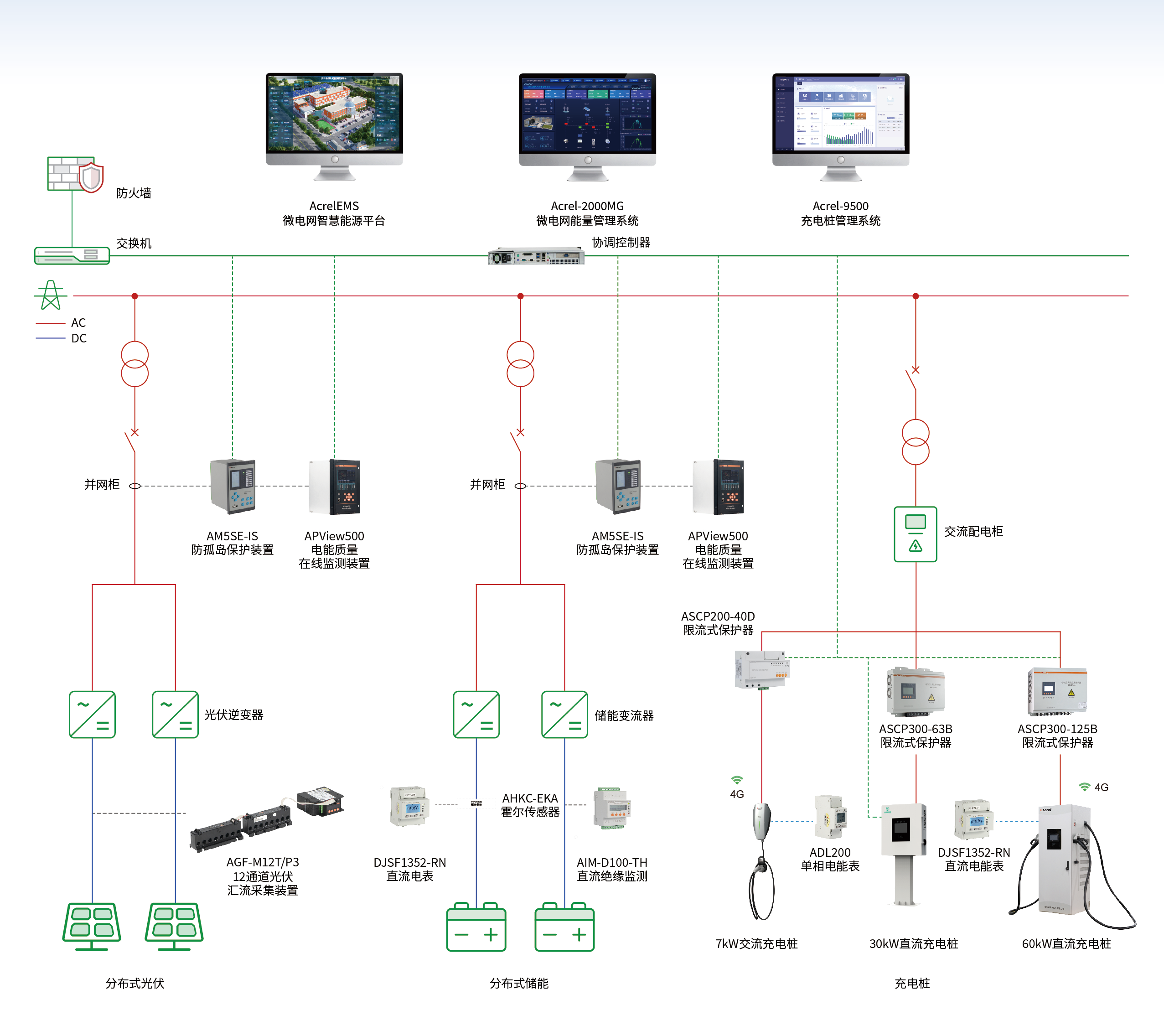
Solution - Energy Efficiency Management+Light Storage Charging System
Typical representative:A New Great Wall Heavy Industry 18MW distributed photovoltaic monitoring system, Hubei Xinyuan 21.35MW distributed photovoltaic monitoring system and 60MW distributed photovoltaic monitoring system for photovoltaic cells, Jintian Copper 10kV energy storage system, Cixi Jingzhong 10kV Energy storage system, intelligent parking lot charging operation platform in Guannan City, Jiangsu Province, photovoltaic system in a temple in Myanmar, photovoltaic system in an airport in Hunan Province, photovoltaic system in Jiangyin Research Institute, photovoltaic system in a tobacco company, energy platform in an exchange center in Shenzhen, low-carbon energy platform in a steel industry in Jingjiang, photovoltaic energy storage and charging platform in a village in Jilin Province, intelligent energy management platform in a park in Hefei, intelligent energy management platform in a provincial transportation center, intelligent energy management platform in a highway in a province, intelligent energy management platform in a service area in Liaoning Province, intelligent energy management platform in a western district of Henan Province, intelligent energy management platform in a college in Henan Province, and intelligent energy management platform in a university in Guizhou Province
Platform Features
System Overview
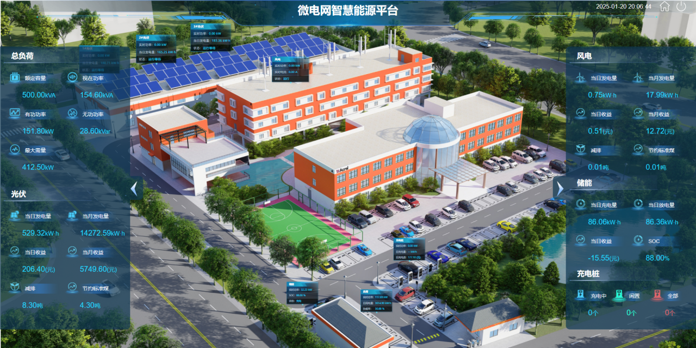
Full operation data such as "source network load storage", storage display, status detection, and operation alarm. Intuitively display various data such as electricity consumption, carbon emissions, costs, and equipment operation of microgrid systems. Real time presentation of microgrid power data flow and equipment security status.
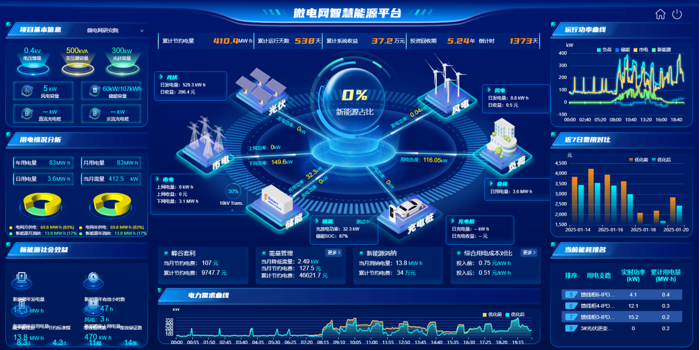
Microgrid operation monitoring
Support power station topology, optical storage and charging monitoring, environmental monitoring, strategy execution, revenue settlement, situational awareness, etc.
power prediction
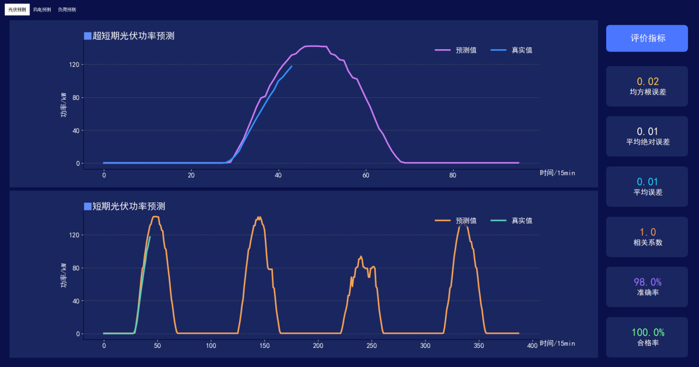
Multi source data integration: Based on meteorological data, historical operational data, and power grid data, understand the operating status of the power system.
High precision prediction model: Machine learning algorithms can automatically learn and adapt to changing trends under different conditions, ensuring the accuracy of prediction results.
optimized scheduling
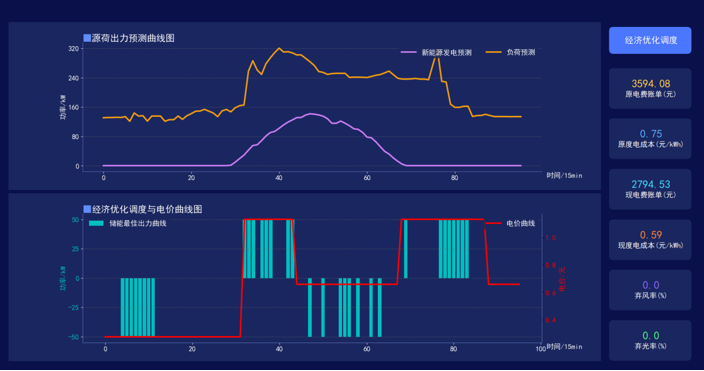
Economic optimization scheduling based on optimal energy consumption, low cost, and low carbon emissions; Consider safe operation scheduling strategies for smooth power supply and voltage stability in the power grid; Demand side response to grid interaction strategy.
Carbon emission management
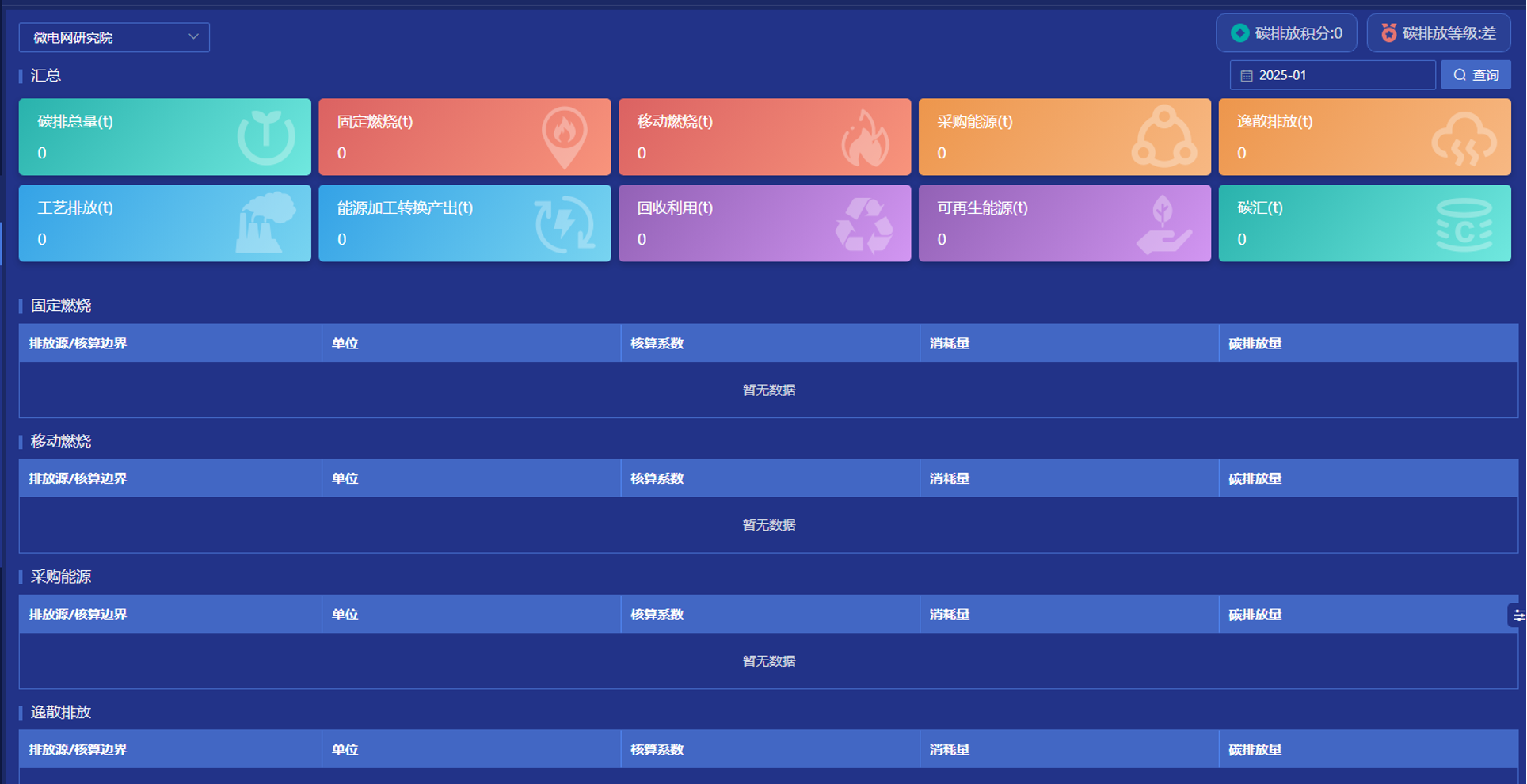
Monitor the carbon emissions of enterprises, departments, and regions; Carbon emission statistics and month on month analysis; Support monthly and annual carbon emission reports; Generate carbon inventory report;
hardware configuration
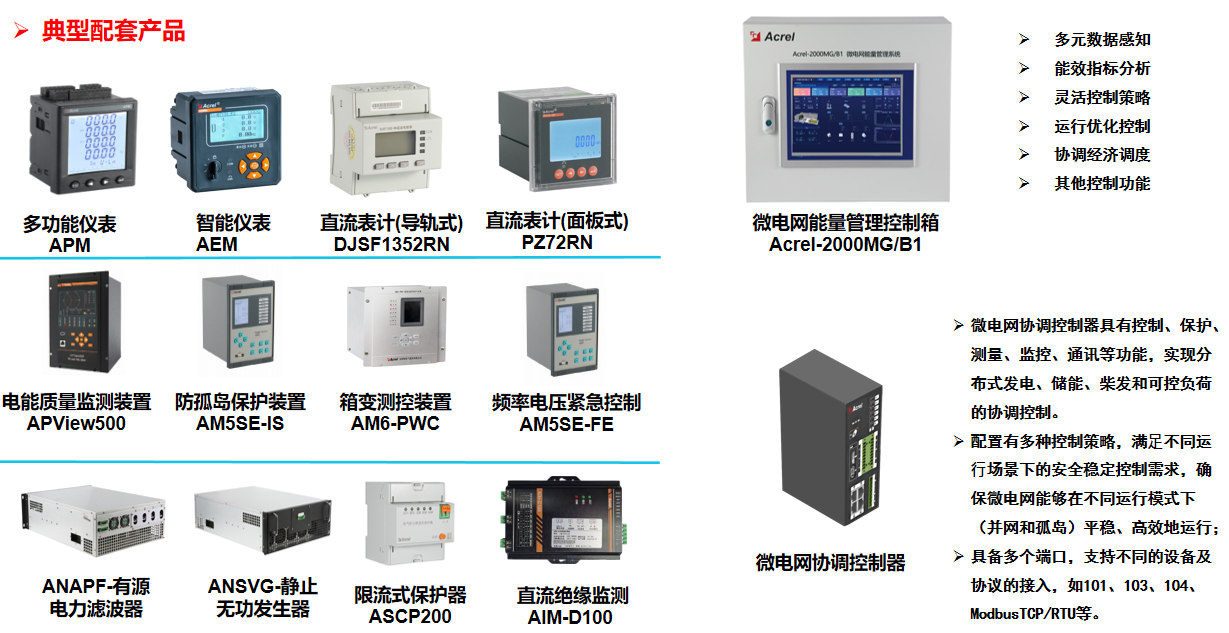
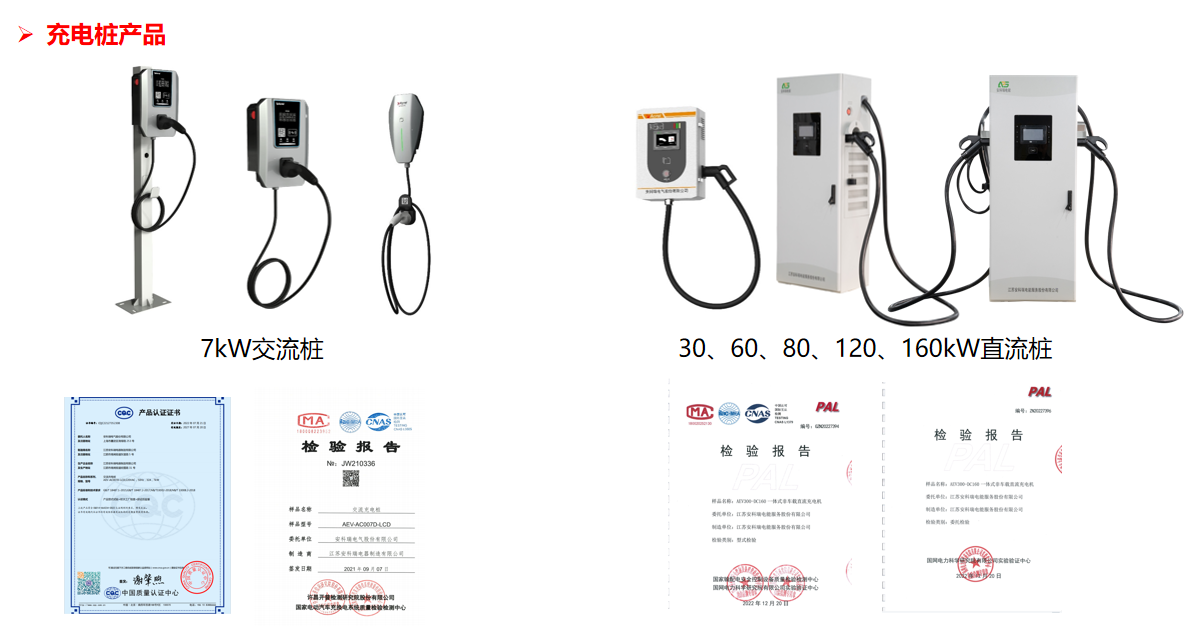
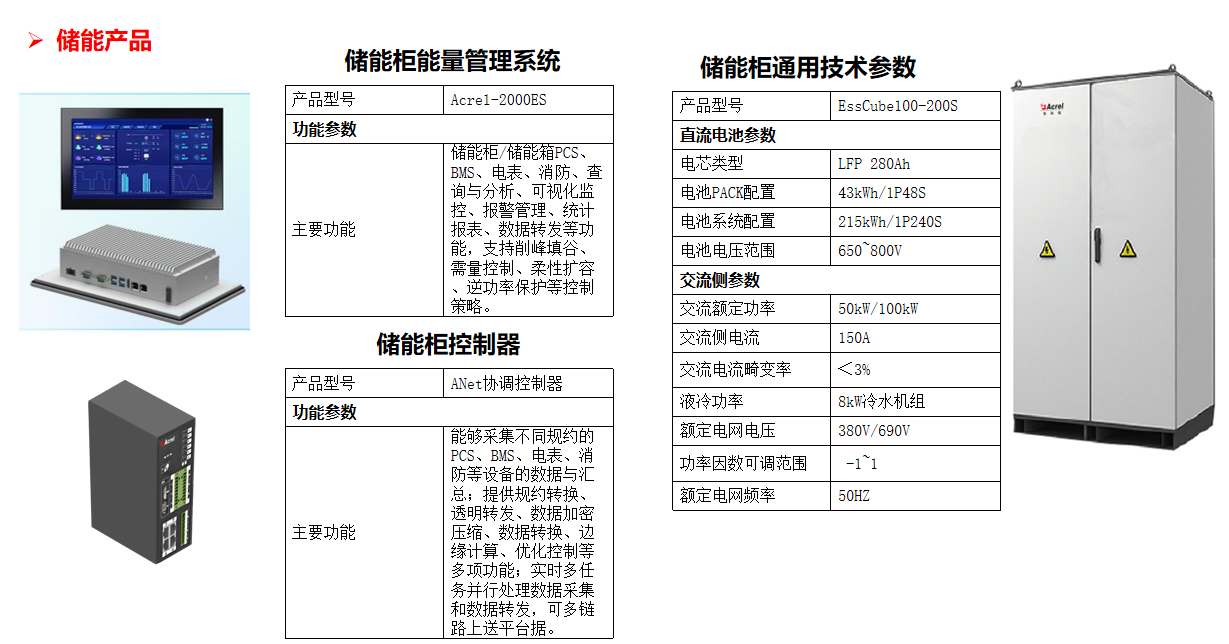
Case Study
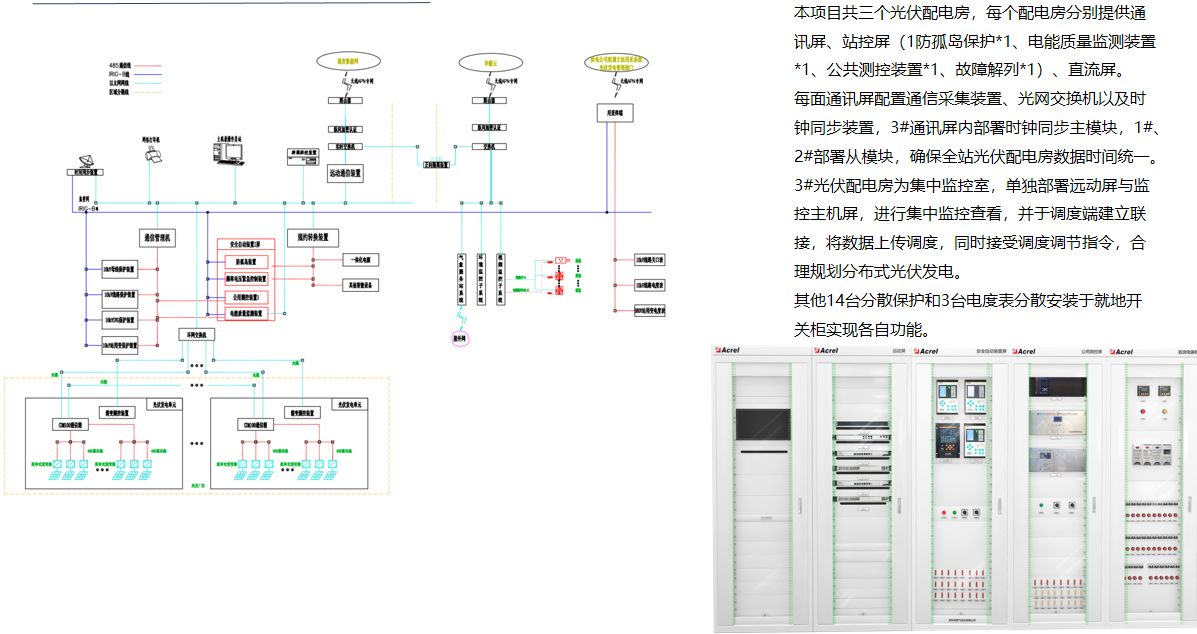
Case 1: A 18MW distributed photovoltaic monitoring system for a heavy industry enterprise
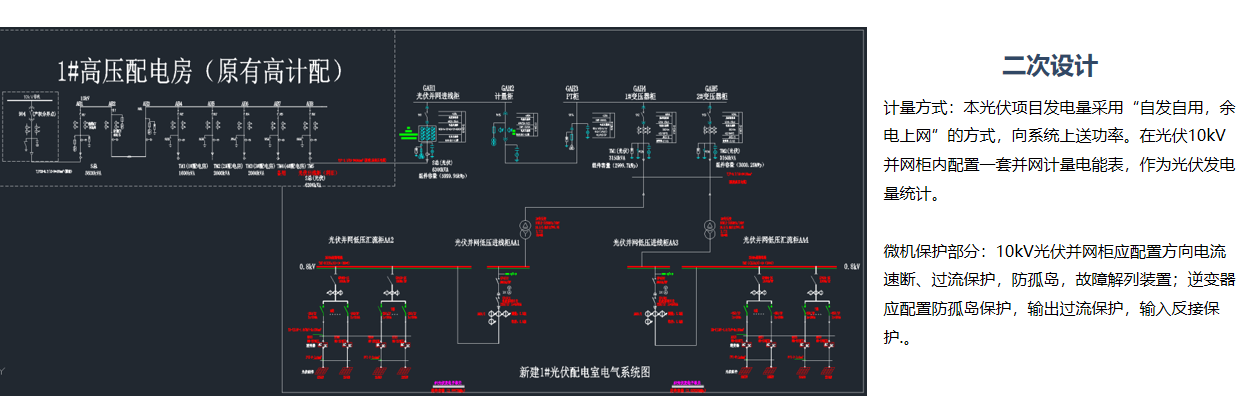
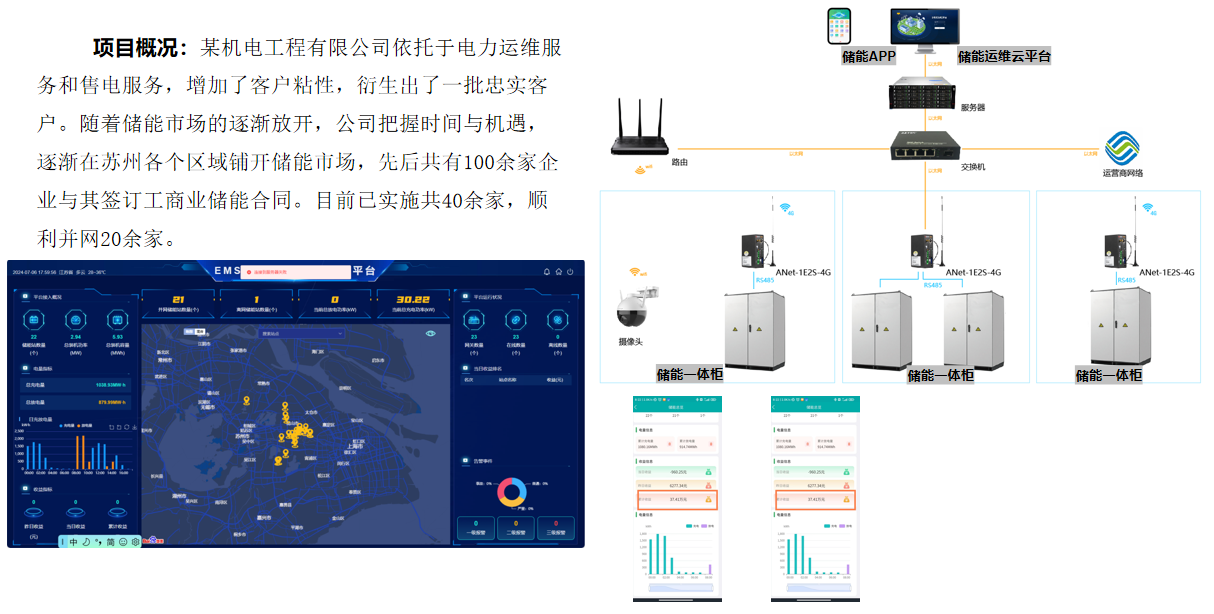
Case 2: A certain electromechanical industrial and commercial energy storage operation and maintenance project
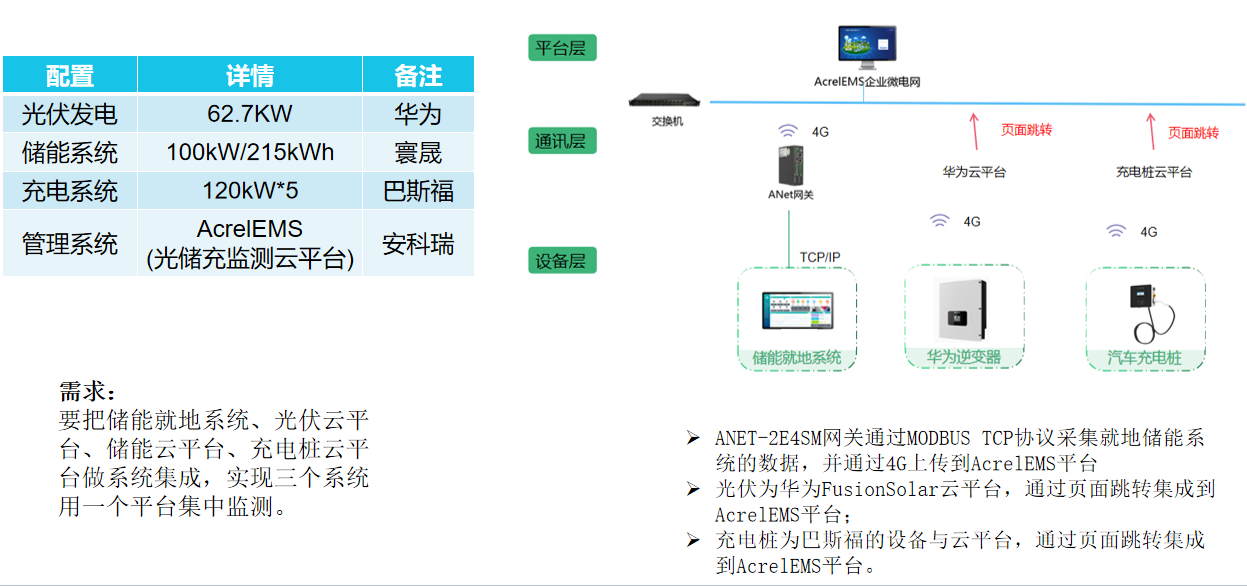
Case Three: A Photovoltaic Storage and Charging Microgrid Project in Ningxia
Conclusion
Driven by the dual goals of "dual carbon" and electricity market reform, the integration of "source grid load storage" has become the core path for the construction of new power systems. The demand matching, pain point solving, and scenario adaptation in its implementation process cannot be separated from professional technical solutions and intelligent management platforms. Ankerui relies on the AcrelEMS3.0 smart energy management platform to build a microgrid solution covering multiple scenarios such as distributed photovoltaics, industrial and commercial energy storage, orderly charging, and photovoltaic storage charging collaboration. From bottom level device monitoring and data collection to upper level optimization scheduling and carbon emission management, it forms an integrated energy management loop of "cloud edge end".
From reducing energy costs for enterprises and ensuring electricity safety, to assisting in the low-carbon transformation of industrial parks and supporting the construction of virtual power plants, Ankerui's solutions have been implemented and verified in many fields such as heavy industry, new energy, transportation, and universities. In the future, Ankerui will continue to deeply cultivate the field of energy digitization and intelligence, and create a safe, economical, and low-carbon microgrid operation mode for more users with more accurate demand response, more efficient system collaboration, and more comprehensive scene coverage, promoting the energy industry to steadily move towards cleanliness, efficiency, and intelligence.