-
E-mail
2885080326@qq.com
-
Phone
18701998775
-
Address
No. 253 Yulu Road, Jiading District, Shanghai
Ankerui Electric Co., Ltd
Say goodbye to electrical hazards! Ankerui's smart electricity usage provides dual protection for safety and energy conservation
Date: 2025-12-30Read: 22
Tang Xueyang
Ankerui Electric Co., Ltd. Shanghai Jiading 201801
What is smart electricity?
Smart electricity, as the name suggests, refers to the use of intelligent technology to make the use of electricity more efficient, safe, and convenient. Specifically, smart electricity is a comprehensive system that integrates electricity monitoring, data analysis, and intelligent control. It consists of an intelligent monitoring IoT system and social management methods based on the system. Its core lies in utilizing technologies such as the Internet of Things, big data, and cloud computing to monitor, analyze, and manage the electricity consumption process in real-time, aiming to achieve effective supervision and safety prevention of energy consumption.
The advantages of smart electricity usage
1. Energy conservation and consumption reduction, reducing electricity costs
The smart electricity system can monitor and analyze electricity consumption data in real time, providing users with accurate electricity statistics and energy-saving suggestions. Through intelligent control, the system can automatically adjust the operating mode and power of electrical equipment, achieving effective energy utilization and reducing waste. For example, in commercial buildings, smart power systems can automatically adjust the brightness and on/off time of lighting equipment based on pedestrian flow and light intensity, significantly reducing energy consumption costs. In addition, the system can provide personalized energy-saving solutions based on users' electricity habits and needs, helping users further reduce electricity costs.
2. Improve electrical safety and ensure the safety of life and property
The smart power system has powerful safety monitoring functions, which can monitor the operation status and power environment of electrical equipment in real time, and timely discover potential safety hazards. The system can accurately determine whether there are abnormal situations such as overload and short circuit in electrical equipment by monitoring key parameters such as residual current and temperature, and issue alarms at the appropriate time to remind users to take corresponding measures. This real-time monitoring and warning mechanism effectively reduces the risk of safety accidents such as fires and ensures the safety of life and property.
3. Optimize the electricity experience and improve the quality of life
The smart electricity system provides users with a more comfortable and convenient electricity experience through intelligent control. In the field of smart homes, users can control household appliances such as air conditioning, television, lighting, etc. anytime and anywhere through interactive devices such as mobile apps, achieving intelligent management. In addition, the system can provide customized electricity plans and services based on users' preferences and habits, such as automatically adjusting indoor temperature and humidity, setting intelligent scene modes, etc., allowing users to enjoy the convenience brought by modern technology while also feeling the improvement of their quality of life.
4. Promote energy transformation and green development
As an important component of new energy technology, smart electricity is of great significance in promoting energy transformation and achieving green development. Through smart electricity technology, effective utilization and management of renewable energy can be achieved, improving energy efficiency and reducing carbon emissions. For example, in the field of photovoltaic power generation, smart power systems can monitor the power generation efficiency and power quality of photovoltaic panels in real time, and automatically adjust power generation strategies based on weather and electricity demand, achieving the utilization of photovoltaic power generation. In addition, smart electricity can also promote the development of the energy Internet, promote the deep integration of the energy industry with information technology, manufacturing and other industries, and provide strong support for the sustainable development of the economy and society.
5. Promote industrial upgrading and create more job opportunities
The promotion and application of smart electricity technology will promote the upgrading and development of related industries. On the one hand, smart electricity will give rise to new industrial chains and business models, such as smart homes, smart buildings, etc., providing more development opportunities for related industries. The rise of these emerging industries will drive the development of upstream and downstream industrial chains, forming a virtuous cycle. On the other hand, the research and application of smart electricity technology require a large number of professional talents, including IoT engineers, data analysts, system operation and maintenance personnel, etc. This will create more employment opportunities for society, alleviate employment pressure, and improve talent quality.
6. Improve energy regulatory efficiency and assist government decision-making
The smart electricity system can achieve real-time collection and analysis of electricity consumption data, providing accurate energy regulatory data for the government. By analyzing these data, the government can understand information such as energy consumption structure and electricity demand, providing strong support for formulating more scientific and reasonable energy policies. For example, the government can analyze the electricity consumption characteristics and trends of different industries based on the data provided by the smart electricity system, and formulate corresponding energy-saving and emission reduction policies and measures; At the same time, data analysis can also identify phenomena of energy waste and unreasonable use, and take timely measures to correct them. This data-driven regulatory model not only improves regulatory efficiency, but also enhances the scientific and targeted policy-making.
Analysis of Existing Problems
There are many safety hazards:The aging, short circuit, overload, leakage and other problems of traditional power lines are difficult to monitor in real time, which can easily lead to safety accidents such as electrical fires and electric shocks. Moreover, it is difficult to quickly locate the fault point after the accident occurs, delaying rescue time.
Serious energy waste:Some users have irregular electricity usage habits, such as long on lights and equipment idling; At the same time, due to the lack of effective analysis and optimization methods for electricity consumption data, it is impossible to adjust the electricity consumption strategy reasonably according to the electricity load, resulting in a large amount of energy waste.
Low management efficiency:Traditional electricity management mainly relies on manual inspection, which not only consumes a lot of manpower, material resources, and time costs, but also has a long inspection cycle and limited coverage, making it difficult to grasp the electricity situation in real time, and unable to discover and solve electricity problems in a timely manner.
Data not interoperable:The data between different electrical devices and systems are often independent of each other, forming a "data island" that cannot achieve data sharing and collaborative analysis, making it difficult to provide comprehensive and accurate data support for electricity decision-making.
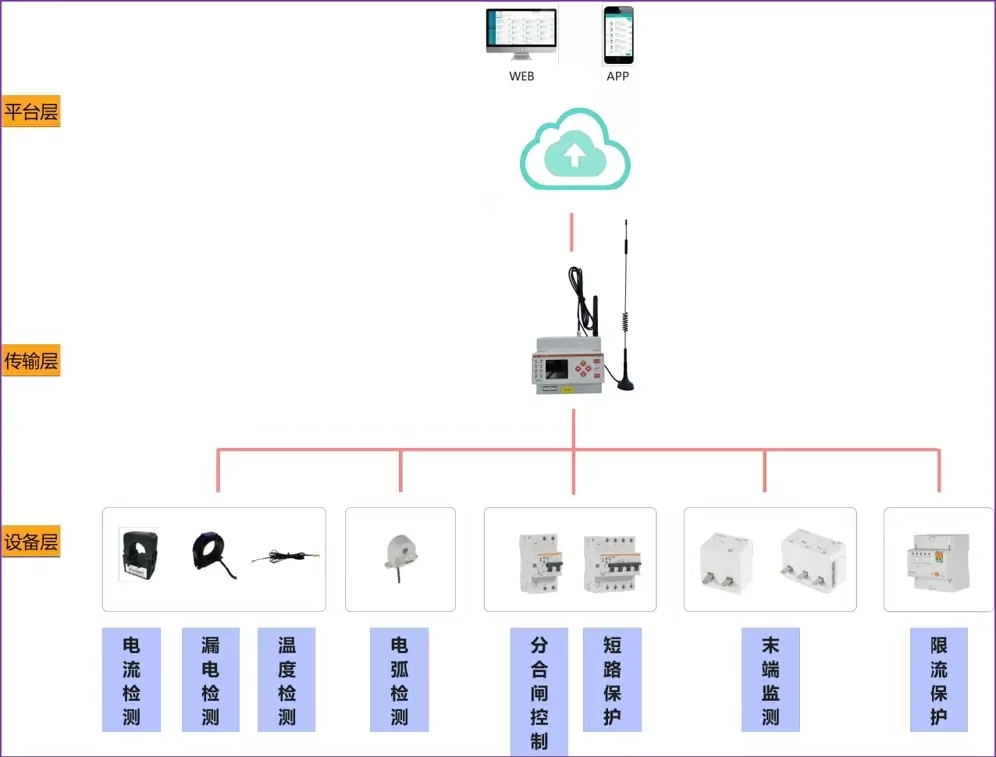
The smart electricity monitoring solution adopts a three-layer architecture of "cloud edge end", as follows:
Terminal layer: mainly composed of various smart sensors, smart meters, smart circuit breakers and other devices, it is responsible for collecting the current, voltage, temperature, power, leakage and other parameters of the power lines, and uploading the collected data to the edge computing layer.
Edge computing layer: edge nodes deployed on or near the user's site are mainly responsible for real-time processing and analysis of the data uploaded by the terminal layer, such as data filtering, data cleaning, data compression, etc., and real-time pre-warning of abnormal data, and uploading the processed data to the cloud platform. In addition, the edge computing layer can also remotely control the terminal devices according to the instructions of the cloud platform.
Cloud platform layer: use cloud computing technology to build a unified smart power monitoring cloud platform, which is mainly responsible for storing, managing, analyzing and mining the data uploaded by the edge computing layer, providing power monitoring, early warning management, energy consumption analysis, report statistics, remote control and other functions, and providing users with multiple access methods such as the Web end and APP end, so that users can view power consumption and conduct power management anytime and anywhere.
Implementation function:● Leakage detection ● Temperature detection ● Voltage/current detection ● Arc detection ● Short circuit protection ● Switching control ● Terminal monitoring ● Current limiting protection
Installation location:● Incoming circuit ● Outgoing lighting circuit ● Outgoing socket circuit ● Outgoing air conditioning circuit
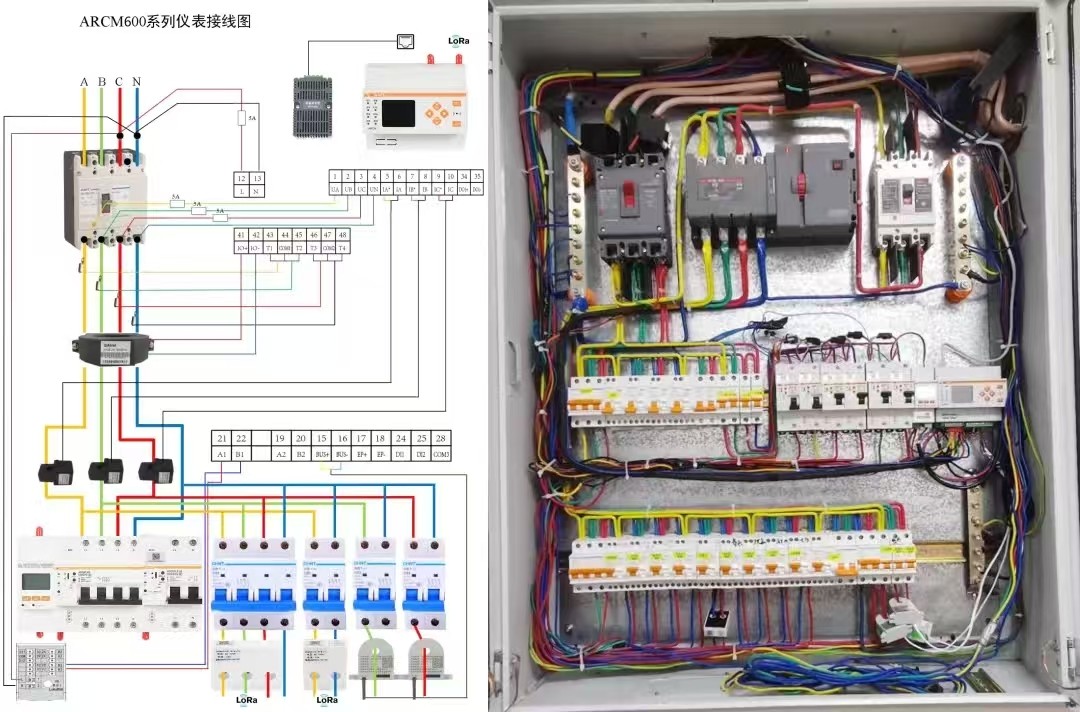
Advantages of the plan:
1. To achieve precise control over the electrical safety of on-site distribution boxes/cabinets, the combination scheme greatly reduces the cost investment of traditional smart electricity while accurately locating fault points without leaving blind spots.
2. Combination product solution, unified ARCM600 detector upload, reduces installation space and debugging difficulty, shortens installation time, and improves hazard investigation efficiency.
Application scenarios
Nine small venues, three in one venues
● Personnel intensive places such as shopping malls, supermarkets, wholesale markets, etc
● Social welfare institutions such as nursing homes, welfare homes, orphanages, etc
Cultural activity centers such as libraries, museums, science and technology centers, and cultural centers
● Kindergartens, primary schools, universities and other school places
● Transportation venues such as stations, high-speed trains, airports, etc
Financial venues such as bank headquarters buildings, branches, and business halls
● Explosive warehouses, wood processing, textile, spraying, pharmaceutical and other enterprises
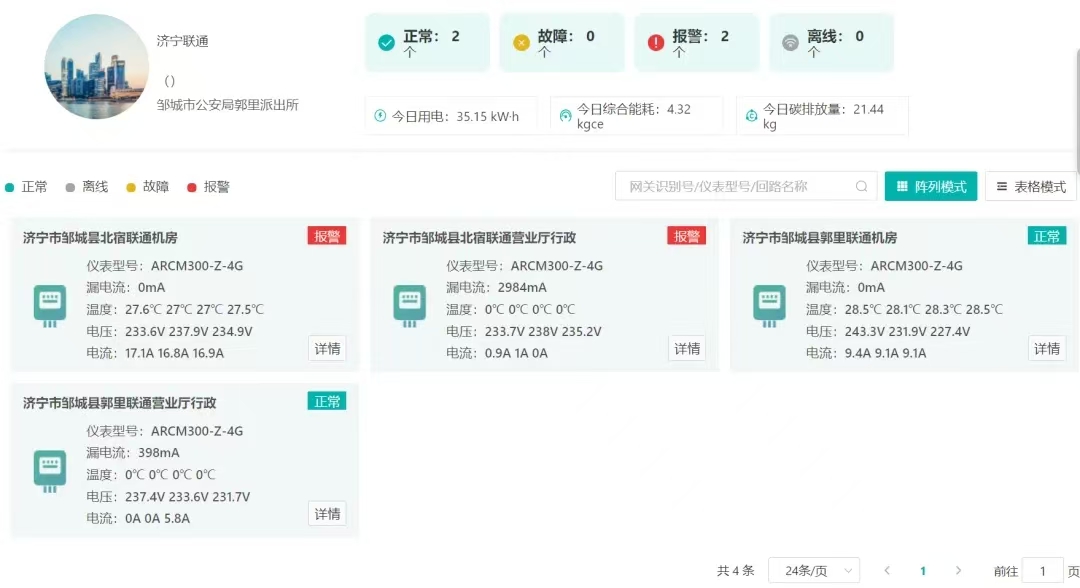
The cockpit can intuitively display the location information, equipment alarm information, alarm classification, alarm statistics, etc. of all tenants on the map.

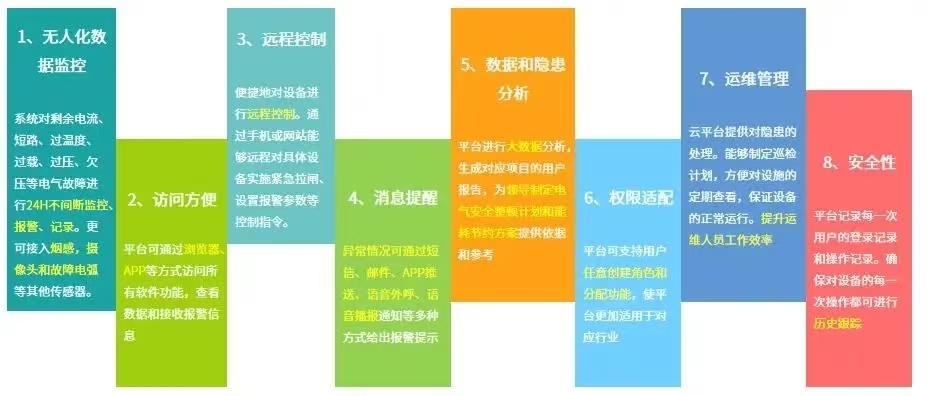
The system can be connected to electrical fire detectors, fault arcs, intelligent micro breakers, power sprites, intelligent molded case circuit breakers, arc extinguishing protectors, etc., and can remotely control the corresponding detectors.

Electrical safety monitoring, monitoring electrical parameters such as leakage current, cable temperature, and fault arcs in the electrical circuit. When there is a large leakage current, high cable temperature, fault arcs in the circuit, or when an electric scooter charging is detected, an alarm is generated.