-
E-mail
2880956079@qq.com
-
Phone
13524471462
-
Address
No. 253 Yulu Road, Jiading District, Shanghai
Ankerui Electric Co., Ltd
Dual carbon+rural revitalization synergy! Ankerui EMS3.0 cracking six major zero carbon rural construction projects
Date: 2025-11-06Read: 27
In the context of the deepening of the "dual carbon" strategy and the coordinated efforts of rural revitalization strategy, zero carbon rural construction has become the core lever to solve the imbalance of urban and rural development and promote the construction of ecologically livable rural areas. As an important component of the national carbon reduction system, rural areas bear the dual mission of agricultural production and ecological conservation. However, their traditional energy dependence, extensive production methods, and weak infrastructure not only constrain their own development quality, but also affect the overall promotion of the national "dual carbon" goals. The construction of zero carbon rural areas is not simply about "reducing carbon emissions", but is supported by digital and intelligent technologies, with the path of replacing clean energy, developing circular agriculture, and upgrading ecological governance, to achieve a comprehensive green transformation of rural energy, industry, human settlement, and governance. This practice can not only activate the ecological value and economic potential of rural areas, narrow the development gap between urban and rural areas, but also lay a solid foundation for the construction of ecological civilization at the grassroots level nationwide, enabling the organic unity of "green mountains and clear waters" and "common prosperity" on the rural land.

Six core obstacles to the construction of zero carbon smart countryside
1. Lagging digital integration: rural Internet penetration rate is low, regional gap is large, residents' digital acceptance is insufficient, and there is a lack of adaptive management talents, technical platform input and output are unbalanced, and top-level design is imperfect.
2. Contradiction between economy and carbon constraints: There is a synergistic problem between rural poverty alleviation and carbon reduction. The rural carbon trading, carbon compensation market, and green finance system are not sound, and there is a single product and "greenwashing" behavior.
3. Insufficient adaptation of low-carbon technology: Low carbon technology is generally immature, uneven regional development, poor adaptability and disconnection in rural applications, and lack of mandatory standards for green buildings.
4. Insufficient implementation of goals: Rural areas still rely on traditional energy sources such as coal, high carbon emissions from agricultural production, inadequate control of pollution such as manure and garbage, and the integration of pollution reduction and carbon reduction into production and life.
5. Imperfect top-level design: fragmented governance policies, lack of top-level and local emission reduction responsibility mechanisms, lack of normalized evaluation, unclear low-carbon planning for agriculture, rural areas, and farmers, and insufficient departmental coordination.
6. Insufficient coordinated development between urban and rural areas: Zero carbon cities are separated from rural development, and close connections have not been established in areas such as ecology, technology, and finance, resulting in the failure to form a zero carbon integrated development pattern between urban and rural areas.
Ankerui Smart Energy Management System optimizes zero carbon rural management
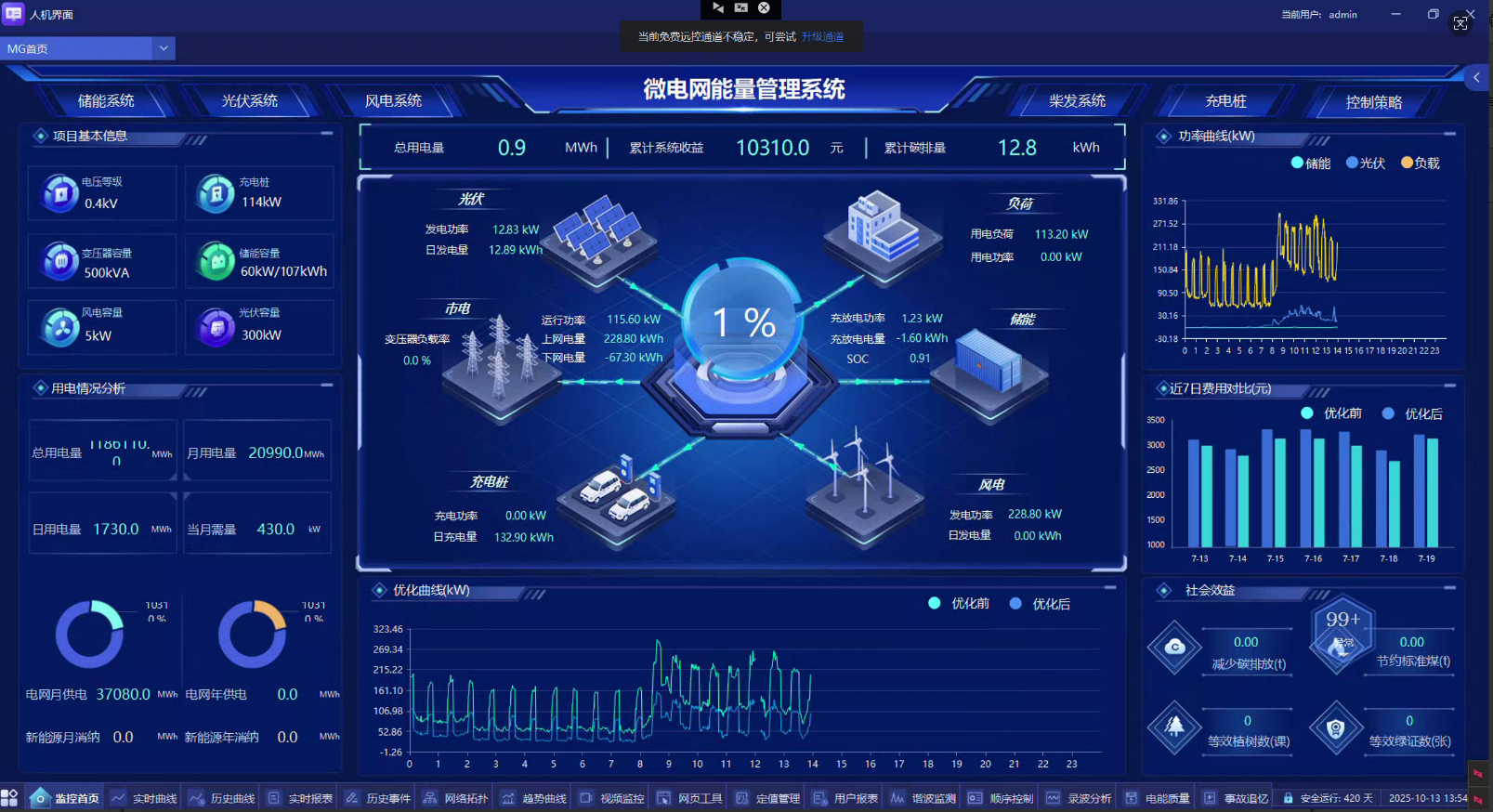
The Ankerui EMS3.0 microgrid management system is capable of real-time monitoring, diagnosis and alarm, panoramic analysis, orderly management and control of the sources, networks, loads, energy storage systems, and charging loads of microgrids deployed in rural areas, meeting the needs of multi-faceted operation monitoring, intelligent security analysis, forward-looking adjustment and control, and dynamic panoramic analysis of microgrids. It integrates modern information technologies (such as IoT, big data, cloud computing, and artificial intelligence AI) to monitor, control, and optimize energy use, improve efficiency and reduce waste, achieve flexible interaction and economic optimization of photovoltaic energy storage and charging resources under different goals, and maximize energy, economic, and environmental benefits
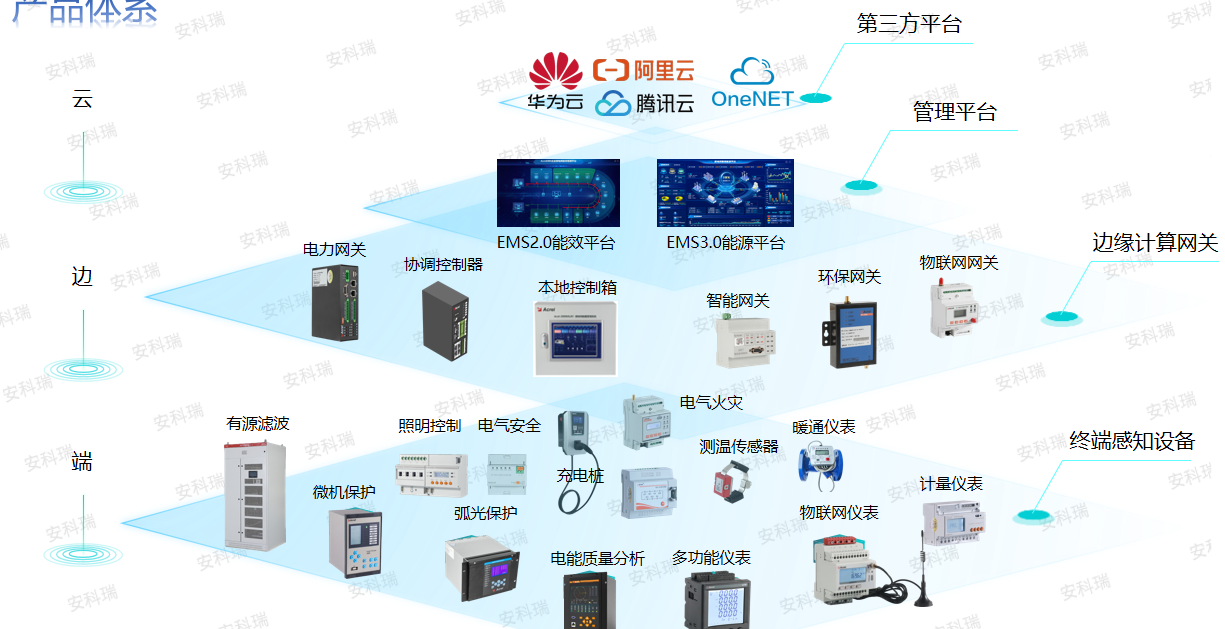
The Ankerui EMS3.0 platform integrates the Internet of Things, big data, AI algorithms, and power automation technology to build an integrated platform system of "cloud edge management end", supporting multi-source and diversified access to photovoltaics, energy storage, power grids, charging piles, loads, etc. It has the following core functions:
Coordination and control function
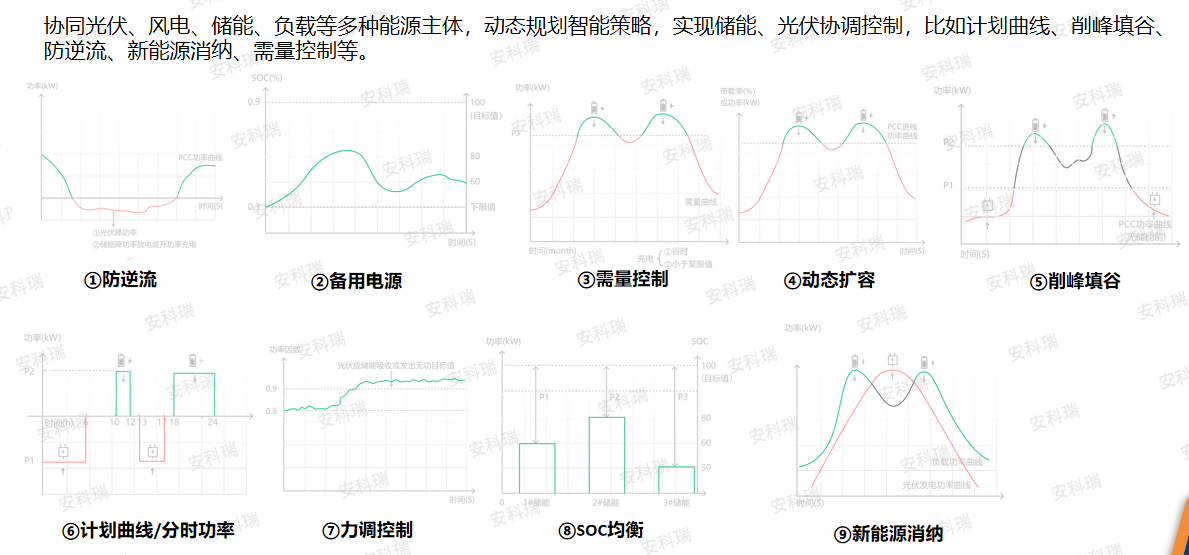
Energy monitoring and operation optimization
“source-grid-load-storage”Waiting for full operation data, storing and displaying, status detection, operation alarms, visually displaying various data such as microgrid system electricity, carbon emissions, costs, equipment operation, etc; Real time monitoring of the "source network load storage and charging" status in county-level rural areas, dynamically displaying electricity consumption, carbon emissions, and operating costs; Integrated light storage and charging monitoring, power quality analysis, fault diagnosis, strategy execution, and revenue calculation; Multi time scale power prediction (minute, hour, day) enhances scheduling foresight.