-
E-mail
1660276275@qq.com
- Phone
-
Address
A306 Zhongguancun Software Park Information Center, Dongbeiwang West Road, Haidian District, Beijing
Beijing Blue Card Technology Co., Ltd
The evolution path of parking lot dedicated cameras from basic monitoring to intelligent management
Date: 2025-07-27Read: 45
In the wave of smart city construction, parking lot management is undergoing a revolutionary transformation from manual monitoring to comprehensive intelligence. As the core equipment of this transformation, the parking lot dedicated camera has broken through the traditional monitoring scope and evolved into a comprehensive management terminal integrating license plate recognition, parking space guidance, and abnormal warning. Its technological iteration and adaptability to different scenarios directly determine the operational efficiency and user experience of the parking lot.
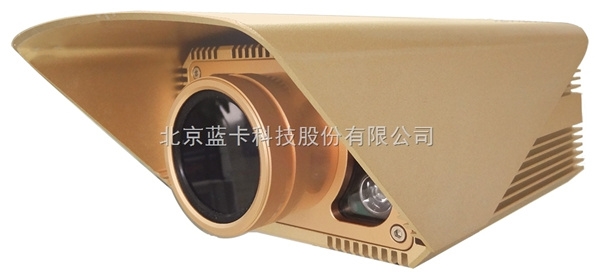
1、 Technical Core: Breakthrough in Multidimensional Perception Capability
Modern parking lot dedicated cameras have achieved three core functional upgrades through deep integration of hardware and algorithms:
1. Ultra clear imaging and intelligent fill light: Equipped with 4K resolution sensors and array white lights, it can capture clear license plates in low light environments of 0.1Lux. For example, the Yidongtong video parking guidance camera uses a 4 million pixel CMOS chip, combined with an intelligent fill light system that lights up when the car is coming and turns off when the car is going, to ensure a recognition accuracy of 99.8% in complex lighting scenes in underground parking lots.
2. Multi scenario recognition algorithm: For pain points such as new energy parking space occupation and temporary vehicle parking exceeding the time limit, the device integrates a deep learning framework. The TP-LINK parking management camera can recognize blue/green license plate vehicles and automatically control new energy dedicated parking spaces through linkage locking, increasing the utilization rate of charging piles by 40%.
3. Environmental adaptability optimization: With IP67 waterproof and dustproof design, a wide temperature range of -30 ℃ to 70 ℃, and built-in heater, the equipment can operate stably in abnormal environments such as outdoor parking lots and high-altitude areas. The Hikvision "Deep Eyes" series is equipped with 120dB wide dynamic technology, effectively solving the problem of license plate overexposure caused by backlighting at entrances and exits.
2、 Scenario based application: from single monitoring to full process management
1. Entrance and exit control: Equipped with LPR license plate recognition system cameras, vehicles can lift their poles within 0.5 seconds upon entry and automatically deduct fees upon exit. After being applied in a commercial complex in Beijing, the efficiency of vehicle traffic during peak hours has increased threefold, and labor costs have been reduced by 60%.
2. Parking guidance and reverse car search: The video parking guidance camera updates the remaining parking data in real time and pushes it to the car owner app through built-in parking lights and AI algorithms. The Chengdu Urban Investment Group headquarters building project shows that this technology has shortened the car search time from 15 minutes to 2 minutes and increased parking turnover by 25%.
3. Security warning and evidence retention: supports intelligent analysis functions such as motion detection and wandering detection. A certain technology park in Shenzhen successfully intercepted 12 suspicious intrusion incidents by deploying cameras with sound and light alarms, increasing the efficiency of accident investigation and evidence collection by 80%.
3、 Future trend: deep integration of edge computing and the Internet of Things
With the development of 5G and AIoT technology, parking lot dedicated cameras are evolving towards a "end-to-end cloud" collaborative architecture. The platform has implemented a closed-loop system of local AI inference for cameras and cloud based data training, which can dynamically optimize license plate recognition models. The multimodal camera launched by SenseTime Technology integrates facial recognition and behavior analysis functions, providing full chain security for unmanned parking lots.
The evolution history of parking lot dedicated cameras, from a single monitoring device to a neural node in the smart parking ecosystem, reflects the need for refinement in urban governance. In the future, with the popularization of vehicle road collaboration technology, such devices will become key hubs connecting static and dynamic traffic, providing data support for alleviating urban congestion.