-
E-mail
3008384089@qq.com
-
Phone
15201760719
-
Address
No. 253 Yulu Road, Malu Town, Jiading District, Shanghai
Shanghai Ankerui New Energy Co., Ltd
Disorderly distributed energy? Distribution network load fluctuation? Ankerui's intelligent solution ensures worry free management of the new power grid!
Date: 2025-11-28Read: 26
Abstract
Improve the carbon emission statistical accounting system, steadily implement policies and systems such as local carbon assessment, industry carbon control, enterprise carbon management, project carbon evaluation, and product carbon footprint. Develop and construct zero carbon factories and parks,
-Suggestions for the 15th Five Year Plan
With the deepening of the "dual carbon" target and the acceleration of the construction of new power systems, the distribution network is undergoing profound changes. High proportion of distributed energy access, large-scale charging of electric vehicles, and a surge in user interaction demand... The traditional distribution network management model is facing all the challenges it has ever faced:
Distributed energy cannot be ignored: a large number of fluctuating power sources such as photovoltaics and wind power are connected, and problems such as local overvoltage and reverse power transmission occur frequently.
The massive load cannot be controlled: electric vehicles are charging in a disorderly manner, industrial and commercial load fluctuations are intensifying, peak valley differences are widening, and the risk of transformer overload is sharply increasing.
The lack of effective aggregation and coordination of dispersed resources makes it difficult to support the safe and stable operation of the power grid and efficient consumption of new energy.
Accurate regulation "cannot be achieved": The traditional "passive response" mode lags behind and is difficult to meet the requirements of real-time perception, rapid decision-making, and precise control of the new distribution network.
Breaking the impasse urgently requires a 'smart' upgrade!
Based on the core requirements of the new distribution network, we have launched a new generation of "Lingxi" smart energy management platform, with the core concept of "global perception, intelligent decision-making, flexible control, and value aggregation", injecting powerful "digital intelligence genes" into the distribution network and empowering efficient coordination of energy grid load and storage.
1. Requirements for new energy construction in the new distribution network
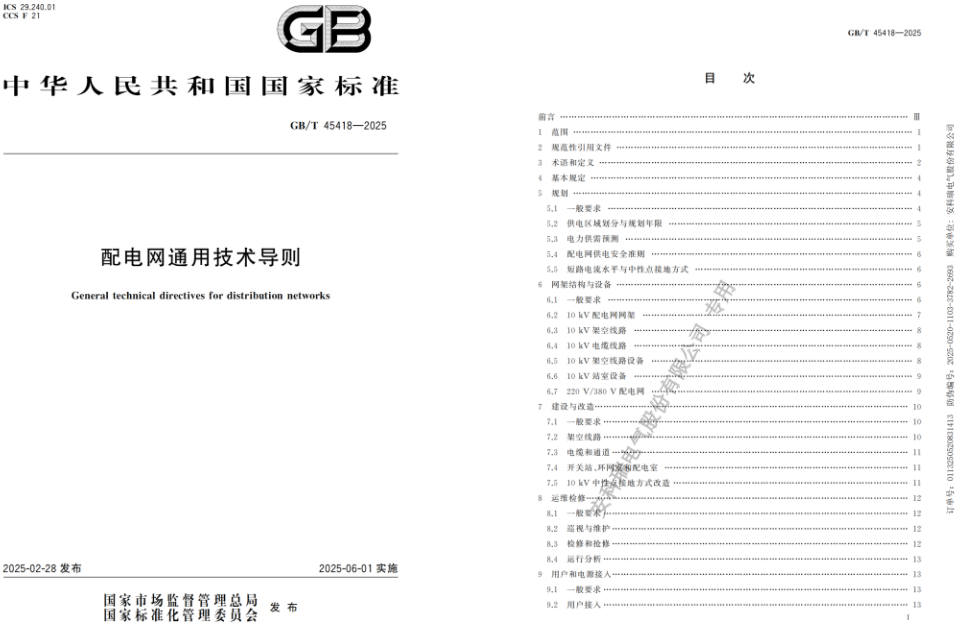
The 10kV distribution network belongs to the load side and is mainly used to supply power to industrial and commercial users as well as large public facilities. The guidelines stipulate the technical requirements for planning, grid structure and equipment, construction and renovation, operation and maintenance, new energy access, secondary systems, etc. of AC distribution networks of 10kV and below, and are applicable to the planning, construction, renovation, and operation of distribution networks in urban, rural, and other areas. In addition, the guidelines have made requirements for the distribution network to adapt to the new power system, with the core purpose of ensuring reliable power supply to the distribution network, improving the ability to accept clean energy, adapting to diverse load demands, and promoting the intelligent and green development of the distribution network.
Guidelines for grid connection of distributed power sources: "9.3.2 The grid connection power control, voltage and frequency adaptability, islanding protection, etc. of distributed power sources should comply with the provisions of GB/T33593. Distributed power sources connected to the distribution network through three-phase should have power control and high and low voltage ride through capabilities. Electrochemical energy storage devices connected to the distribution network shall comply with the provisions of GB/T36547. ”
Requirements for the consumption of new energy: "9.3.4 Distributed power sources should be connected to the nearest distribution network. When the carrying capacity of the distribution network is insufficient, necessary adaptive transformation measures should be taken to improve the on-site consumption capacity of distributed power sources
Requirements for electric vehicle charging and swapping facilities: "9.4.6 Electric vehicle charging facilities should have orderly charging functions, and charging and swapping facilities should have functions that support power regulation of the distribution network, such as bidirectional energy exchange and vehicle network interaction
Requirements for secondary systems: "10.1.5 The construction of secondary systems in distribution networks should meet the requirements for access and coordinated control of distributed power sources, energy storage devices, and electric vehicle charging and swapping facilities
2. Energy storage IoT system
What kind of 'central brain' is needed for an intelligent distribution network?
AcrelEMS3.0 is based on the collaborative concept of "cloud edge end", integrating IoT, big data, and AI prediction algorithms. Through centralized monitoring, intelligent regulation, and economic dispatch, it achieves global perception, local optimization, and autonomous collaboration of the new distribution network, providing a software and hardware integrated solution for new energy projects including distributed photovoltaics, energy storage, and charging stations.
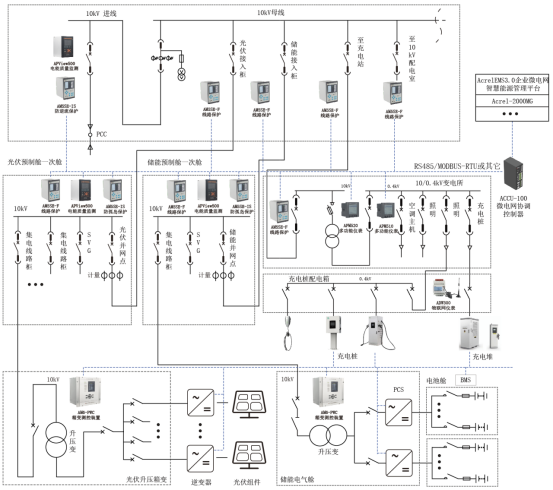
A new 10kV distribution network consisting of distributed photovoltaics, energy storage, car charging stations, and traditional electricity loads, consisting of 10kV switching stations, 10kV grid connected distributed photovoltaic systems, 10kV grid connected energy storage systems, electric vehicle charging stations, and other loads. The solutions provided by Ankrui include:
10kV distributed photovoltaic and energy storage system anti islanding protection, power quality monitoring, anti backflow control, and data security and scheduling docking for new energy grid connection;
AC/DC charging stations and orderly charging solutions;
10kV distribution network relay protection, box transformer measurement and control, fault diagnosis, and electrical monitoring;
Provide various energy utilization strategies such as new energy consumption and anti backflow control for new energy sites through "cloud edge end" collaboration;
Provide 1+N operation and maintenance management solution: 1 set of cloud platform, N new energy station operation and maintenance management.
Three core subsystems covering the entire chain of optical storage and charging scenarios
Distributed Photovoltaic Monitoring System
The Acrel-1000DP system supports communication with mainstream inverters, box transformers, power quality monitoring equipment, power controllers, and other devices, and has capabilities such as local remote control, alarm linkage, active and reactive power regulation, and network security protection. Support frequency/voltage emergency control, anti islanding protection, adapt to new operating systems, and meet the technical requirements of data docking and safe operation of the power grid for the dispatch platform.
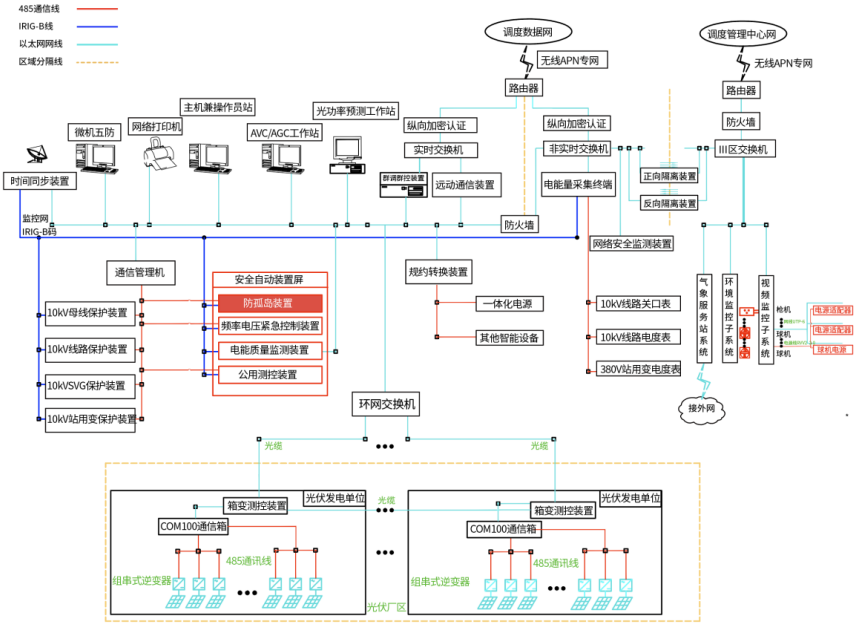
The capacity range of photovoltaic power stations connected to 10kV lines is usually between 400kW and 6MW. The Acrel-1000DP distributed photovoltaic power generation monitoring system from Ankerui is compatible with the domestic Kirin operating system and collects data from on-site inverters, box transformer measurement and control devices, anti islanding protection, anti backflow control devices, measuring instruments, power quality online monitoring devices, DC screens and other equipment. It provides local real-time display and alarm, remote control operation and adjustment, and has functions such as optical power prediction, active/reactive power control, frequency and voltage emergency control. In addition, the system is equipped with network security monitoring, horizontal isolation, and vertical encryption authentication devices to meet the requirements of power grid data security. The data is uploaded to the dispatch system to meet the requirements of grid connection, providing users with distributed photovoltaic monitoring and grid connection solutions to ensure photovoltaic power supply. The power station operates stably and reliably.
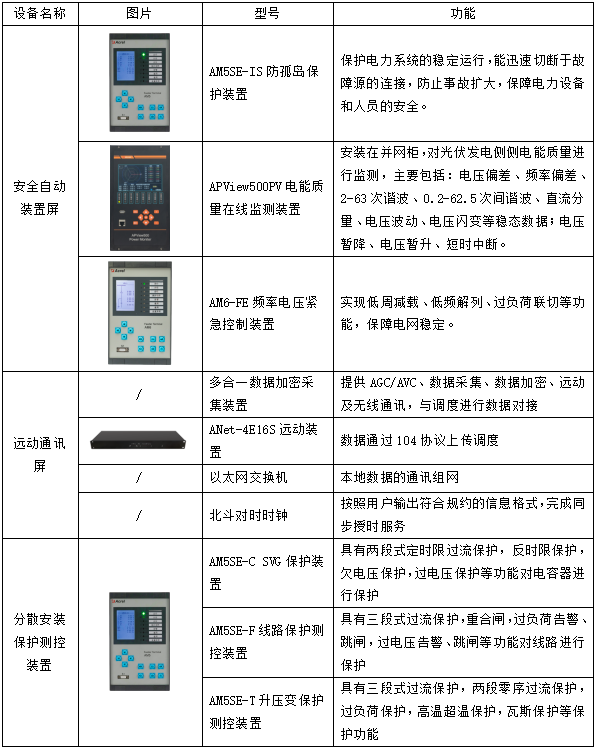
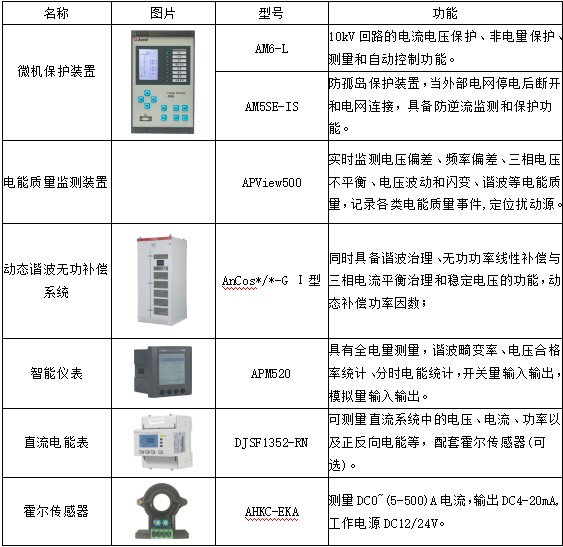
The photovoltaic monitoring system requires the use of relevant protection, measurement and control, stability control, analysis, data security, and communication equipment. The secondary equipment required for a typical distributed photovoltaic power station grid connected system is shown in the table below.
Energy storage system energy management platform
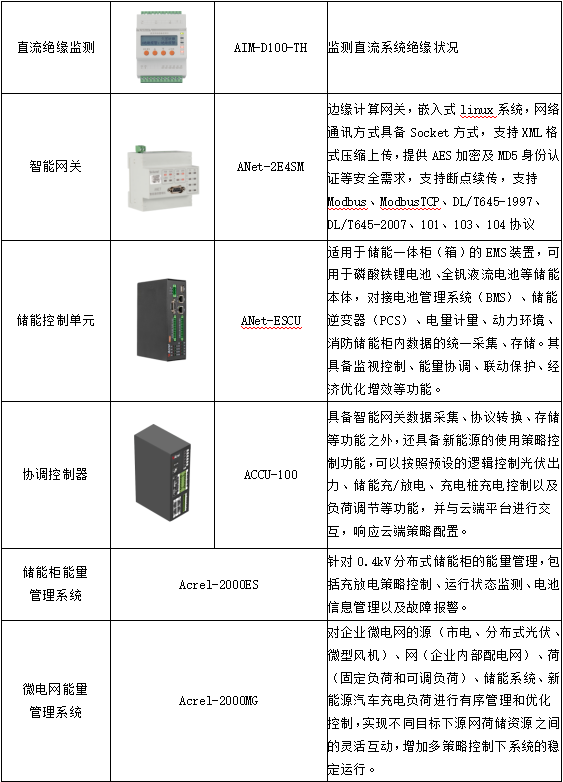
In the 10kV grid connected energy storage system, Ankerui's solution supports docking with BMS, PCS, power meters, and fire environment monitoring equipment, with functions such as DC insulation monitoring, power quality analysis, peak valley arbitrage, and anti backflow control. The Acrel2000MG energy management system can implement various operational strategy controls.
The Acrel-2000MG microgrid energy management system has complete battery management functions and rich external communication interfaces, which can achieve real-time monitoring of the operation information of intelligent devices such as energy storage systems, charging systems, photovoltaic systems, etc., including the collection, real-time monitoring, optimization management, intelligent maintenance, and information query functions of voltage, current, temperature, pressure, flow and other information in the energy storage system. Equipped with various control strategies such as new energy consumption, peak valley arbitrage, anti backflow, demand control, flexible expansion, and power rationing mode, to ensure the safe, stable, and intelligent operation of energy storage systems.
Orderly Charging Operation Management System
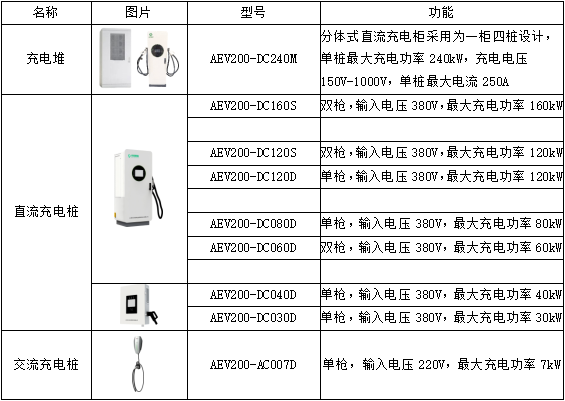
Acrel has developed the APSMS platform to address the impact of charging pile loads on distribution transformers. By combining peak and valley electricity prices with load forecasting models, it achieves orderly regulation and flexible management of charging piles, improves the controllability of transformer load rates, and reduces the cost of electricity usage.
The AcrelEMS3.0 platform adopts a layered control strategy:
End side control: The device layer performs functions such as voltage/frequency control and MAX power point tracking;
Side scheduling: Local controllers implement new energy coordination, load management, anti backflow strategies, etc;
Cloud optimization: Based on big data analysis for power prediction, energy economy evaluation, and strategy issuance.
The platform supports unified scheduling and management of distributed sites, and can flexibly adapt to complex power environments such as large parks, industrial and commercial enterprises, and integrated photovoltaic storage and charging stations through the deployment of "1 platform+N stations". Collaborative three-layer strategy of "cloud edge end": data-driven energy optimization
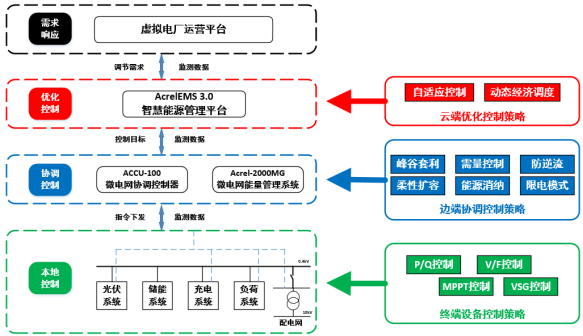
Terminal device control strategy refers to the operational strategy of on-site devices in grid connected and off grid states, including active/reactive power control, voltage/frequency control/MA power tracking, virtual synchronous generator inertia control, and other strategies provided by energy storage inverters, photovoltaic inverters, charging piles, and other equipment;
The edge coordination control strategy is an energy strategy executed by the local ACCU-100 coordination controller or Acrel-2000MG energy management system, including new energy consumption, anti backflow control, peak valley arbitrage, flexible expansion, demand control, power rationing mode, etc. These strategies can be executed locally;
The cloud optimization control strategy is a strategy optimization made by the AcrelEMS3.0 platform based on power generation forecasting, load forecasting, electricity price fluctuations, and scheduling instructions from the virtual power plant platform. These strategies are distributed to local coordination controllers or energy management systems for execution.
The AcrelEMS3.0 smart energy management platform mainly includes the following functions:
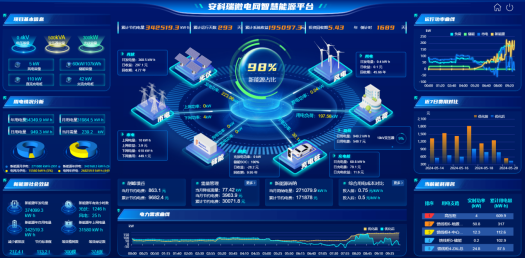
Integrated monitoring: Implement functions such as collection, monitoring, visualization display, abnormal alarm, event query, and report statistics of distribution rooms, photovoltaic systems, energy storage systems, loads, charging piles, and environmental data in the distribution network;
Intelligent control: Collaborative photovoltaic, energy storage, load and other energy entities, dynamically planning intelligent strategies to achieve coordinated control of energy storage and photovoltaic, such as planning curves, peak shaving and valley filling, anti backflow, new energy consumption, demand control, etc;
Energy analysis: equipped with microgrid energy consumption and benefit analysis, microgrid economic operation analysis, multi-dimensional electricity analysis, and conducting daily, monthly, and annual energy report statistics;
Power prediction: Based on historical photovoltaic output power and historical numerical weather data, combined with numerical weather forecast data and the geographical location of photovoltaic power generation units, a deep learning algorithm is used to establish a prediction model library to achieve short-term and ultra short time power prediction of photovoltaic power generation, and error analysis is conducted; At the same time, for all loads within the microgrid, based on historical load data, the load power curve is predicted through big data analysis algorithms.
Optimization scheduling: Based on the results of distributed energy generation forecasting and load forecasting, combined with factors such as time of use electricity prices, grid interaction power, and energy storage constraints, an optimization model is established with the goal of reducing electricity costs and carbon emissions. Deep learning algorithms are used to analyze the operating power plan of microgrids, and the system decomposes the power plan to achieve optimal control of photovoltaic, energy storage, and charging piles.
What is the core value of smart energy management?
Operational safety: achieving grid connection protectionGuarantee mechanisms such as power quality control and emergency power dispatch;
Maximizing energy utilization: enhancing the on-site consumption capacity of new energy and supporting collaborative operation;
Energy efficiency and economic optimization: Through power generation and load forecasting, as well as cost model construction, energy conservation and cost reduction can be achieved;
Digital operation and maintenance: supports remote monitoring, abnormal alarm, event tracing, and data visualization operation and maintenance.
Conclusion
The new distribution network is a key link in building a new power system, which puts forward higher and more intelligent requirements for energy management. The smart energy management platform is the key supporting tool that has emerged. It takes advanced digital and intelligent technology as its core, connects various links of source, network, load and storage, and achieves efficient collaboration and value creation.