-
E-mail
13613264222@163.com
-
Phone
13613264222
-
Address
Liuyanma Industrial Zone, Dacheng, Langfang, Hebei
Tianjin Cable Factory Rubber Cable Factory
A versatile player in high temperature, severe cold, and complex working conditions for silicone rubber cables
Date: 2025-08-25Read: 43
In the high temperature roasting of 150 ℃ in front of the steel smelting furnace, the extreme cold test of -50 ℃ at the Arctic scientific research station, the strong electromagnetic interference of the new energy vehicle motor compartment, and the corrosive gas erosion of the petrochemical platform, traditional cables often strike frequently due to insulation aging, embrittlement and cracking problems. Silicone rubber cables, with their unique molecular structure and outstanding comprehensive performance, have become the "anchor" for power transmission under these abnormal working conditions. This article will reveal the core competitiveness of this industrial "jack of all trades" from three aspects: material characteristics, performance advantages, and application innovation.
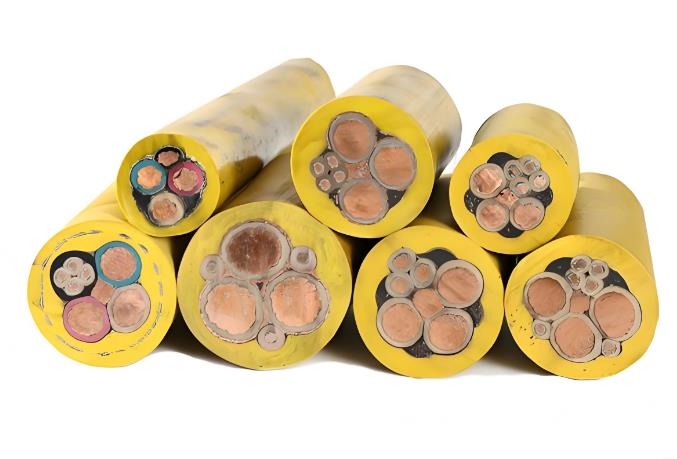
1、 Molecular code: Unlock the 'superpower' of silicone rubber
The excellent performance of silicone rubber cables lies in their unique molecular structure, where the main chain is composed of silicon oxygen bonds (Si-O) and the side chains are connected to organic groups
1. Thermal stability: The Si-O bond energy (466kJ/mol) is 1.3 times that of the carbon carbon bond (347kJ/mol), allowing silicone rubber to maintain elasticity in a wide temperature range of -60 ° C to 250 ° C. After a low-temperature bending test at -70 ° C, there were no cracks, and the insulation resistance decreased by less than 10% after 1000 hours of continuous operation at 250 ° C.
2. Hydrophobic and anti fouling: The methyl group (- CH3) in the molecular chain forms a dense hydrophobic layer with a water contact angle greater than 110 °. The water absorption rate is only 0.05% in a 98% humidity environment, effectively preventing short circuits caused by moisture.
3. Arc resistance: The breakdown field strength reaches 20kV/mm, and it can withstand 50 consecutive arc impacts at a voltage of 1.8kV without damage, which is three times higher than that of cross-linked polyethylene cables.
2、 Performance breakthrough: redefining cable reliability standards
1. Mechanical lifespan: Through 100000 dynamic bending tests (bending radius 5D), the conductor breakage rate is less than 0.1%, while ordinary PVC cables show significant damage after 20000 tests.
2. Chemical resistance: After soaking in a 10% concentration sulfuric acid solution for 30 days, the volume expansion rate of the insulation layer is less than 2%, and there are no corrosion marks on the surface of the sheath.
3. Flame retardant properties: Passed UL94 V-0 certification, with a self extinguishing time of less than 2 seconds after ignition, and a smoke emission of only 1/5 of PVC cables during combustion.
3、 Application innovation: full scene coverage from industry to civilian use
1. In the field of new energy: In the Tesla Model 3 motor compartment, the cable can withstand continuous high temperature of 150 ℃ and 8g vibration acceleration, transmit 400V high-voltage current, and have a service life of 15 years, which is three times longer than traditional cables.
2. Rail Transit: The pantograph cable on the roof of China's high-speed railway Fuxing adopts a silicone rubber sheath, which remains flexible in -40 ℃ ice and snow weather and level 8 strong winds, ensuring that the contact pressure between the pantograph and the catenary is stable at 70N ± 5N.
3. Medical equipment: The internal wiring harness of the da Vinci surgical robot uses medical grade silicone rubber cables, which have passed ISO 10993 biocompatibility certification and meet FDA standards for release detection in a 37 ℃ body fluid environment.
4. Aerospace: Inside the fairing of the Long March 5 carrier rocket, the cables transmit signals with an error rate of less than 10 ⁻¹ ² in a vacuum environment and between -180 ℃ and 120 ℃ of alternating temperature.
From laboratories to production lines, silicone rubber cables are reshaping the industry landscape with an annual market growth rate of 12%. The 23 technologies contained in each meter of cable are not only a conquest of "extreme working conditions", but also an example of the transformation of materials science into engineering applications. Under the dual drive of Industry 4.0 and carbon neutrality, this' temperature adaptive 'will surely usher in a broader stage.