-
E-mail
673420760@qq.com
-
Phone
15810926112
-
Address
No. 6, South Xisanhuan Road, Fengtai District, Beijing
Product Categories
Simoro (Beijing) Intelligent Technology Co., Ltd
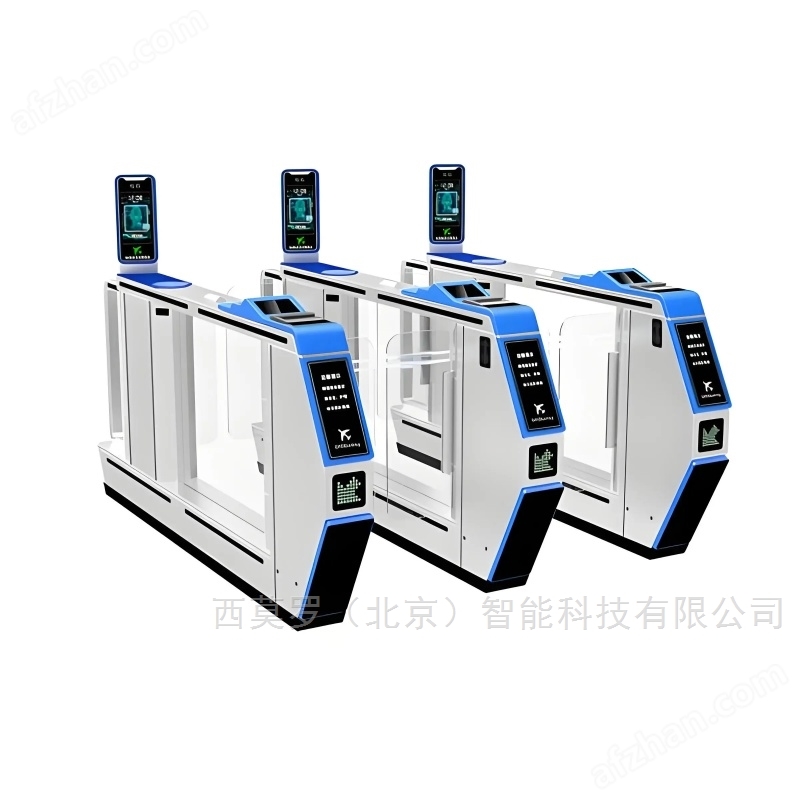


AFC ticket checking channel gate control system
NegotiableUpdate on 01/08
- Model
- Nature of the Manufacturer
- Producers
- Product Category
- Place of Origin
Overview
The AFC ticket checking channel gate control system is the core security and ticket checking management equipment for public transportation and service places such as urban rail transit, passenger stations, and scenic spots. Its core value lies in achieving automation of verification, standardization of traffic management, and visualization of operational data, while ensuring traffic efficiency and site safety.
Product Details
AFC ticket checking channel gate control systemIt is the core security and ticketing management equipment for public transportation and service places such as urban rail transit, passenger stations, and scenic spots. Its core value lies in achieving automated verification, standardized traffic management, and visualized operational data, while ensuring traffic efficiency and site safety. The following will provide a detailed overview of its main functions and typical application scenarios.


1AFC ticket checking channel gate control systemMain functions
(1) Diversified verification function
As a core basic function, the system supports rapid verification of multiple media and adapts to the traffic needs in different scenarios. Specifically, it includes: firstly, physical ticket verification, which can recognize paper tickets (such as scenic spot tickets, high-speed rail second-class seat tickets), magnetic stripe tickets (traditional subway tickets), IC cards (transportation one card, employee card, real name registration card), etc., and read the ticket information (such as train number, validity period, amount, identity information, etc.) through a reader/writer to quickly complete the legitimacy verification; The second is electronic ticket verification, which is compatible with contactless verification methods such as QR codes (dynamic QR codes, static QR codes) and NFC sensing (mobile Pay, smartwatches). The response time is usually ≤ 0.5 seconds, meeting the demand for fast passage during peak hours; The third is real name verification, which is integrated with the identity information system to achieve consistency verification among tickets, certificates, and individuals. It is commonly used in places that require strict real name management, such as train stations and long-distance passenger stations.
(2) Intelligent access control function
The system automatically controls the opening and closing of the gate based on the verification results, and also has multiple traffic protection mechanisms. Firstly, precise release control. After verification, the gates (wing gates, swing gates, three roller gates, etc.) quickly open and automatically close upon completion of passage. For unverified or failed verification (such as invalid or expired tickets), the gates remain closed and sound and light warnings are issued; Secondly, the passenger flow control function supports adjusting the opening time of the gate based on real-time passenger flow data (such as extending the opening time during peak hours), and can also set one-way/two-way traffic modes (such as setting a one-way entrance channel during the morning rush hour of the subway); Thirdly, adaptation for special groups, supporting barrier free access modes (such as opening wide channel gates for people with disabilities), as well as slow traffic control for special groups such as children and the elderly, to enhance traffic safety and convenience.
(3) Abnormal alarm and emergency response function
To ensure operational safety and order, the system has a comprehensive mechanism for anomaly monitoring and alarm. On the one hand, abnormal behavior monitoring can identify behaviors such as ticket evasion (such as crossing gates, following traffic), illegal intrusion, fraud (such as forging tickets), etc., immediately trigger sound and light alarms, and upload the alarm information to the operation management platform; On the other hand, equipment failure alarm can monitor the operation status of the mechanical structure, readers, sensors and other components of the gate in real time. If there are problems such as ticket jamming, mechanical failure, communication interruption, etc., timely fault alarm can be issued, and the fault location and type can be pushed to facilitate quick disposal by operation and maintenance personnel; In addition, the emergency response function supports emergency opening mode (such as one click opening of all gates in case of sudden events such as fire, earthquake, etc. to ensure rapid evacuation of personnel), as well as emergency closing mode (such as closing gates to block passage and maintain order on site in case of malignant events).
(4) Data collection and operation management functions
The system has powerful capabilities in data collection, statistics, and analysis, providing data support for operational decision-making. Specifically, it includes: real-time data collection, accurate recording of each passage record (such as passage time, channel number, user identity information, etc.), as well as gate operation status data (such as opening times, failure times, traffic flow, etc.); The second is data statistics and analysis, automatically generating passenger flow reports (such as peak hour passenger flow distribution, daily average passenger flow, holiday peak passenger flow, etc.), ticket checking reports (such as box office revenue, type proportion, abnormal quantity, etc.), supporting multi-dimensional analysis by time (hour, day, week, month), region (different channels, different stations); The third is the remote management function. Operators can remotely monitor the operation status of gate machines, issue access rules (such as adjusting verification parameters and setting access permissions), and remotely upgrade system programs through the backend management platform, achieving unmanned management and reducing operating costs.
(5) Linkage control function
The system can be linked with other security or operational systems to improve overall operational efficiency and security levels. For example, in conjunction with the video surveillance system, when an abnormal alarm occurs, the corresponding channel's monitoring screen is automatically retrieved, making it easier for operators to view the on-site situation in real time; Linked with the fire alarm system, in the event of a fire, the emergency opening mode of the gate will be automatically triggered, and evacuation indication signs will be linked; Integrate with ticketing systems (such as automatic ticket machines and manual ticket windows) to achieve real-time synchronization of information and ensure consistency between ticket and gate information; Linked with the security access control system, for specific areas such as station staff passages and VIP areas in scenic spots, dual control of access control permissions and verification can be achieved.
2、 Application scenarios
(1) Urban rail transit field
This is the core application scenario of AFC ticket checking channel gates, covering subways, light rails, etc. At the entrance and exit of subway stations, the gate system is responsible for verifying and controlling the massive passenger flow. During the morning rush hour, the system ensures fast passage of thousands of people per hour through media such as QR codes and transportation cards; At the same time, through passenger flow data statistics, provide data support for operators to adjust train departure intervals and optimize station personnel configuration; In addition, the system is linked with the subway security system to effectively prevent ticket evasion, illegal entry and other behaviors, and maintain the order of station operation.
(2) In the field of highway and railway passenger transportation
Including train stations, long-distance bus stations, high-speed railway stations, airports and other places. In these scenarios, the core function of the system is to achieve the integration of real name verification and validation. For example, at the ticket checkpoint of a high-speed railway station, passengers can verify their identity or electronic ticket QR code, and the system automatically verifies the consistency of the ticket, ID, and person. After passing the verification, the gate is opened, greatly improving ticket checking efficiency and reducing errors and time spent on manual ticket checking; At the same time, the system can real-time collect passenger entry data to provide support for station scheduling and passenger flow guidance, ensuring orderly flow of passenger flow during peak holiday periods.
(3) Tourist attractions and cultural and museum venues
At the entrance of scenic spots, museums, science museums and other places, the gate control system is mainly used for ticket verification and passenger flow control. Support verification through various media such as paper tickets and electronic tickets (QR codes, identity linked tickets), effectively preventing issues such as counterfeit tickets and repeated use of tickets; At the same time, the system can monitor the real-time passenger flow entering the venue. When the carrying capacity is reached, it will automatically stop releasing and issue warnings to avoid overcrowding of personnel in the venue and ensure the safety of tourists; In addition, by collecting passenger flow data from different time periods and regions, scenic spots can optimize their tour route design, adjust their opening hours, and enhance the tourist experience.
(4) Commercial complexes and park areas
In large shopping malls, office buildings, industrial parks, schools and other places, gate control systems are mainly used for personnel access management and permission control. For example, at the entrance and exit of an industrial park, employees can pass through with their work ID cards (IC cards), while external visitors need to register and obtain temporary access credentials (QR codes or temporary cards) to enter, effectively ensuring the safety of the park; In the exclusive member area of the mall, members can enter after verifying their membership card, achieving precise customer segmentation services; In addition, the system can track the inflow and outflow of personnel, providing data reference for the operation and management of commercial complexes (such as shop investment and event planning).
(5) Sports venues and exhibition centers
In large event venues such as sports stadiums, gymnasiums, and convention centers, gate control systems are responsible for quickly checking and maintaining order for large-scale passenger flows. For example, at the ticket checkpoint of sports events, the system supports quick verification of electronic and paper tickets, ensuring that tens of thousands of spectators can enter in an orderly manner in a short period of time; At the same time, the system has emergency response functions. If there is an unexpected event at the event site, all gates can be opened with one click to ensure rapid evacuation of the audience; In addition, through passenger flow data statistics, the distribution of audience entry and exit times can be accurately grasped, providing support for event organization and traffic diversion.
In summary, AFC ticket checking channel gates, with their diversified verification functions, intelligent traffic control, and comprehensive security and data management capabilities, are widely used in various public transportation and public service places, becoming the core infrastructure for improving operational efficiency, ensuring venue safety, and optimizing service experience.
Similar Product Recommend