- Phone
-
Address
Room 322, Building A, Lane 168, Chengnan Road, Huinan Town, Pudong New Area, Shanghai
Product Categories
Shanghai Hengze Technology Co., Ltd
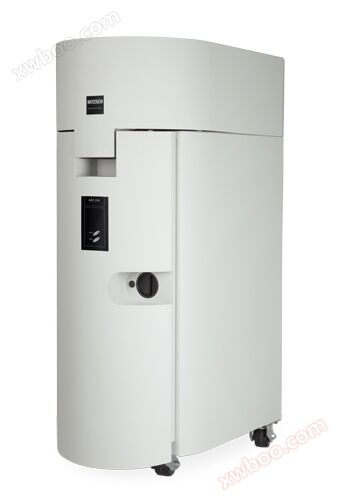
Adiabatic acceleration calorimeter ARC 254
NegotiableUpdate on 02/12
- Model
- Nature of the Manufacturer
- Producers
- Product Category
- Place of Origin
Overview
The adiabatic acceleration calorimeter ARC254 has a maximum adiabatic tracking rate of up to 200K/min, providing a wider range of applications and more reliable data
Product Details
Adiabatic acceleration calorimeter ARC 254
- The fastest adiabatic tracking rate of ARC254 is up to 200K/min, which can provide a wider range of applications and more reliable data.
- Using the patent VariPhi ® Technology can fully or partially compensate for the thermal inertia of sample containers, even with small and safe sample sizes, and can achieve testing at low Φ values. This function can also be used for scanning calorimetry similar to DSC to detect the exothermic, endothermic transition, and specific heat of the sample.
- The instrument is powered by the powerful Proteus ® Software control seamlessly integrates with other Netzsch thermal analysis instruments in the laboratory.
ARC 254 can provide adiabatic thermal data in a safe and controllable laboratory environment. This information can help researchers gain a deeper understanding of the underlying physical processes involved. Starting from this, a variety of operational safety systems and processes can be developed to reduce the possibility of hazardous reactions in the reaction system.
ARC 254 synchronously measures temperature and pressure. The sealed pressure system allows users to evaluate the impact of different atmospheres on the thermal stability of the system.
At the end of the experiment, the gaseous reaction products can be analyzed to help identify and understand the relevant reaction mechanisms.
ARC 254 can model small-scale processes to simulate large-scale reactions. The testing principle is to heat the material to be tested in a certain volume of testing chamber until an exothermic effect is detected. The sample is in an adiabatic environment with no energy loss, and the temperature and pressure of the sample are measured and recorded by a calorimeter.
With just one experiment, the information obtained can be used for the following research:
- Thermal hazard assessment
- Pressure hazard assessment
- Thermodynamic analysis
Special consideration was given to user security in the design of ARC 254. Users are protected by a series of security systems that are completely independent of the control system and can protect users in the event of a main control system failure. ARC 254 is based on an easy to learn and use graphical interface that provides complete computer control and a high degree of automation. The system has an elegant and modern exterior design, and all commonly used functions are easy to use.
ARC 254- Technical Parameters
|
ARC ® 254 structural schematic diagram |