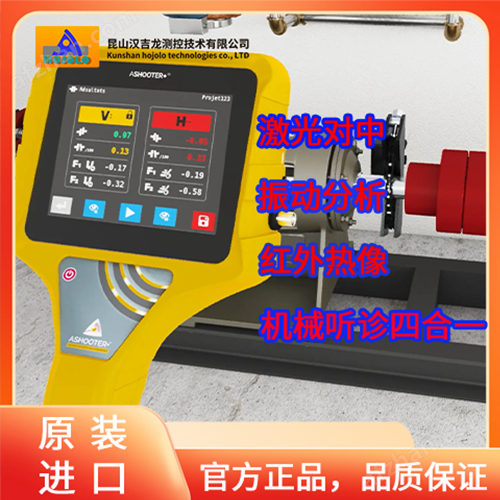
The combination of high-precision axis centering measurement and Bluetooth wireless transmission technology in laser centering instruments has changed the traditional axis centering operation mode and demonstrated significant advantages in industrial equipment installation and maintenance. Below are the technical principles, core advantages, and mainstream product parameters
Laser centering instrument for high-precision axis centering measurement, Bluetooth wireless transmission
Laser centering instrument for high-precision axis centering measurement, Bluetooth wireless transmission
The combination of high-precision axis centering measurement of laser centering instrument and Bluetooth wireless transmission technology has changed the traditional axis centering operation mode and demonstrated significant advantages in the field of industrial equipment installation and maintenance. The following analysis will be conducted from four dimensions: technical principles, core advantages, mainstream product parameters, and practical application points:
High precision measurement of laser alignment instrument based on
Laser triangulation methodand
Digital Signal Processing Technologyrealization. Its laser emitting unit generates line laser or point laser (usually with a wavelength of 630-680nm), which is projected onto the PSD (position sensitive detector) or CCD (charge coupled device) of the receiving unit. By calculating the displacement of the laser spot, it is converted into parameters such as radial deviation and angular deviation of the axis system, and the measurement accuracy can reach the level of ± 0.001mm.


The Bluetooth wireless transmission module is responsible for transmitting real-time data collected by the measurement unit to the display terminal (mobile phone, tablet, or dedicated host). The mainstream uses Bluetooth 4.0 and above versions, and some industrial grade devices support Bluetooth LE (Low Energy) protocol, which reduces power consumption while ensuring transmission rate and is suitable for long-term on-site operations.

The core value of high-precision measurement
Extended lifespan of equipmentFor every 0.01mm increase in shaft centering accuracy, bearing wear can be reduced by more than 30%, equipment vibration and noise can be reduced, and the service life of the unit can be extended. For example, the ASHOOTER AS500 laser alignment instrument can measure with an accuracy of ± 0.001mm, and with vibration analysis function, it can provide early warning of the risk of faults caused by misalignment of the shaft system.
energy consumption optimizationAccording to industrial testing data, for every 0.1mm increase in shaft alignment deviation, motor energy consumption increases by 5% -8%. High precision alignment can increase equipment operating efficiency by about 10%, especially suitable for continuous operation equipment such as large fans and pumps.
Breakthrough in Bluetooth wireless transmission
Improved homework flexibilityBreaking free from the constraints of traditional wired connections, the transmission distance can reach 6-30 meters (such as 8 meters for HOJOLO and 30 meters for S-680BT). Technicians can freely move between the two ends of the equipment without frequent adjustment of cable positions, greatly improving the efficiency of centering operations for large equipment such as turbines and generators.
Anti interference and stabilityIndustrial grade Bluetooth modules have anti electromagnetic interference design, which can resist interference from equipment such as frequency converters and welding machines in the workshop. For example, the HOJOLO laser alignment instrument can maintain stable transmission by shortening the transmission distance (within 8 meters) in a strong electromagnetic environment, avoiding data delay or loss.
There are differences in accuracy and transmission performance among different brands of laser alignment instruments. The following is a comparison of the core parameters of mainstream models in the market:
Bluetooth transmission stability guarantee
Distance controlAlthough some devices have a nominal transmission distance of more than 10 meters, it is recommended to control the distance between the measuring unit and the terminal within 8 meters in environments with many metal obstacles or strong electromagnetic environments (such as near frequency converters) to avoid signal attenuation.
interference avoidanceStay away from interference sources in the 2.4GHz frequency band such as Wi Fi routers and microwave ovens, and check if the device antenna is blocked to ensure that the Bluetooth module is working properly.
Environmental requirements for high-precision measurement
Avoid measuring in strong light (such as direct sunlight on PSD receivers) or severe vibration environments. Some models (such as AS500) have ambient light cancellation and anti vibration modes, which can adapt to complex working conditions.
Temperature changes can affect measurement accuracy. It is recommended to use within the rated temperature range of -10 ℃ -60 ℃, while considering the thermal expansion coefficient of the equipment. Some models support the calculation of cold preset deviation.
This type of equipment is widely used in industries such as wind power, chemical, and metallurgy, for example:
wind power industryAlign the main shaft of the wind turbine with the input shaft of the gearbox, and use Bluetooth wireless transmission to avoid the risk of cable entanglement during high-altitude operations. With the 3D animation guidance function, even beginners can quickly get started;
chemical industryRegular maintenance of rotating equipment such as pump sets and compressors, reducing seal leakage and downtime losses through high-precision centering;
automobile manufacturingThe alignment calibration of machine tool spindle and transmission shaft ensures machining accuracy and improves the quality of component production.