-
E-mail
362482413@qq.com
-
Phone
18106759923
-
Address
Shengao Village, Yanpen Street, Yueqing City
Product Categories
- Explosion proof magnetic starter
- The explosion-proof distribution box
- explosion-proof junction box
- Stainless steel explosion-proof operating column
- explosion-proof switch
- Explosion proof power supply maintenance box
- Dust explosion-proof distribution box
- Explosion proof instrument box
- explosion-proof flexible conduit
- Explosion proof control button box
Yueqing Yuheng Explosion proof Electrical Appliance Co., Ltd


Stainless steel explosion-proof control button box
NegotiableUpdate on 01/08
- Model
- Nature of the Manufacturer
- Producers
- Product Category
- Place of Origin
Overview
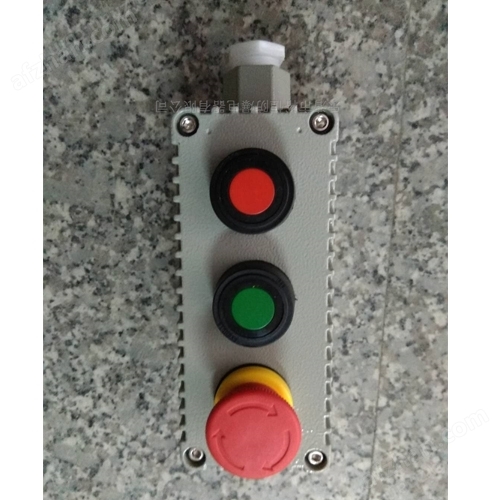
The stainless steel explosion-proof control button box has the advantages of compact structure, good reliability, small size, strong switching ability, and long service life. Suitable for explosive gas environments of Class IIA and IIB, with temperature levels of T1-T6.
Product Details
Stainless steel explosion-proof control button boxFeatures:
1. The shell is made of aluminum alloy die-casting, which has excellent properties such as beautiful appearance, corrosion resistance, and impact resistance;
2. The product has an increased safety structure, with explosion-proof components installed inside the increased safety shell;
3. Adopting a curved sealing structure, it has good waterproof and dustproof capabilities;
4. Explosion proof control buttons have the advantages of compact structure, good reliability, small size, strong switching ability, and long service life
Scope of application:
1. Suitable for hazardous areas in Zone 1 and Zone 2,
2. Suitable for explosive gas environments of Class IIA and IIB, with temperature levels of T1-T6
Stainless steel explosion-proof control button boxTechnical Specifications:
1. Implement standards GB3836.1-2010, GB3836.2-2010, GB3836.3-2010, IEC60079
2. Explosion proof mark: ExedIIBT6
3. Rated voltage: AC220V/380V
4. Rated current: 5A
5. Protection level: IP65
6. Anti corrosion grade: WF2
7. Inlet thread: G3/4 '
8. Cable outer diameter: Φ 9mm - Φ 14mm
The technical requirements for electrical circuits in dust and fiber explosion hazardous environments are basically the same as those for electrical circuits in gas and vapor explosion hazardous environments of corresponding levels. That is, electrical circuits in Zone 10 and Zone 11 can be considered as Zone 1 and Zone 2 respectively.
When a short circuit occurs in the circuit, the short-circuit current is tens of times greater than the normal working current flowing through it. In a short period of time, the circuit generates a large amount of heat, leading to a sharp rise in temperature and causing the insulation material to burn. It may also cause the combustion of surrounding combustibles due to sparks and arcs generated during short circuits, resulting in the occurrence of fires.

Similar Product Recommend