-
E-mail
2802943235@qq.com
-
Phone
18702111683
-
Address
No. 253 Yulu Road, Jiading District, Shanghai
Ankerui Electric Co., Ltd
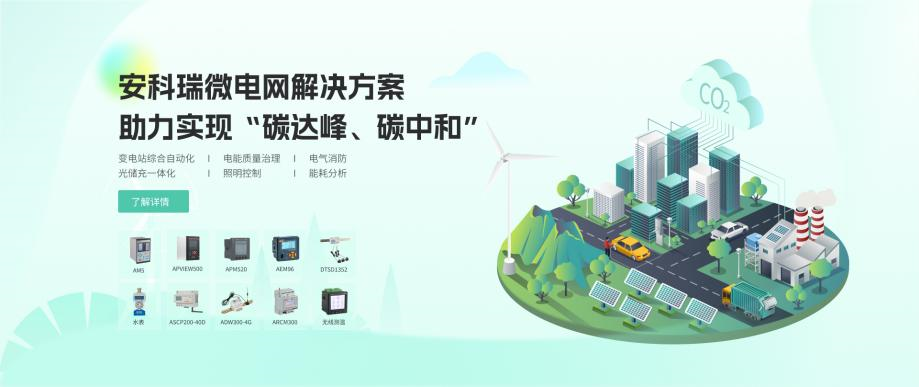
Enterprise carbon neutral photovoltaic storage direct flexible microgrid solution
Date: 2025-09-29Read: 23
Enterprise carbon neutral photovoltaic storage direct flexible microgrid solution
Introduction: Enterprise Energy Revolution towards Carbon Neutrality Era
Against the backdrop of global efforts to address climate change and China's firm implementation of its "dual carbon" goals, enterprises are facing new challenges such as tightened carbon emission constraints and rising energy costs. The traditional energy consumption model is no longer suitable for future development needs, and achieving carbon neutrality is no longer an option, but a core strategy and inevitable requirement for sustainable development of enterprises. In this process, the green, low-carbon, and intelligent transformation of the energy system is a key breakthrough. As an integrated, innovative, and multi energy complementary advanced energy solution, "Light Storage Direct and Flexible" is a profound transformation of enterprise energy systems, providing a clear path for enterprises to balance environmental and economic benefits, empowering them to win the initiative in the wave of carbon neutrality.
1 Solution policy background
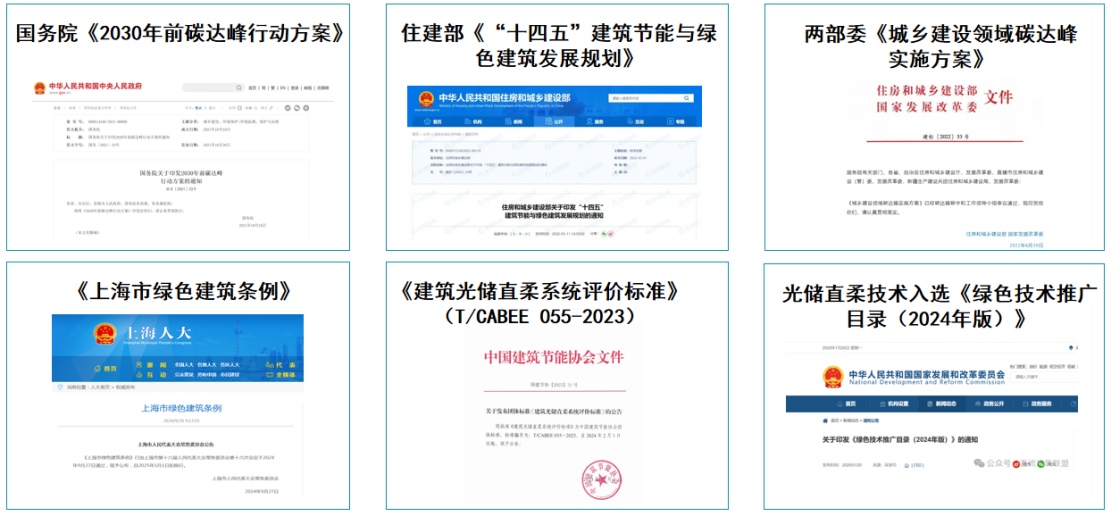
With its innovation and foresight, the photovoltaic direct flexible technology has won wide recognition and active practice in the industry. At the national level, various ministries and local governments have successively introduced a series of targeted policies, from financial support, standard setting to demonstration project promotion, building a multi-level and multi-party policy support system, creating a good policy ecology for the large-scale application and industrial development of photovoltaic direct flexible technology.
II What is Light Storage Straight Soft?
Light storage straight and softTechnology, abbreviated as PEDF (photovoltaics, energy storage, direct current and flexibility), refers to an integrated system that comprehensively applies four technologies in the construction field: solar photovoltaics, energy storage, DC distribution, and flexible interaction. This technology is essentially a new type of building power distribution system aimed at carbon neutrality goals.
'Light'Refers to solar photovoltaic power generation technology, mainly including rooftop photovoltaics and facade photovoltaics;
'Storage'Distributed energy storage technology, mainly based on electrochemical energy storage batteries, to achieve safe, economical, and efficient storage of renewable energy;
'Straight'DC distribution technology refers to the transformation of building distribution networks from traditional AC to low-voltage DC, which has the advantages of simple structure, convenient control, and high transmission efficiency;
'Soft'Flexible interactive technology refers to the ability of buildings to dynamically adjust their electricity load based on the status of clean energy generation, achieving real-time balance and coordination between electricity demand and renewable energy generation.
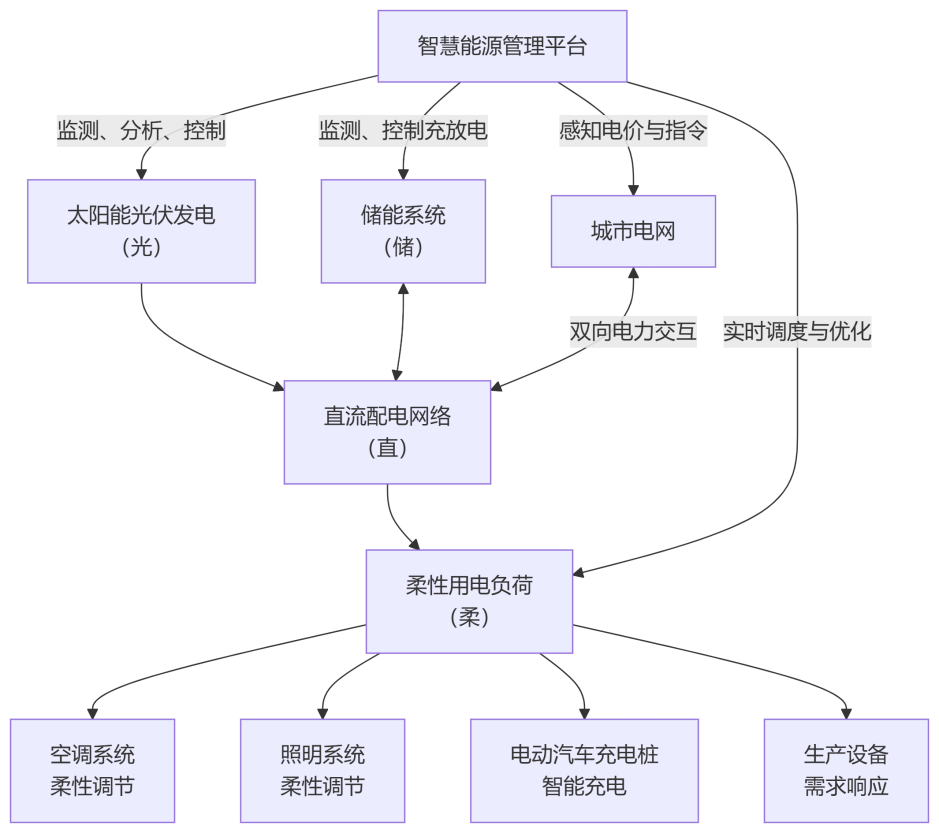
III Typical topology architecture of optical storage with straight and flexible features
3.1 DC bus voltage level
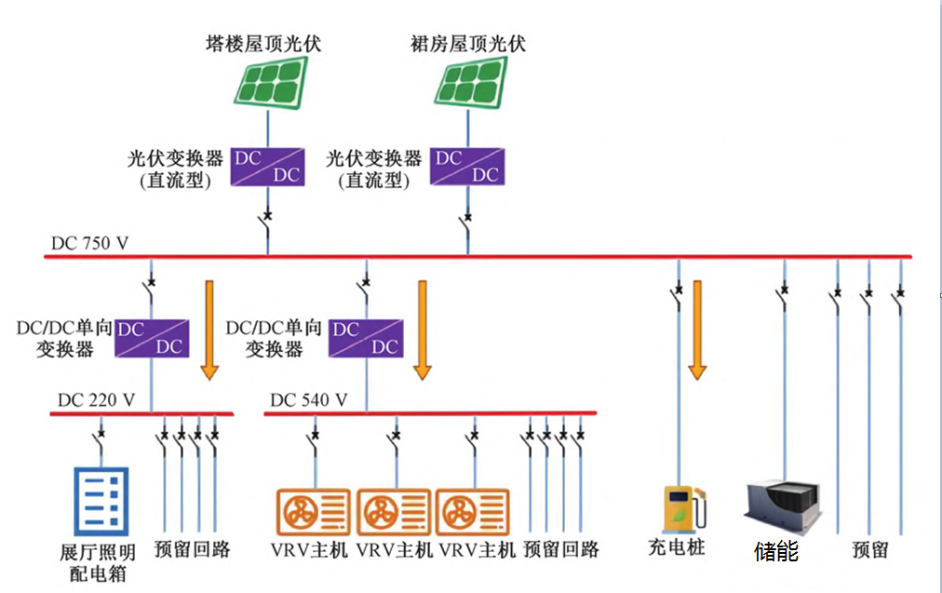
DC 750V: a commonly used voltage level. For example, in some projects, the system sets a DC bus voltage of 750V and feeds out a DC 220V voltage level through a converter to supply power to loads such as LED lamps.
± 375V Bipolar Bus: In some systems, a ± 375V bipolar bus is used, which can provide two supply voltage levels (i.e.+375V and -375V), simplifying voltage levels and improving power supply flexibility.
Other voltage levels: In addition to the common voltage levels mentioned above, according to specific requirements and system design, other voltage levels of DC busbars may also be used, such as DC 480V, DC 600V, etc.
3.2 Voltage level for electrical equipment connection
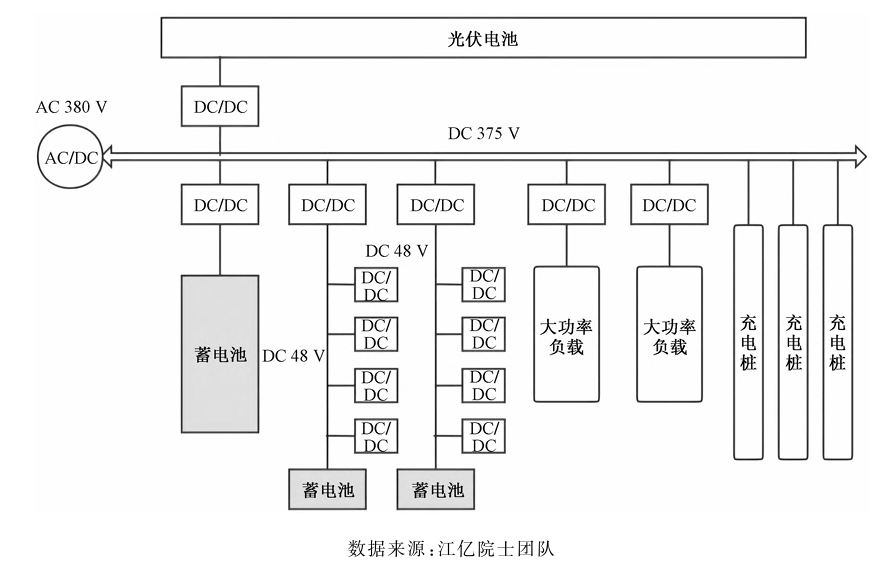
High power devices, such as air conditioners, charging stations, etc., may be connected to higher voltage levels, such as one pole of a DC 750V or ± 375V bipolar bus.
Small power devices, such as sockets, lighting fixtures, etc., may be connected to lower voltage levels, such as DC 220V or lower voltage levels (such as below 48V to ensure safety).
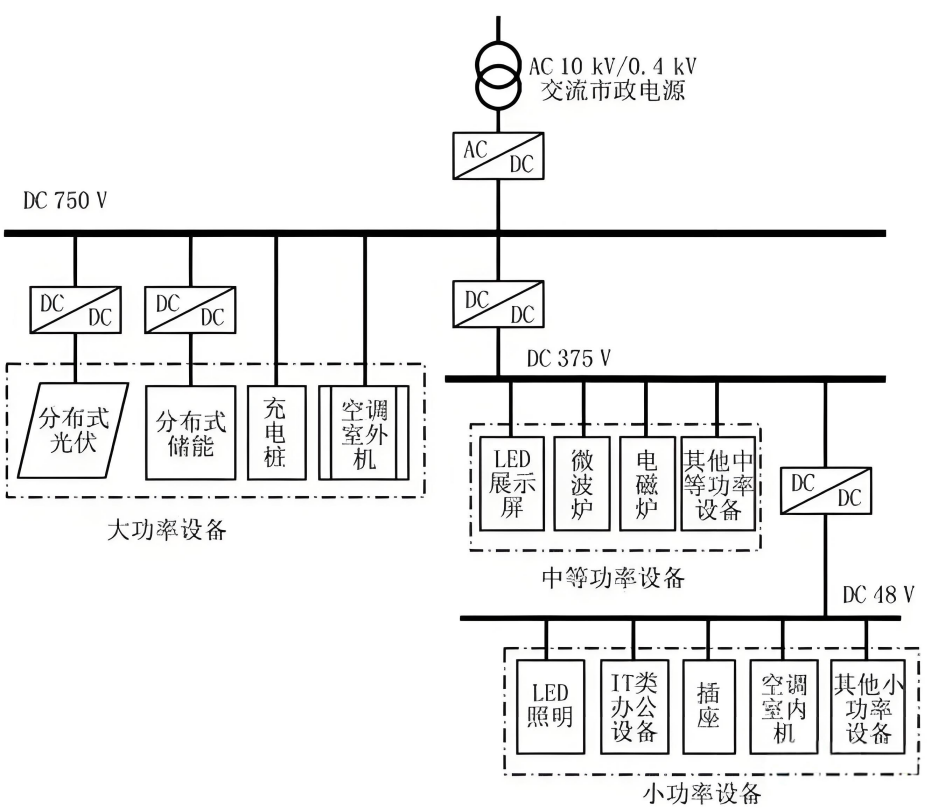
3.3 Single ended single channel radial structure
This grid structure is suitable for general DC load concentration areas, such as residential areas, electric vehicle charging stations, and high-power energy storage stations, as well as for the initial and transitional stages of DC distribution system construction.
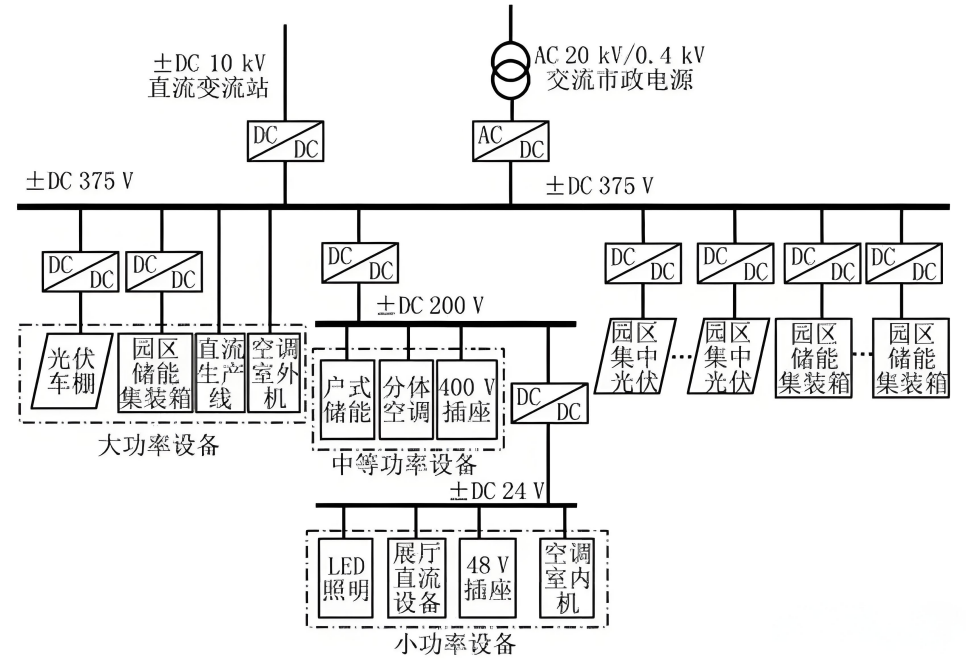
3.4 Double ended structure
It has the characteristics of large power supply range and high power supply reliability, and is suitable for places with large capacity and high power supply reliability requirements, such as industrial parks, important load areas and other power supply places.
4 Solution application scenarios
High energy consuming manufacturing industries, such as automobile manufacturing, electronics factories, data centers, etc., have a significant proportion of electricity costs in the total operating costs of enterprises. At the same time, they face strict requirements for energy conservation and emission reduction, and the demand for energy transformation is particularly urgent.
Logistics warehousing park: usually has large areas of idle rooftop resources, suitable for large-scale deployment of photovoltaic power generation systems; In addition, the energy consumption of cold chain storage and other links is high, and the application of the "light storage direct flexible" system can effectively achieve energy self-sufficiency and electricity optimization.
Office parks and commercial buildings: Air conditioning, lighting, elevators and other electrical loads are concentrated and have large capacity, with good adjustable characteristics. They can achieve energy efficiency improvement and demand management through flexible control strategies, reducing operating costs.
Charging station/charging park: As the core scenario for electric vehicle energy supply, the "light storage direct flexible" system can be naturally combined with it, achieving orderly charging, V2G (vehicle to grid) and other two-way interactive functions through intelligent scheduling, effectively alleviating the pressure on the power grid and improving operational economy.

5 Introduction to Solution Platform Functions
As the core platform for energy management in microgrid parks and buildings, the photovoltaic storage direct flexible management system integrates the functions of "source grid load storage" full process operation data acquisition and monitoring, achieving holographic perception and dynamic management of photovoltaic power generation, energy storage devices, flexible loads, and distribution systems. The system has comprehensive capabilities such as data collection and transmission, intelligent storage, visual display, status diagnosis, and abnormal alarm. It can intuitively present key indicators such as electricity consumption, carbon emission trajectory, and equipment operating conditions, providing multidimensional data support for energy management.
Based on in-depth analysis of power monitoring data, the system supports hierarchical and multi-dimensional visualization display of operating status, covering system level monitoring and global situation analysis, effectively improving the efficiency of new energy consumption, and promoting the upgrade of photovoltaic storage direct flexible microgrid to an economically efficient, safe, reliable, intelligent and flexible operation mode. The specific functional modules include:
5.1 Total factor operation monitoring
Constructing a digital topology model for power plants to achieve real-time monitoring and strategy execution tracking at the equipment level;
Integrate situational awareness algorithm to dynamically evaluate the operational health of the system;
Establish a multidimensional evaluation index system to support quantitative analysis of operational efficiency.
5.2 Accurate power prediction
Develop differentiated prediction models for distributed photovoltaics, charging facilities, air conditioning loads, etc;
provideBefore and within the dayMulti time scale prediction service,Provide reliable basis for scheduling decisions.
5.3 Full chain carbon emission management
Establish a dynamic tracking model for carbon emissions flow to achieve carbon footprint accounting for the entire process of source network load storage;
Develop a visualization tool for carbon emission heat maps to accurately locate emission reduction potential nodes;
Generate customized carbon reduction strategies based on big data analysis to help achieve carbon neutrality goals.
5.4 Intelligent optimization scheduling
Economic optimization scheduling: constructing a multi-objective optimization model of energy consumption cost carbon emissions, supporting dynamic adjustment of operational strategies under the time of use electricity pricing mechanism;
Safe and stable scheduling: integrating grid power smoothing control and voltage quality regulation functions to ensure friendly interaction between microgrids and large grids;
Demand response scheduling: Develop a interruptible load rapid response mechanism and participate in the grid peak shaving auxiliary service market.
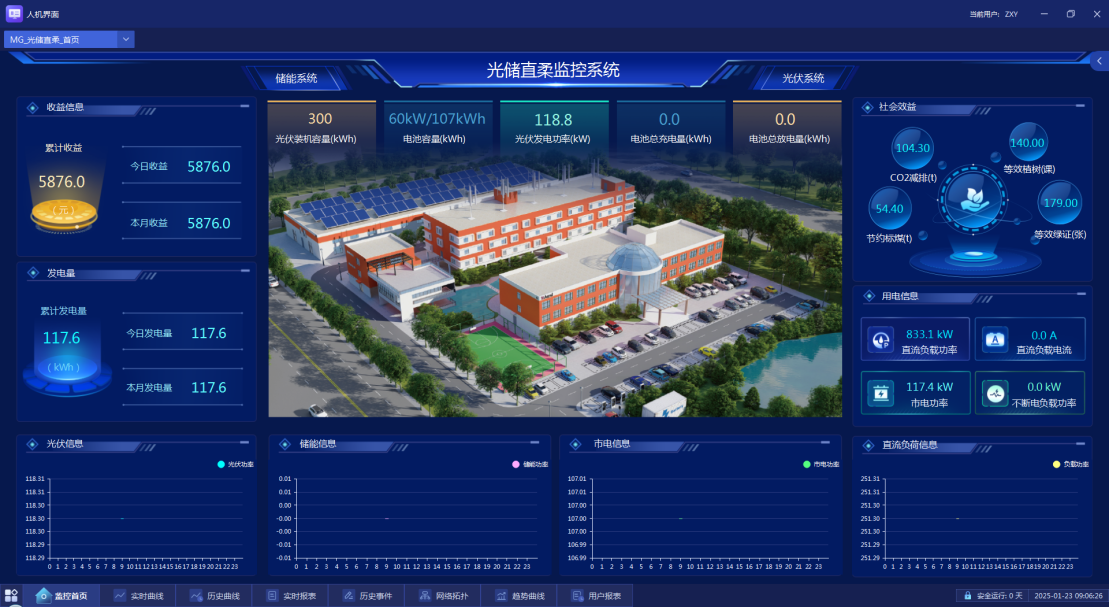
The system achieves closed-loop control from data collection to decision optimization through the deep integration of digital twin technology and AI algorithms, providing a complete solution for the refined operation of the photovoltaic storage direct flexible microgrid, effectively improving the utilization rate of renewable energy and the comprehensive energy efficiency level.
VI Solution benefit analysis
Direct economic benefits:Photovoltaic power generation has a low cost per kilowatt hour, and users can save on daily electricity costs by using it themselves. Selling excess electricity to the grid can open up additional revenue channels.
Reduce electricity costs:Energy storage technology optimizes the cost structure of electricity consumption through traditional battery, tiered, and V2G mobile energy storage methods, including valley charging and peak discharging.
Create additional revenue:V2G technology provides new profit opportunities for car owners. Charging at home costs 0.5 yuan/kWh, discharging at the office during peak hours costs 1.1 yuan/kWh, and discharging 30 kWh per day can earn a price difference of 18 yuan. In the long run, it can basically earn back the electricity bill.
Significant environmental benefits:Taking the 100kWp photovoltaic microgrid system as an example, it provides nearly 120000 kWh of new energy electricity annually, saves 42 tons of standard coal, reduces carbon dioxide emissions by 120 tons, and carbon dust by 32 tons, which is beneficial for improving air quality and mitigating climate change.
Save construction costs:Microgrids integrate photovoltaics and energy storage, enabling autonomous regulation of power supply and demand, saving on charging equipment distribution and capacity expansion costs, reducing power infrastructure investment, and lowering user upfront investment.
Assisting in Carbon Neutrality:New energy is widely used, especially the combination of microgrids and V2G, to alleviate the impact of charging piles on the power grid, achieve "zero carbon" electricity for vehicles, support the national "dual carbon" goal, and promote green and sustainable development.

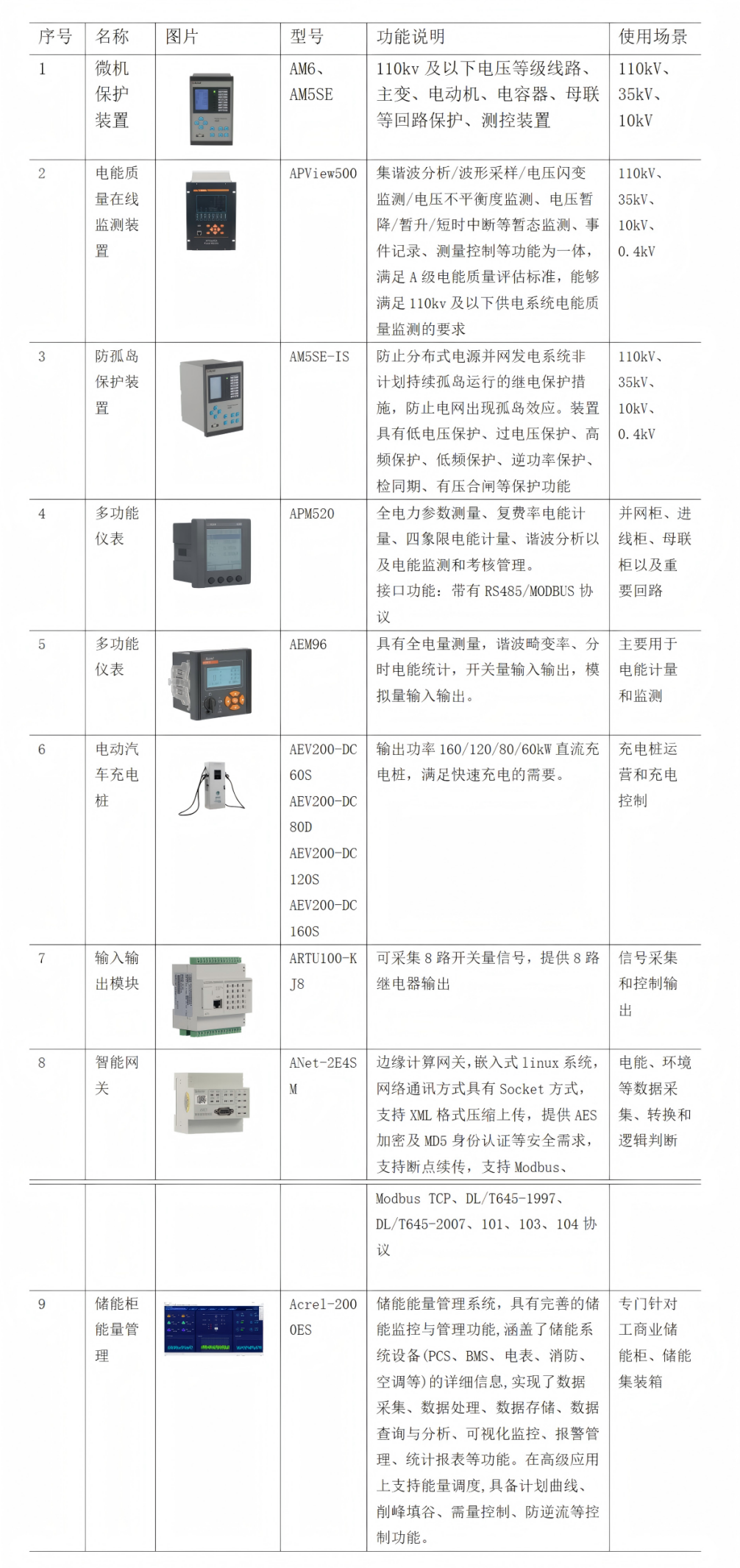
7 Typical Supporting Products for Solutions