-
E-mail
2802943235@qq.com
-
Phone
18702111683
-
Address
No. 253 Yulu Road, Jiading District, Shanghai
Ankerui Electric Co., Ltd
Why are industrial parks all building microgrids for source, grid, load, and storage? How to improve the revenue of source grid load storage microgrids?
Date: 2025-11-05Read: 23
Introduction:
Driven by the global energy transition and the "dual carbon" goal, the distribution network is evolving from a traditional power distribution network to an intelligent system that integrates and interacts with "source grid load storage". The Guiding Opinions on High Quality Development of Distribution Networks under the New Situation issued by the National Development and Reform Commission and the National Energy Administration clearly state that by 2025, the distribution network needs to have the access capacity of 500 million kilowatts of distributed new energy and 12 million charging piles, and promote the coordinated regulation and digital transformation of source grid load storage. Under this policy guidance, industrial parks, as the core scenario for energy consumption and carbon emissions, have become a key practice in the construction of new power systems by building source grid load storage microgrids to achieve energy self-sufficiency, cost optimization, and low-carbon transformation. The Acrel-EMS3.0 smart energy management platform, with its full coverage, intelligent scheduling, and multi energy collaboration capabilities, is becoming the core tool for microgrid construction in industrial parks.

1 The core driving force behind the promotion of source grid load storage microgrids in industrial parks
1.1 Coping with fluctuations in new energy and ensuring stable power supply
Industrial parks have concentrated loads and high requirements for power supply stability. However, new energy sources such as wind and photovoltaic power generation are affected by natural conditions and have intermittency and volatility (such as sudden drops in photovoltaic power generation at night or on cloudy days, and wind power is affected by wind speed). The source grid load storage microgrid network stores energy through energy storage systems (batteries, pumped storage, etc.) when there is excess electricity, and releases it when there is insufficient or peak electricity, smoothing out fluctuations in new energy output. assomeThe photovoltaic ranch project achieves over 80% self-sufficiency in green electricity through the synergy of energy storage and photovoltaics, and participates in CCER transactions to increase revenue.
1.2 Reduce energy costs and enhance economic benefits
Under the traditional power grid model, the purchase of electricity in the park is greatly affected by peak and valley electricity prices. Source grid load storage microgrids can utilize peak valley price arbitrage: low valley electricity storage, high peak electricity consumption, or electricity sales. assomeZero carbon park reduces electrolytic aluminum costs by 20% through green power traceability;someArbitrage of "two charging and two discharging" optical storage charging system in high-speed service area, with a payback period of 3 years.
1.3 Enhance energy self-sufficiency and reduce dependence on the power grid
Microgrids integrate local distributed photovoltaics, wind power, biomass energy, etc. to achieve energy self-sufficiency. assomeThe self-sufficiency rate of the "wind solar hydrogen storage" system in the zero carbon industrial park is 80%, and the remaining 20% is supplemented through green electricity trading to build a zero carbon energy system and reduce dependence on external power grids, as well as the risks of faults and price fluctuations.
1.4 Meet the "dual carbon" goal and promote green transformation
Industrial parks are key areas for energy consumption and carbon emissions, and need to achieve low-carbon transformation through source grid load storage microgrids. This model integrates clean energy and energy storage, reduces fossil energy consumption, and helps the park achieve the goals of "safety, economy, efficiency, low-carbon, and intelligence".

II Strategies for Enhancing the Revenue of Source Grid Load Storage Microgrids
2.1 Optimize energy allocation and scheduling
Utilizing the intelligent control function of Acrel-EMS3.0, achieve source storage collaboration, network load interaction, and storage load linkage. For example, storing low-priced electricity during off peak periods and releasing or selling it back to the grid during peak periods; Guide users to use electricity off peak and reduce purchasing costs through demand response.
2.2 Expand revenue channels and participate in electricity market transactions
Aggregate photovoltaic, energy storage, and charging pile resources through the platform, participate in grid peak shaving, frequency regulation services, or green power trading. For example, a virtual power plant project in Jiangsu Province aggregates distributed resources through a platform, resulting in an annual revenue increase of 2 million yuan; The Qinghai Photovoltaic Ranch Project, through CCER trading, will generate an additional annual revenue of over one million yuan when the carbon price rises to 80 yuan/ton in 2025.
2.3 Technological innovation and equipment upgrading
Adopting efficient energy storage devices (such as submerged energy storage) and intelligent control technologies (such as AI algorithms) to reduce operation and maintenance costs. For example, a certain project dynamically adjusts energy storage charging and discharging through algorithms, resulting in a 20% increase in annual revenue.
2.4 Policy and mechanism innovation
Strive for local policy support, such as incremental distribution network operation, green power premium trading, etc. For example, Inner Mongolia Zero Carbon Park has reduced the cost of electrolytic aluminum by 20% through incremental distribution network green power traceability; Jiangsu has issued the "Data Access Specification for New Power Load Management System" to accelerate the standardization construction of microgrids.
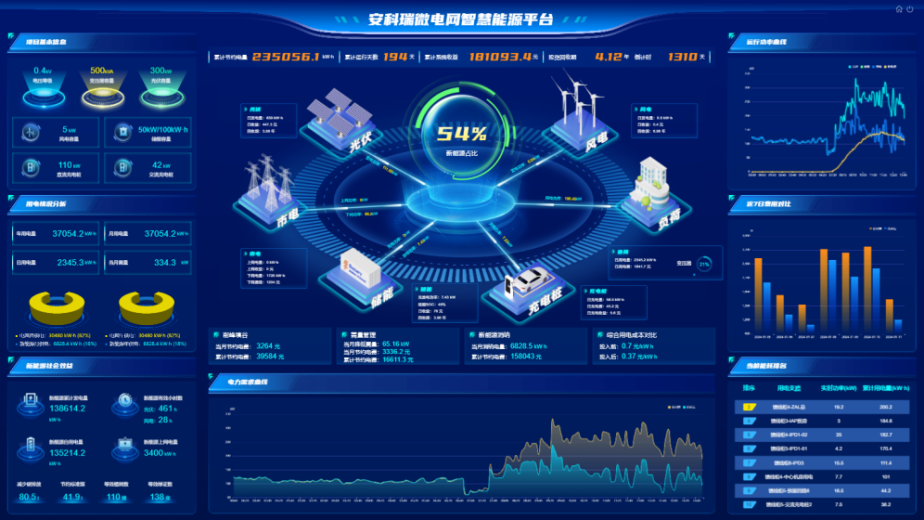
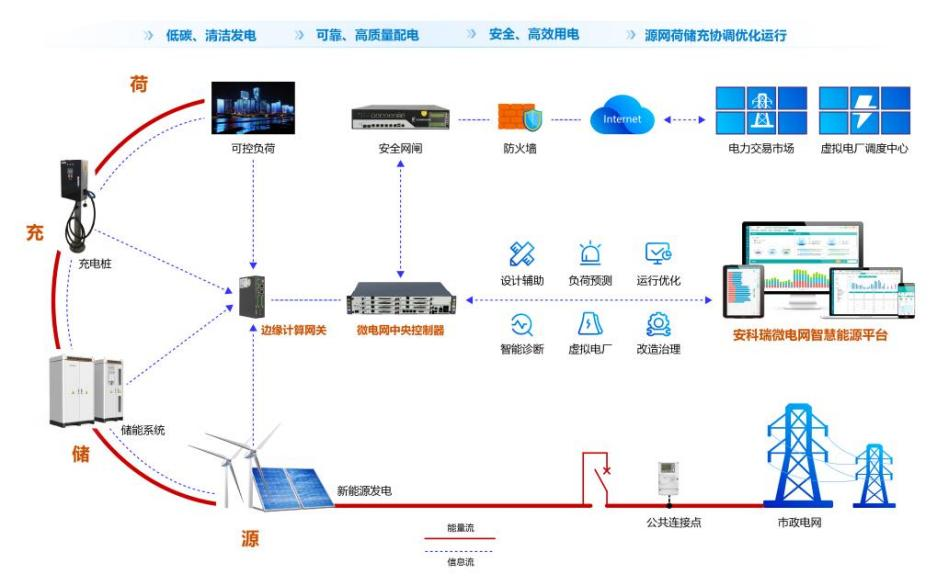
III Network architecture of microgrid solution for source network load storage green industrial park
The energy regulation of microgrids in zero carbon parks is based on the core element of "source grid load storage and charging", and achieves intelligent collaboration throughout the entire process through technologies such as the Internet of Things, big data, and artificial intelligence
End layer: Deploy terminal devices such as smart meters, DC meters, environmental gateways, and arc protection devices to collect real-time data on photovoltaic power generation, energy storage charging and discharging, load electricity consumption, and charging pile operation with an accuracy of milliseconds.
Edge layer: Configure a microgrid coordination controller as a local "smart brain" that supports protocols such as Modbus/104/101 to achieve real-time on-site collaborative optimization of distributed power sources, energy storage, and loads. For example, in the event of a power grid failure, the controller can quickly switch to islanding operation mode to ensure power supply for critical loads.
Management layer: Through communication networks, efficient data exchange between terminals and cloud platforms is achieved, ensuring real-time command issuance and status feedback.
Cloud layer: Build a smart energy management platform that integrates panoramic monitoring, power prediction, optimized scheduling, carbon asset management, and other functions to form a global decision-making center.
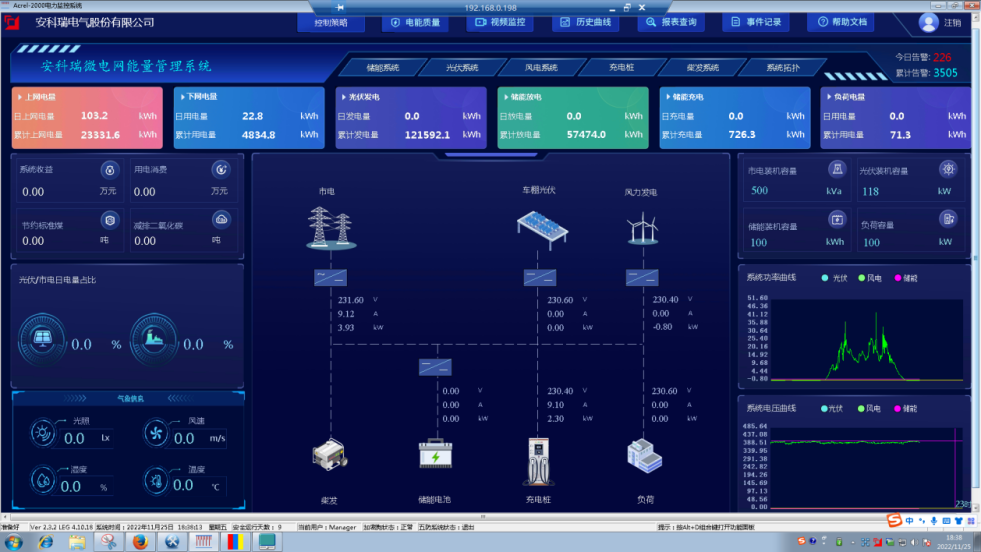
4 Display of featured interfaces in the software system
4Real time monitoring
The monitoring system interface of the microgrid energy management system includes the system main interface, which includes the microgrid photovoltaic, wind power, energy storage, charging piles, and overall load composition, including revenue information, weather information, energy conservation and emission reduction information, power information, electricity quantity information, voltage and current situation, etc. According to different needs, charging, energy storage, and photovoltaic system information can also be displayed.
4Photovoltaic interface
Display information on photovoltaic systems, mainly including monitoring and alarm of the operating status of inverters on the DC and AC sides, statistics and analysis of inverter and power station power generation, monitoring and analysis of grid connected cabinet power generation, statistics of annual effective utilization hours of power station power generation, statistics of power generation revenue, carbon emission reduction statistics, monitoring of irradiance/wind power/environmental temperature and humidity, simulation and efficiency analysis of power generation; Simultaneously display the total power, voltage and current of the system, as well as the operational data of each inverter.
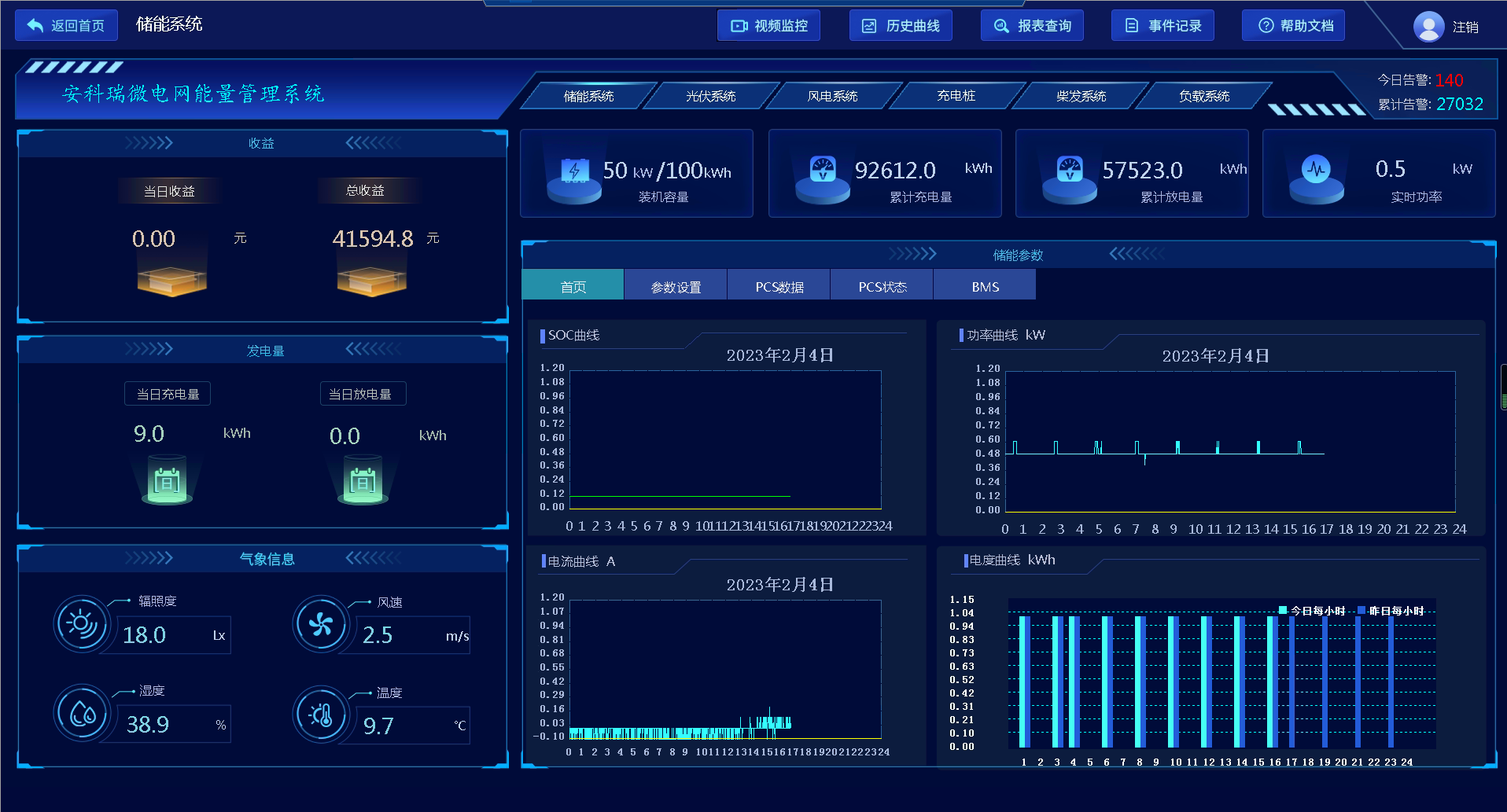
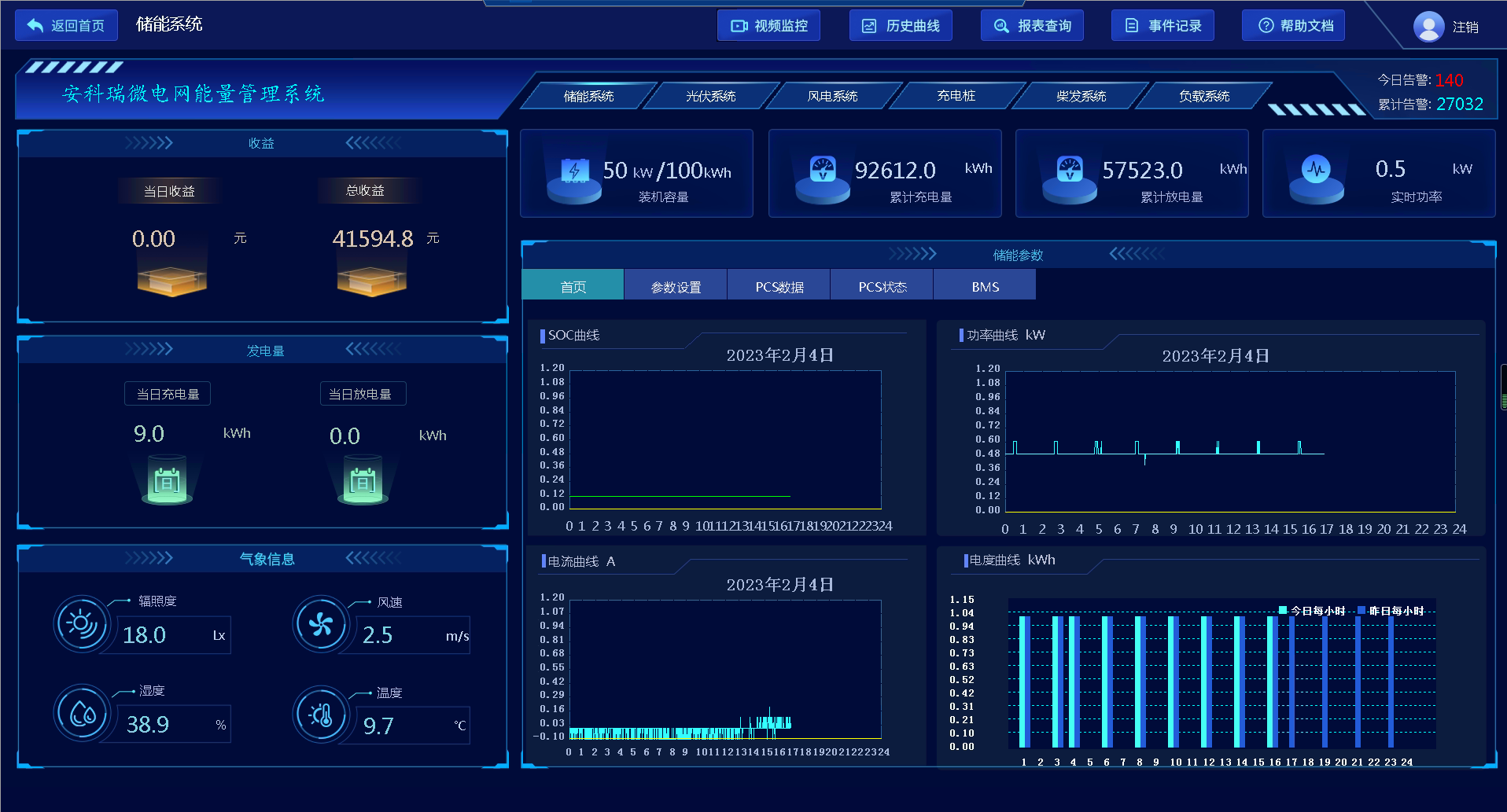
4Energy storage interface
Display the energy storage installed capacity, current charging and discharging capacity, revenue, SOC change curve, and electricity change curve of this system. Data display and control of PCS and BMS.
4. 4 Wind Power Interface
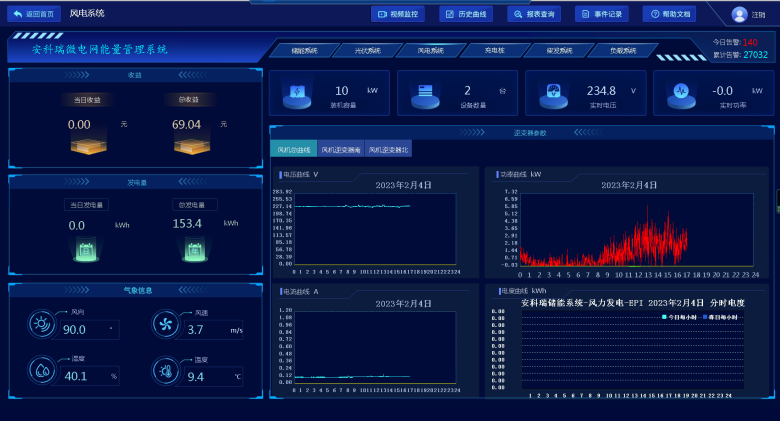
Display information on wind power systems, mainly including monitoring and alarm of the operation status of the DC and AC sides of the inverter control integrated machine, statistics and analysis of the power generation of the inverter and the power station, statistics of the annual effective utilization hours of the power station's power generation, statistics of power generation income, carbon reduction statistics, monitoring of wind speed/wind speed/environmental temperature and humidity, simulation of power generation and efficiency analysis; Simultaneously display the total power, voltage and current of the system, as well as the operational data of each inverter.
4. 5 Charging Station Interface
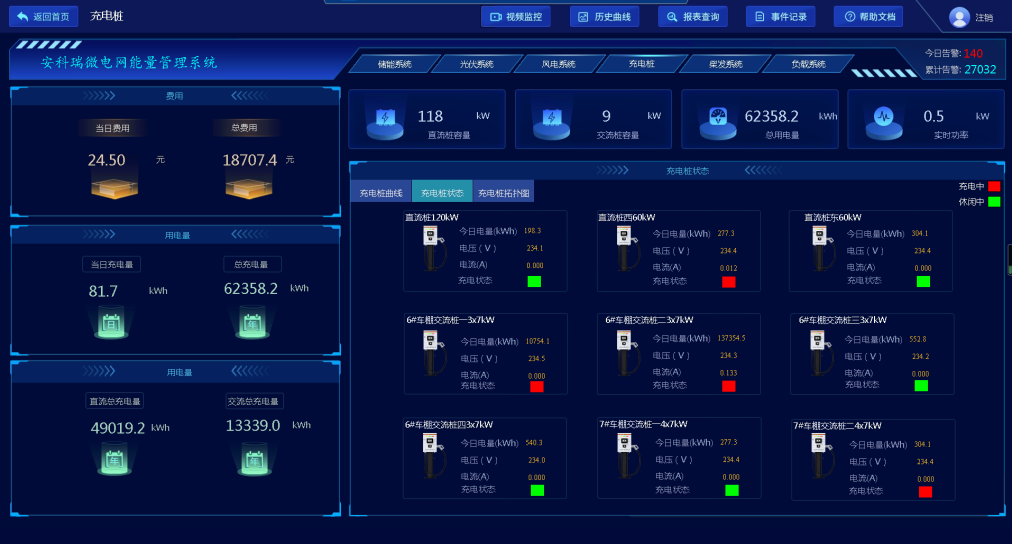
Display information about the charging station system, mainly including the total power consumption of charging stations, the power and electricity consumption of AC and DC charging stations, electricity costs, change curves, and operational data of each charging station.
46. Power generation forecast
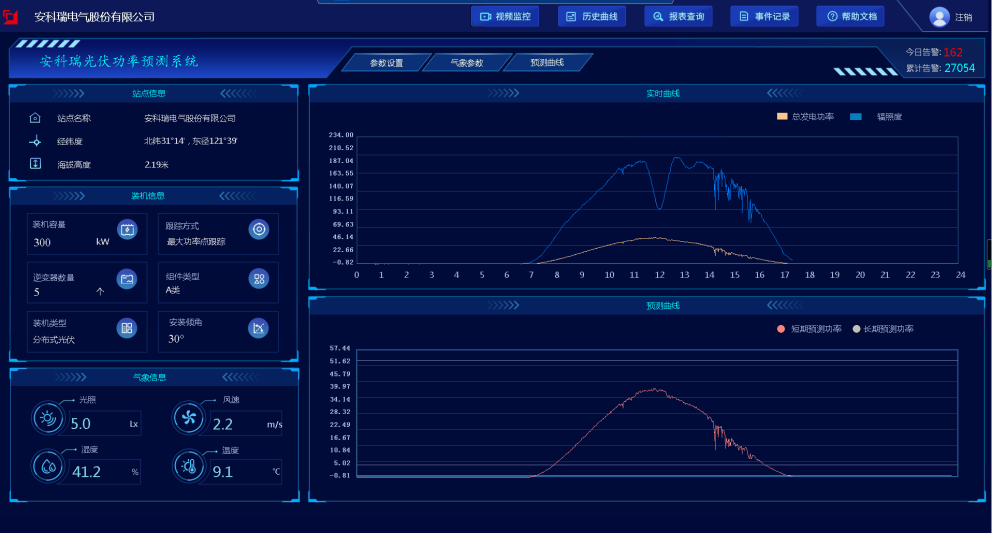
Based on historical power generation data, measured data, and future weather forecast data, predict the short-term and ultra short term power generation of distributed power generation, and display the qualification rate and error analysis. According to power prediction, manual input or automatic generation of power generation plans can be carried out, which facilitates users to centrally control the new energy generation of the system.
4. 7 Strategy Configuration
The system should be able to set the system operation mode and configure different control strategies based on power generation data, energy storage system capacity, load demand, and time of use electricity price information. Such as peak shaving and valley filling, cycle planning, demand control, anti backflow, orderly charging, dynamic expansion, etc.

4Real time alarm
Equipped with real-time alarm function, the system should be able to remotely signal the starting and closing of inverters and bidirectional converters in each subsystem, as well as issue alarms when internal protection actions or accident trips occur. It should be able to display alarm events or trip events in real time, including the name of the protection event and the time of the protection action; And it should be able to notify relevant personnel in the form of pop ups, sounds, text messages, and phone calls.
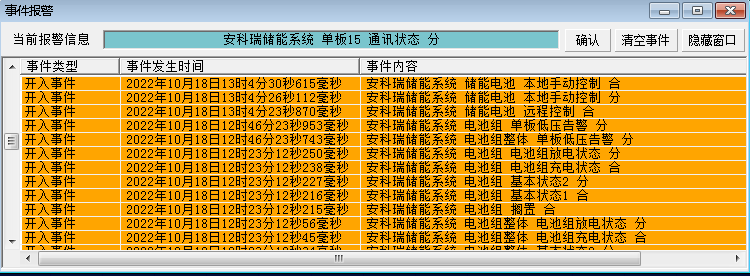
49 Power Quality Monitoring
Continuous monitoring of the power quality of the entire microgrid system, including steady-state and transient states, enables management personnel to grasp the power quality situation of the power supply system in real time, in order to timely detect and eliminate unstable power supply factors.
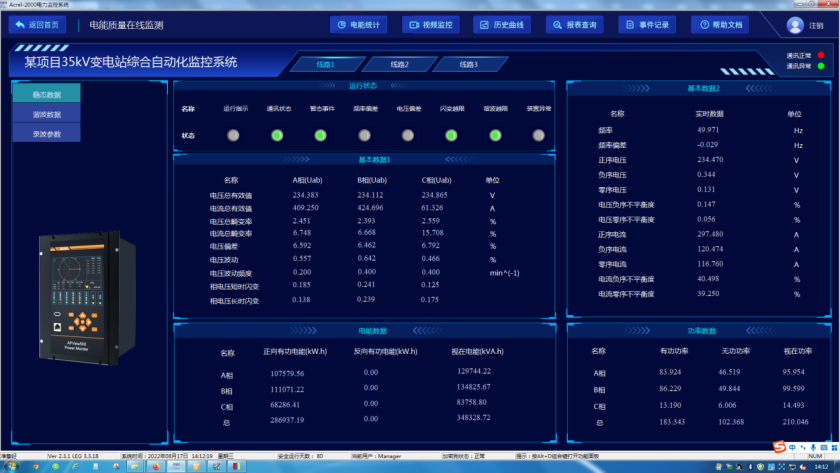
410 Network Topology Diagram
The system supports real-time monitoring of the communication status of various devices connected to the system, and can fully display the entire system network structure; It can diagnose the communication status of equipment online, and automatically display the faulty equipment or component and its faulty location on the interface when network abnormalities occur.
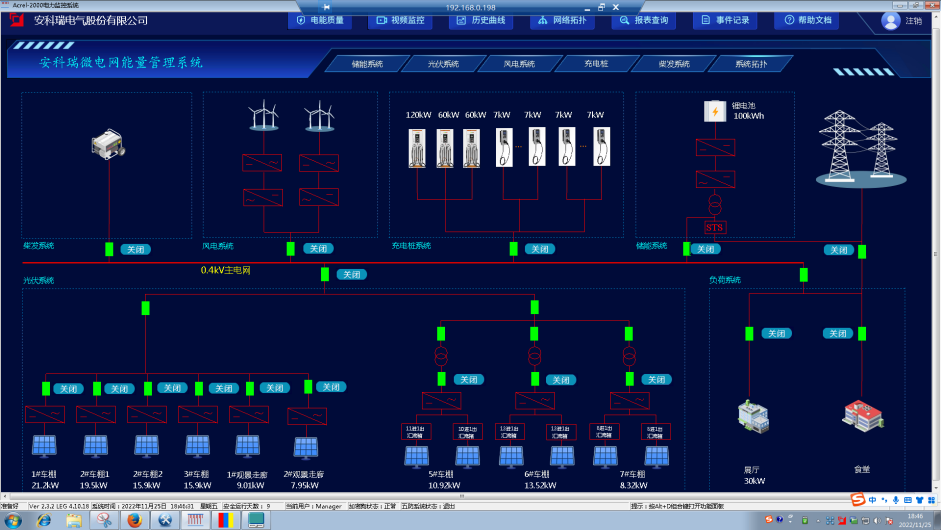
4. 11 Fault recording
When the system malfunctions, it automatically and accurately records the changes in various related electrical quantities before and after the fault. By analyzing and comparing these electrical quantities, it plays an important role in analyzing and handling accidents, determining whether the protection is operating correctly, and improving the safe operation level of the power system. Among them, a total of 16 fault waveforms can be recorded, and each waveform can trigger 6 segments of waveform recording. Each waveform recording can record 8 cycles before the fault and 4 cycles after the fault, with a total recording time of 46 seconds. Each sampling point recording should include at least 12 analog waveforms and 10 switch waveforms.
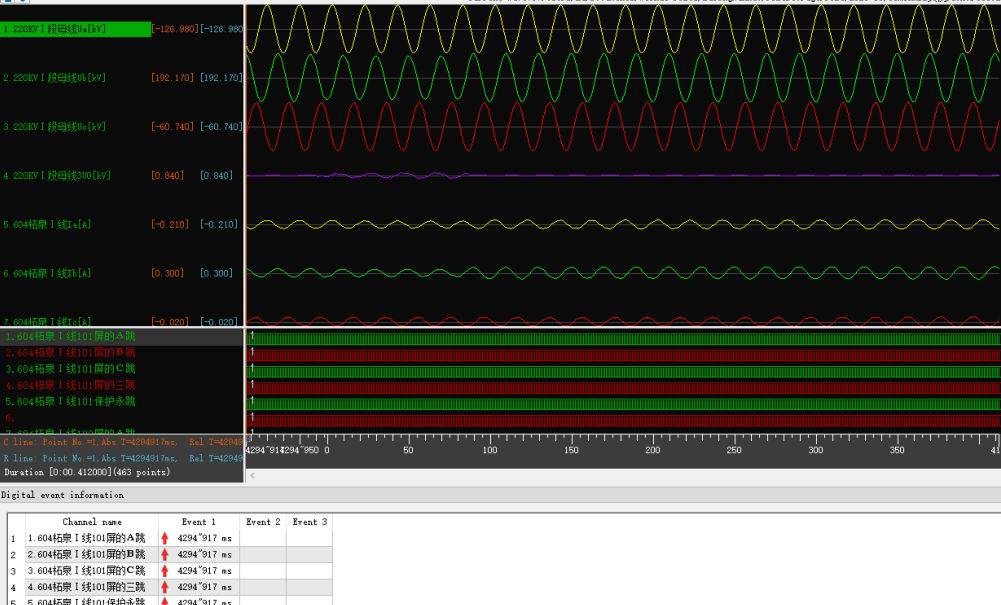
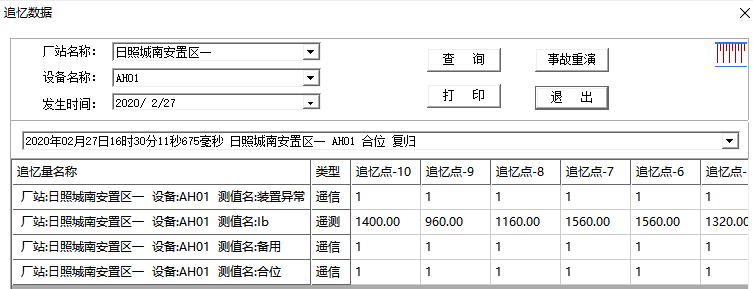
412 Accident Remembrance
It can automatically record all real-time scanning data before and after the accident, including switch position, protection action status, remote measurement, etc., forming the data basis for accident analysis;
Users can customize the start event for accident recall, and when each event occurs, store relevant point data for * * scan cycles before the accident and 10 scan cycles after the accident. The data points for initiating events and monitoring can be specified and modified by users at will.
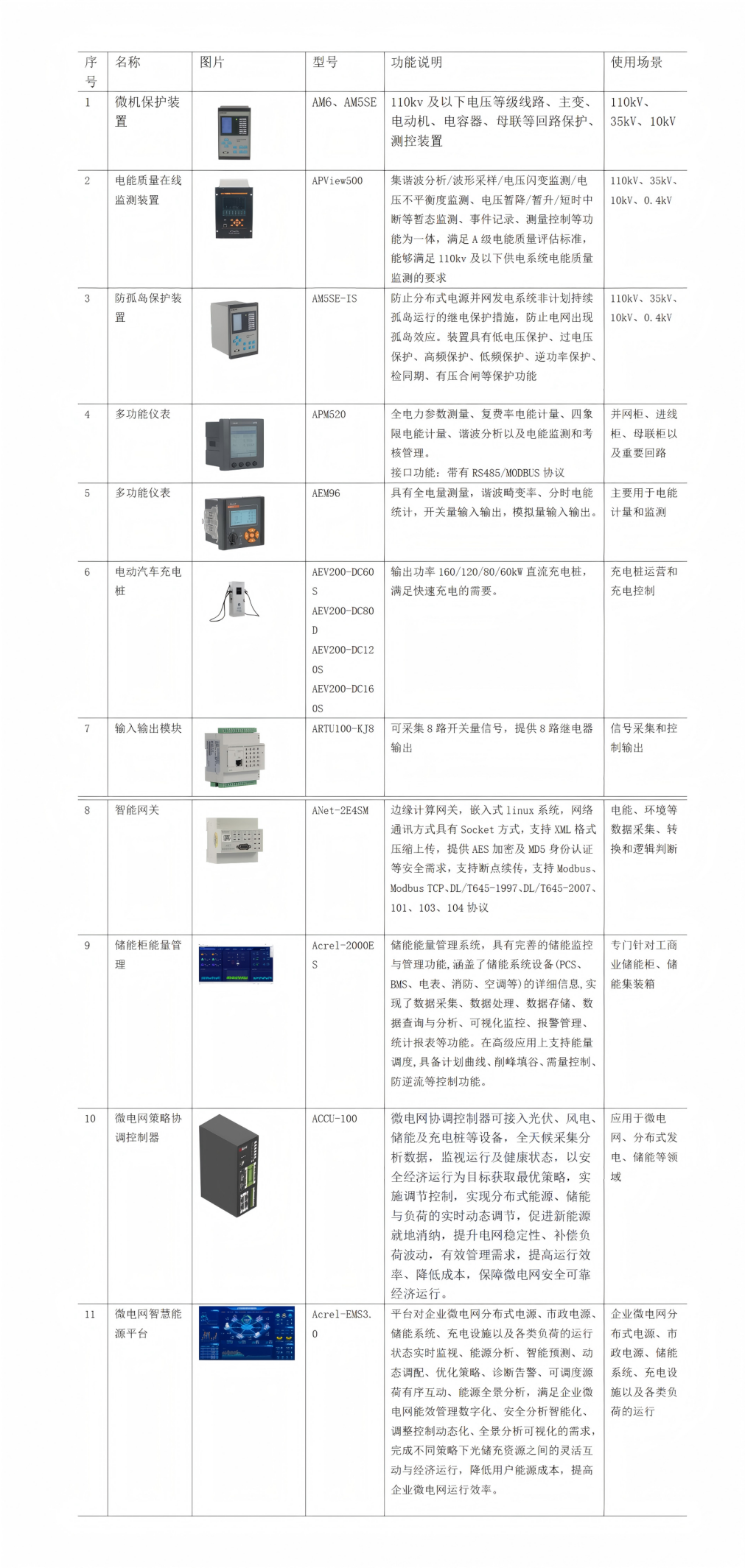
5 Solution related product recommendations
Conclusion:
Driven by the new situation, the distribution network is accelerating towards high-quality development, which has laid a solid policy foundation and pointed out the technical direction for the construction of source grid load storage microgrids in industrial parks. The Acrel-EMS3.0 system demonstrates strong advantages, achieving precise coverage of the entire energy management process, possessing highly intelligent scheduling capabilities, and enabling collaborative operation of multiple energy forms. With these characteristics, the system has become a key tool for industrial parks to reduce energy costs, improve the level of new energy consumption, and achieve green and low-carbon transformation. Looking ahead to the future, with the continuous deepening of the flexible transformation of the distribution network, the source grid load storage microgrid will continue to make efforts to promote greater breakthroughs in safety assurance, economic benefits, operational efficiency, and low-carbon development in industrial parks, providing solid and powerful support for the smooth achievement of the "dual carbon" goal and the construction of new power systems.