-
E-mail
1724948622@qq.com
-
Phone
15884555587
-
Address
No. A14-1 Haowang West Road, Cheng'a Industrial Park, Huaikou Town, Jintang County, Chengdu City
Product Categories
Sichuan Zhongying Environmental Protection Equipment Co., Ltd
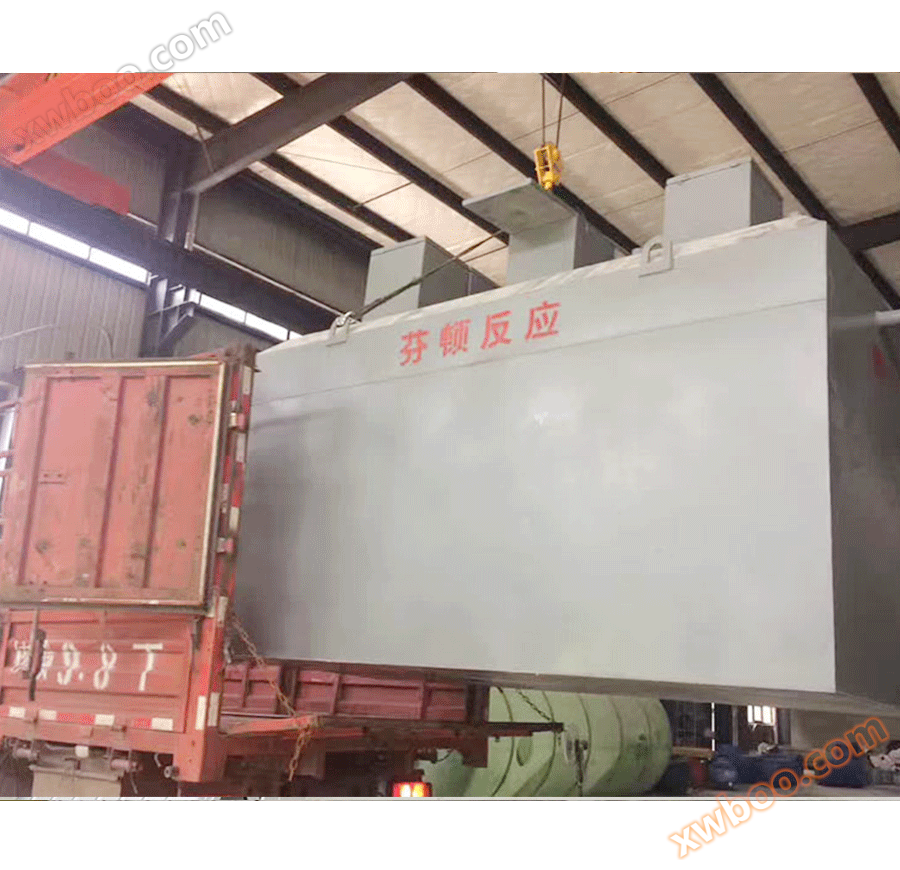
Fenton reaction technology equipment
NegotiableUpdate on 05/30
- Model
- Nature of the Manufacturer
- Producers
- Product Category
- Place of Origin
Overview
Fenton reaction technology equipment
Product Details

The current methods used to treat environmental wastewater are traditional treatment methods, including physical and chemical treatment methods. However, these methods are not effective in treating toxic and difficult to degrade pollutants, such as synthetic dyes widely used in silk products, spraying processes, printing and dyeing industries, and food processing. Moreover, during use, these toxic dyes can form some by-products through oxidation, hydroxylation, or other chemical reactions, posing a threat to ecology and human health.
With the continuous development of advanced oxidation technologies (AOPs), they have played an important role in the treatment of recalcitrant pollutants. It utilizes highly active free radicals to oxidize and decompose organic pollutants in water, such as · OH, which has high oxidation ability to degrade pollutants in oxidized water and convert them into CO2 and H2O. The Fenton method is a type of advanced oxidation technology that utilizes Fe2+and H2O2 to react and generate highly oxidizing · OH. Due to its high oxidation potential and non selectivity, · OH can degrade and oxidize various organic pollutants. However, due to the large amount of reagents required during the processing, such as H2O2, its preparation, transportation, and storage costs are relatively high. And electro Fenton relatively reduces this cost, as it can continuously generate H2O2 through electrochemistry by aeration (oxygen or air) near a suitable cathode.

