-
E-mail
3452523816@qq.com
-
Phone
18013864368
-
Address
Nanjing Jiangbei New Research and Innovation Park
Product Categories
Nanjing Xinfan Biotechnology Co., Ltd
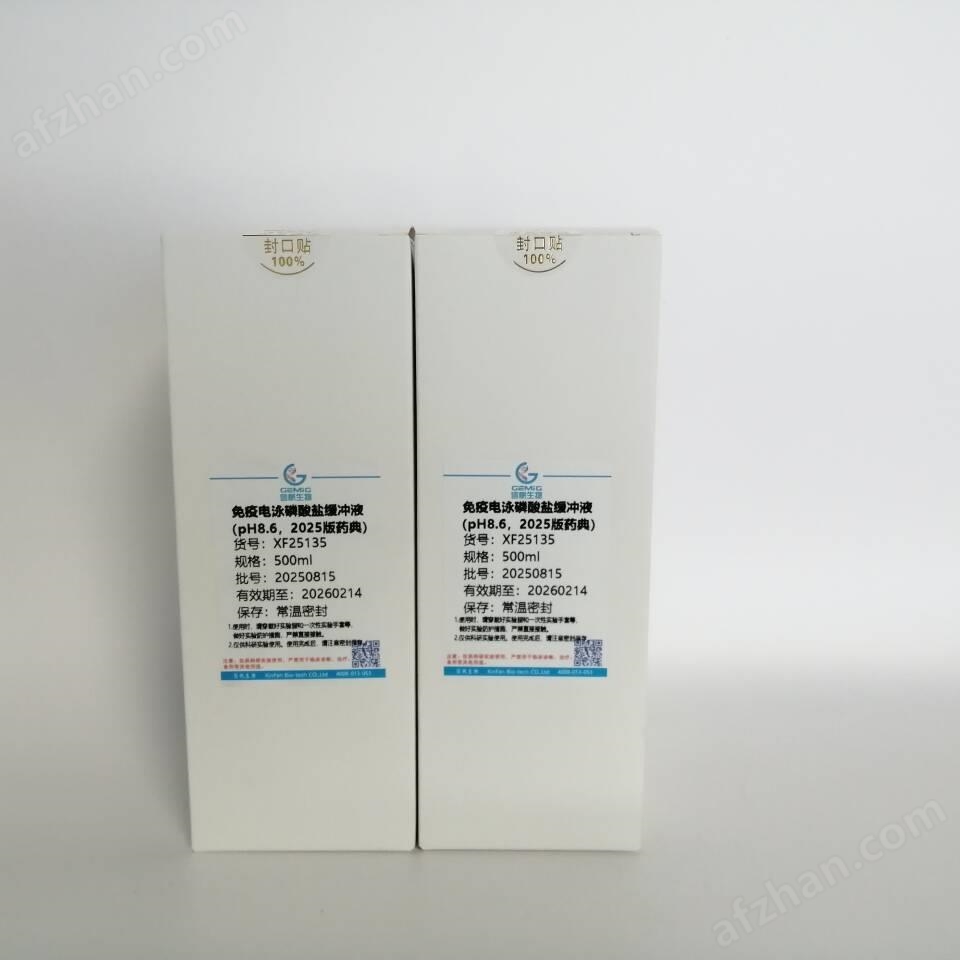
Phosphate buffer solution (pH 8.6)/2025 Pharmacopoeia
NegotiableUpdate on 01/08
- Model
- Nature of the Manufacturer
- Producers
- Product Category
- Place of Origin
Overview
Phosphate buffer solution (pH 8.6)/2025 Pharmacopoeia: This product strictly follows the requirements of item 3404 "Immunoelectrophoresis Method" in the 2025 edition of the Chinese Pharmacopoeia, with a precise pH value controlled at 8.6. It is suitable for precision experiments such as immunoelectrophoresis and protein separation, ensuring that the results comply with pharmacopoeia standards.
Product Details
Phosphate buffer solution (pH 8.6)/2025 Pharmacopoeia
1、 Product positioning and standard basis
Pharmacopoeia standard
This product strictly complies with the requirements of item 3404 "Immunoelectrophoresis Method" in the 2025 edition of the Chinese Pharmacopoeia, with a pH value precisely controlled at 8.6. It is suitable for precision experiments such as immunoelectrophoresis and protein separation, ensuring that the results comply with pharmacopoeia standards.
purpose
Immunoelectrophoresis: As an electrophoretic buffer, keep the pH of gel stable and ensure consistent protein mobility.
Sample dilution: Used for diluting biological samples (such as serum and cell lysate) to avoid pH fluctuations affecting detection accuracy.
Reagent preparation: As a basic buffer system, it participates in biochemical reactions such as enzyme reactions and antigen antibody binding.
The immunoelectrophoresis experiment separates the test sample into various antigens in different bands through electrophoresis, and then performs biphasic immunodiffusion with the corresponding antibodies. When the ratio of the two is appropriate, a visible precipitation arc is formed. By comparing the position and shape of the precipitation arc with those generated by known standard antigens and antibodies, the composition and properties of the test sample can be analyzed.
Operation method (for reference only)
Inspection method Pour the agarose solution onto a horizontal glass plate of appropriate size with a thickness of about 3mm, stand still, and after it is solidified into a uniform thin layer without bubbles, punch a hole at the top and bottom of 1/3 of the negative pole of the agarose gel plate, with a hole diameter of 3mm and a hole spacing of 10-15mm. Add 10ul of test solution and 1 drop of bromophenol blue indicator solution to the measuring hole, and add 10ul of normal serum or plasma to the control hole (omitted).
Operation points
1. Solution pouring: Pour the agarose solution into a horizontal glass plate, ensuring a uniform thickness of 3mm. If the thickness is insufficient, it can be adjusted by adding small amounts multiple times.
2. Static solidification: Let it stand for about 30 minutes until the agarose is completely solidified, avoiding vibration or touch during this period to ensure the formation of a uniform thin layer without bubbles.
3. Follow up processing: After solidification, check whether the surface is flat and smooth. If there are bubbles, use a needle to puncture and squeeze out excess solution.
Precautions
If the temperature of the agarose solution is too high (over 45 ℃), it may cause prolonged solidification time or surface cracking. It is recommended to cool it to below 40 ℃ before pouring. The settling time should not exceed 4 hours, otherwise local solidification may occur, and it needs to be reheated for dissolution.
Phosphate buffer solution (pH 8.6)/2025 Pharmacopoeia


