-
E-mail
apkjtsx@foxmail.com
-
Phone
13316686114
-
Address
Building B, Qianhong Industrial Park, No. 53 Wanbu Road, Changping Town, Dongguan City
Product Categories
Guangdong Aipei Testing Equipment Co., Ltd


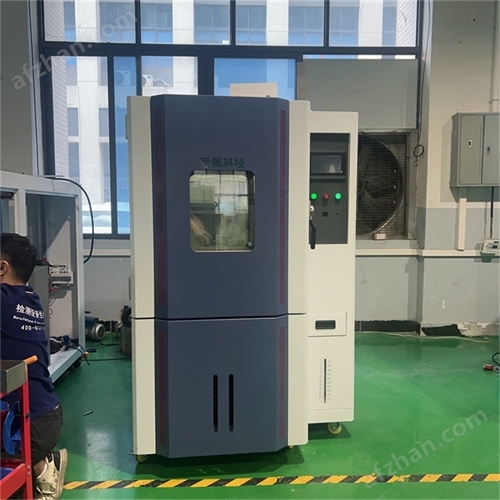
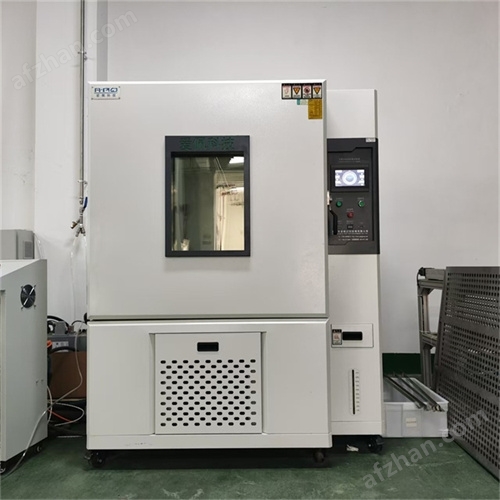
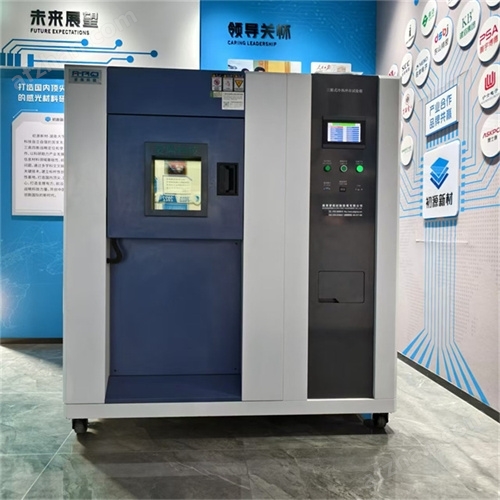
Rapid temperature and humidity change testing machine
NegotiableUpdate on 02/04
- Model
- Nature of the Manufacturer
- Producers
- Product Category
- Place of Origin
Overview
The rapid temperature and humidity change testing machine is suitable for providing reliable environmental temperature change testing, product stress screening, and other tests for various industrial products such as communication products, electronic products, optoelectronic products, security products, and electronic components. At the same time, through this testing chamber, the reliability performance of the product can be improved, and new products can be developed or product quality control can be carried out based on the test results.
Product Details
Rapid temperature and humidity change testing machineSuitable for various industrial products such as communication products, electronic products, optoelectronic products, security products, electronic components, etc., providing reliability environment temperature change tests, product stress screening and other tests. At the same time, through this test box test, the reliability performance of the product can be improved, and new products can be developed or product quality control can be carried out based on the test results.
Rapid temperature and humidity change testing machineTechnical Specifications:
Temperature range: -70 ℃~150 ℃ (there are also temperature ranges of -60 ℃~150 ℃/-40 ℃~150 ℃/-20 ℃~150 ℃/0 ℃~150 ℃ for everyone to choose from)
Standard range for rapid temperature change: -45 ℃ to 80 ℃
Humidity range: 20% to 98% R.H. (If the humidity range is not necessary, try not to add it as it will increase power consumption)
Fast temperature rate: 5 ℃/min, 3 ℃/min, 8 ℃/min, 10 ℃/min, 11 ℃/min, 15 ℃/min, 13 ℃/min (linear or nonlinear slope can be selected)
Temperature/humidity uniformity: ± 1 ℃, ± 2%
Temperature/humidity stability: ± 0.5 ℃, ± 2%
Warm Humidity deviation: ≤± 2 ℃/± 3% RH
Temperature sensor: Platinum resistance (PT100)
Outer box material: either steel plate baked paint or SUS 304 # stainless steel can be chosen
Inner box material: SUS304 stainless steel: has good corrosion resistance, heat resistance, low temperature strength, and mechanical properties; Good hot workability such as stamping and bending, no heat treatment hardening phenomenon (non-magnetic, operating temperature -196 ℃~800 ℃)
Freezing system: Bitzer semi closed compressor unit Binary cascade refrigeration
Refrigerant: Environmentally friendly refrigerant: single-stage first stage R-404A, stacked second stage R-23
Cooling: Air cooling or water cooling can be chosen, and it is generally recommended to choose water cooling for high-power applications
Heating system: Stainless steel finned heating tube for heating air
Humidification system: stainless steel sheathed electric steam generation method
Safety protection: No fuse overload protection, heating, compressor overcurrent, overpressure, oil pressure, humidification dry burning, box overheating, water tank shortage alarm system
Standard configuration of rapid temperature change testing machine: test hole (¢ 50x1 pieces), sample holder and hook (2 sets), observation window (three-layer vacuum tempered glass), over temperature protector, window observation light, one manual, certificate of conformity, and warranty card.
Precautions for use:
Installation and grounding
The equipment should be placed in a dry and well ventilated environment, away from heat sources and areas with high humidity changes. During installation, it is necessary to ensure that the casing of the box is grounded to avoid the risk of electric shock.
Operating Specifications
Avoid frequent opening and closing of doors: During the testing process, the number of times doors are opened should be reduced, and after opening the door, wait for more than 30 minutes for the temperature and humidity to stabilize.
Power management: When testing heating samples, an external power supply is required and direct connection to the device power supply is prohibited.
Safety protection: Wear insulated gloves during operation to avoid skin burns caused by high temperature air.
maintenance
Regular cleaning: Clean the inner and outer surfaces of the equipment and keep them dry.
Replace accessories: Regularly inspect and replace vulnerable parts such as filters and seals.
Calibrate sensors: Regularly calibrate temperature and humidity sensors using standard instruments to ensure accuracy.
Parameter Settings
Reasonably set temperature and humidity parameters according to experimental requirements to avoid frequent adjustments that may cause data bias.
environmental control
Avoid stacking obstacles around the equipment to ensure smooth air circulation
Similar Product Recommend