-
Phone
15921165535
-
Address
No. 418 Huajing Road, Shanzhong Science and Technology Park, Waigaoqiao Free Trade Zone, Pudong New Area, Shanghai
Product Categories
Duzhi Instrument (Shanghai) Co., Ltd

German Fischer COUPOSCOPE CMS2 STEP thickness gauge (capable of measuring potential difference)
NegotiableUpdate on 02/06
- Model
- Nature of the Manufacturer
- Producers
- Product Category
- Place of Origin
Overview
The feature of CMS2 STEP is the STEP testing function (simultaneously measuring thickness and potential difference). Standardized STEP testing (ASTM B764-94 and DIN 50022) for coating thickness and potential difference in quality monitoring of multi-layer nickel. The thickness of the coating was determined by Coulomb method, and the potential difference was obtained from the silver electrode coated with AgCl. CMS2 STEP can perform standard STEP testing on a single coating to detect potential differences (such as quality control of multi-layer nickel coatings).
Product Details
Product Description
German Fischer COUPOSCOPE CMS2 STEP thickness gauge (capable of measuring potential difference)-----Standardized STEP testing for coating thickness and potential difference in quality monitoring of multi-layer nickel.CMS2 STEPThe characteristics areSTEPTesting function (simultaneously measuring thickness)And potential difference). Used for quality monitoring of multi-layer nickel coating thicknessStandardization of potential differenceSTEPTesting (based onASTM B764-94AndDIN 50022). The thickness of the coating is determined by Coulomb method, while the potentialThe difference lies in a coatingAgClThe silver electrode was obtained.The CSM2 STEP version can perform standard STEP testing on a single coating to detect potential differences (such as quality control of multi-layer nickel coatings).Potential difference, also known as potential difference or voltage, is a physical quantity that measures the energy difference generated by a unit charge in an electrostatic field due to different potentials. The international system of units for potential difference is volts (V, abbreviated as V), and commonly used units include millivolts (mV), microvolts (μ V), kilovolts (kV), etc. This concept is similar to the "water pressure" caused by high and low water levels. It should be pointed out that the term "voltage" is generally only used in circuits, while "potential difference" and "potential difference" are widely applied to all electrical phenomena.
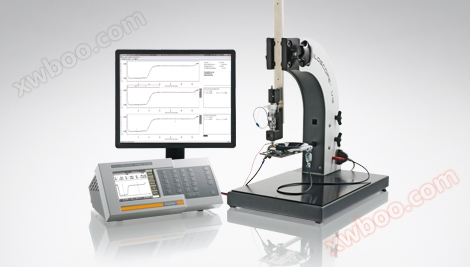 |
Main features: ◇ Using electrolytic stripping technology (Coulomb method),Simultaneously measure the thickness of the coating and the potential difference ◇The interactive mode of graphical display,Operation tips for menu guidanceEasy to operate◇Widely applicable: capable of measuring the thickness of coatings on metal and non-metal substrates ◇Also suitable for measuring the thickness of multiple coatings ◇We provide a comprehensive range of accessory products for you to choose from, which can meet specific needs◇Simple preparation of silver reference electrode ◇Adjustable electrolysis current ◇Attractive design, large LCD display, and clearly arranged keyboard. ◇The diameter of the electrolysis zone ranges from 0.6 mm (24 mil) to 3.2 mm (128 mil). ◇About 100 pre-defined applications are suitable for most metal coatings andwire rod. |
|
STEP TestIt is used to measure the potential difference andThe thickness of multi-layer nickel coating is the standard in this application field. The quality control of multi-layer nickel plating requires the ability to immediately check the thickness after electroplating is completedInstruments for measuring temperature and potential difference.COULOSCOPE CMS2 STEPJust forthisDesigned for a specific purpose, it is easy to operate and can be used as a reference electrodeIt's not complicated either, very suitable for this application in harsh environments of electroplating factories.
Electroplated nickel layer is used for electrolytic protection and to improve machine surface properties such as hardness. Especially in the automotive industry, nickel plated components must meet high requirements in terms of corrosion resistance. A single nickel layer cannot meet this requirement. Therefore, very complex plating systems are currently being developed, which include two, three, or even four layers of nickel plating, as well as chromium or copper plating.
|
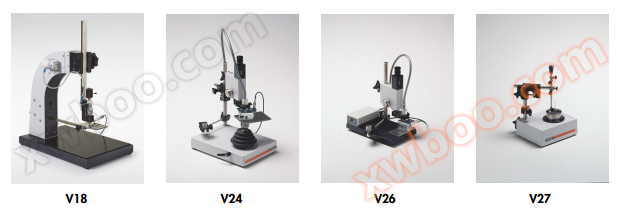
Measurement version: Four different types of measuring stations are suitable for measuring various objects under test: The measuring platform V18 has a new measuring slot design. 605-091 The V24 measuring platform allows for flexible positioning of small workpieces. 600-7832 The measuring platform V26 is designed for simple and flat shaped objects. 600-783 The V27 measuring platform is mainly designed for measuring on online materials. 600-784 |
|
 |
|
Parameter features:
Standard: DIN EN ISO 2177; ASTM B504
Large screen dot matrix LCD display, capable of displaying text and graphics: 126 * 70 mm
Can set and store: 50 applications, 600 data sets; 3000 pieces of data
Statistics: Mean, Max, Min, Standard Deviation, Number of Measurements, Cp, Cpk, and Histogram
Use multi-layered menus and soft keys to make operations more convenient
The RS232 interface can transmit data to a PC through cables and transmission software
Analog output: 0-18V
Input impedance:>2 K Ω
Working temperature: 10 ℃~40 ℃
Instrument weight: 6 kg
Power supply: AC 220 V, 50-60 Hz; Maximum power consumption ≤ 85 VA
Size: 350W * 140H * 200D mm
|
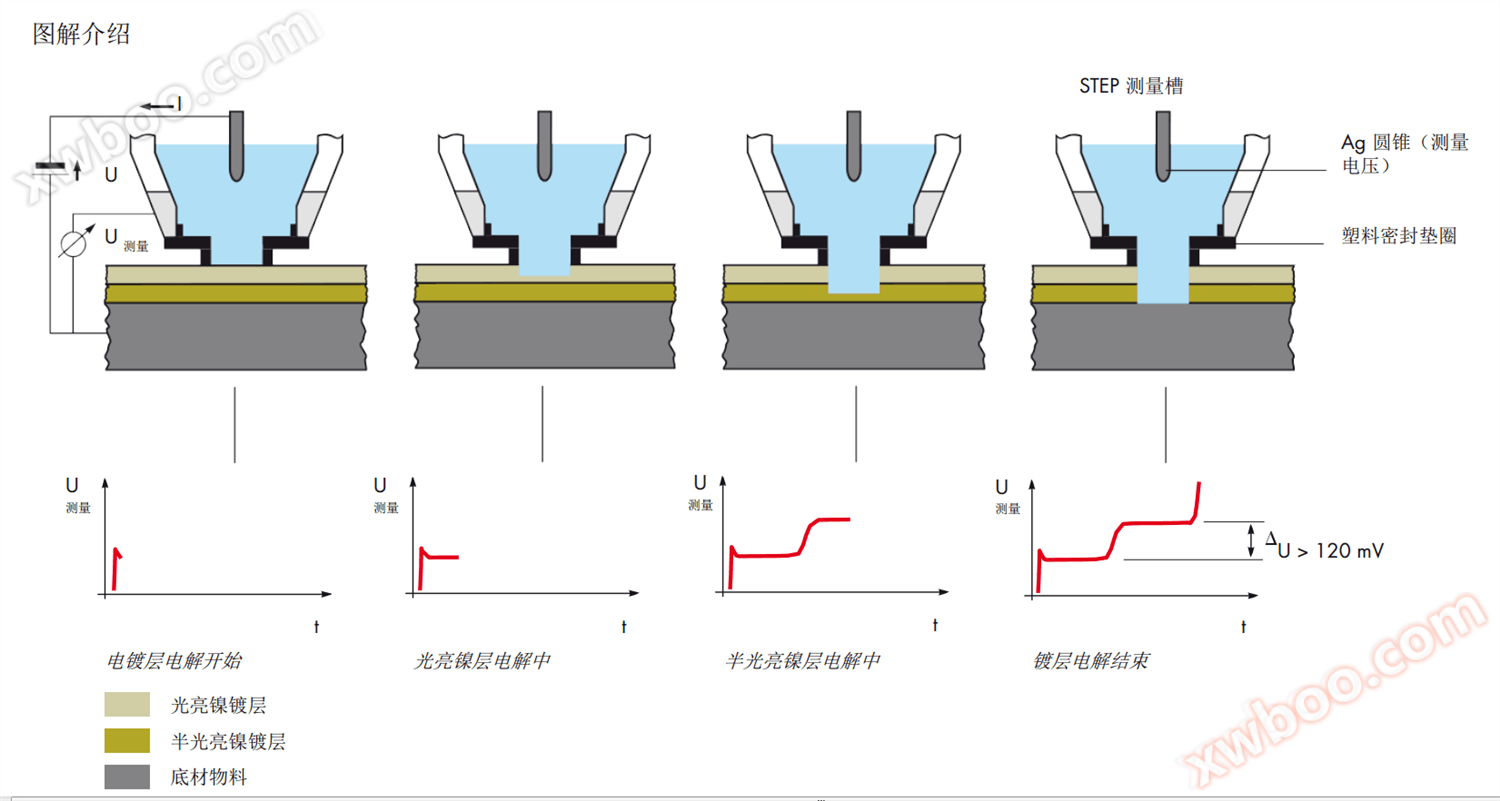
STEP TestMeasurement(ASTM B764 ---94AndDIN EN ISO 2177)Measurement principle
STEP Testcorrect(Simultaneous Thickness and Electrochemical Potential determination)Simultaneously measure the thickness of the coating and chemical potentialThe abbreviation for 'poor' is a measurement method that has been standardized for a long time. It can be done simultaneouslyMeasure the thickness of each coating and the electrochemical potential between two layers in a multi-layer nickel systemPoor. When measuring thickness, Coulomb method is used to measure, and the potential difference is obtained by coating an outer layer with aLayerAgClMeasure with a silver reference electrode. The voltage curve can be displayed on the screenOn the screen, the thickness of the coating and the potential difference can be read on the graph.
In order to obtain comparable and stable potential difference measurement results, the distance between the reference electrode and the workpiece must always remain constant. This problem is solved through a special measuring slot. The silver reference electrode is designed as a conical ring-shaped electrode and serves as the outer shell at the bottom of the measuring slot, connected to the measuring slot cover. The design of the measuring slot ensures that the distance between the reference electrode and the workpiece remains constant.
About Us
Since its establishment, Duzhi Instrument has been deeply trusted and recognized by customers, and has long pursued professional quality, integrity, honesty, and sincere service. Duzhi Instrument is a well-known physical measurement instrument agent and distributor in the industry. Our various brands and models of portable physical measuring instruments have won unanimous praise and widespread acclaim from our customers. We are committed to keeping pace with technology and moving our customers with high-quality service! If you have any questions or would like to learn more about this product, please feel free to call us for consultation!
Similar Product Recommend